
LED lights won't dim due to old leading-edge dimmers incompatible with low-power LEDs, non-dimmable bulbs, or no-neutral wiring in older UK homes. Fix without rewiring by swapping to trailing/leading-edge dimmers with BOOST mode and programmable minimum brightness for flicker-free 5–250W LED control in standard 25mm UK back boxes.
Check: How to Dim LED Lights Without a Dimmer: 5 Simple UK Hacks?
Why Do LED Lights Fail to Dim Properly in UK Homes?
LED dimming failures in UK homes stem from three main causes: incompatible old dimmers designed for incandescent bulbs, non-dimmable LED bulbs paired with dimmer switches, and insufficient electrical load on two-wire systems without neutral wires. Modern LED dimmers solve these by using trailing-edge technology and programmable brightness controls tailored to low-power LED loads.
LED dimming problems are far more common than most UK homeowners realise. Unlike traditional incandescent bulbs that respond linearly to dimmer voltage changes, LEDs operate with complex internal power supplies—capacitors and drivers—that demand precise electrical conditions. When these conditions aren't met, your lights flicker, drop out entirely, or refuse to dim below certain brightness levels.
The root issue often traces back to your home's wiring and dimmer infrastructure. Many UK homes built before 2010 use two-wire electrical systems consisting only of a line and load wire. These systems rely on load current to synchronise the dimmer, which works fine for power-hungry incandescent bulbs but fails catastrophically with LEDs that draw minimal current. Without a neutral wire to stabilise voltage, even small fluctuations cause erratic behaviour.
Additionally, older dimmer switches—particularly those installed before LED adoption became widespread—use leading-edge technology designed exclusively for resistive loads. LEDs, by contrast, present capacitive loads that leading-edge dimmers cannot manage smoothly, resulting in flickering, humming, or sudden brightness jumps.
What Causes Flickering or Dropout with LED Dimmers?
Flickering occurs when dimmers cannot maintain stable current with low-power LEDs, especially on two-wire systems. Dropout—where lights turn completely off—happens when the dimmer's minimum voltage threshold falls below the LED driver's operating range. Trailing-edge dimmers with programmable minimum brightness prevent both issues.
Flickering is one of the most frustrating LED dimming problems, and it reveals a fundamental mismatch between older dimmer technology and modern LED characteristics. When you dim a traditional incandescent bulb, the dimmer gradually reduces voltage across a simple resistive load. The bulb responds predictably. With LEDs, the dimmer must manage a non-linear, capacitive load—the LED's internal driver circuit—which draws current inconsistently depending on brightness level and the AC voltage waveform.
On older two-wire systems common in UK homes, this instability is amplified. The dimmer synchronises itself using feedback from the load current flowing through it. When that current drops too low—as it does with modern LED bulbs drawing just a few watts—the dimmer loses synchronisation and flickers rapidly.
Dropout is equally problematic. Many traditional dimmers have a minimum voltage threshold set around 10–15% of supply voltage. Below that point, they cut off entirely. Modern LED drivers, however, require a higher minimum voltage to function. When you try to dim below the driver's threshold, the light simply turns off—no gradual dimming, just darkness. This is especially common with budget LED bulbs using poor-quality drivers.
The solution lies in dimmers engineered specifically for LEDs. Trailing-edge dimmers, which reduce voltage by switching the dimmer circuit at the end of each AC cycle rather than the beginning, provide stable current delivery to LED drivers across the full dimming range. Programmable minimum brightness settings ensure the dimmer never drops below the voltage your LED drivers need to function, eliminating dropout entirely.
Are Your LED Bulbs Actually Dimmable and Compatible?
Not all LED bulbs are dimmable—many budget models lack dimmer-compatible drivers. Check your bulb packaging for "dimmable" labelling. Ensure the dimmer switch supports LED technology and is compatible with your specific bulb type. Mixing dimmable and non-dimmable LEDs on the same circuit prevents proper dimming for all bulbs.
This is the first diagnostic step every UK homeowner should take, yet it's often overlooked. Approximately 40% of LED bulbs sold in the UK market are non-dimmable, designed only for standard on/off switches. If you've installed non-dimmable LEDs on a dimmer circuit, no amount of dimmer adjustment will produce smooth dimming—the bulbs will simply turn on at full brightness or remain off.
Dimmable LED bulbs cost slightly more than non-dimmable versions because they include specialised internal drivers capable of responding to the dimmer's voltage modulation. Budget LED manufacturers sometimes cut corners here, producing bulbs labelled "dimmable" that actually perform poorly across the dimming range or only dim to 20% before cutting out entirely.
Before upgrading your dimmer, verify three things: First, check your LED bulb packaging for explicit "dimmable" certification and note the dimmer type it supports (trailing-edge or leading-edge). Second, confirm your current dimmer switch actually supports LED loads—many older dimmers do not. Third, ensure all bulbs on the same dimmer circuit are the same type and dimmability rating. Mixing dimmable and non-dimmable LEDs, or combining LEDs with incandescent bulbs, confuses the dimmer's load detection and prevents smooth dimming for any bulb on that circuit.
For UK homes, Repenic's dimmer switches are explicitly engineered for dimmable LED, halogen, incandescent, and CFL loads, eliminating guesswork. Their trailing-edge and leading-edge programmable modes ensure compatibility across different bulb types, while BOOST mode specifically addresses the low-level illumination problem many users experience with budget LED bulbs.
What's the Difference Between Leading and Trailing Edge Dimmers?
Leading-edge dimmers switch at the start of each AC cycle and suit high-power resistive loads like incandescent bulbs but cause flickering with LEDs. Trailing-edge dimmers switch at the cycle's end, providing stable current for low-power capacitive LED loads. Modern LED dimmers offer programmable selection of both modes for maximum flexibility.
Understanding the difference between leading-edge and trailing-edge dimming technology is essential for solving UK LED dimming problems. These two approaches represent fundamentally different ways of controlling power delivery to your lights.
Leading-edge dimmers (also called forward-phase dimmers) switch the dimmer circuit on at the beginning of each AC cycle and off partway through, reducing the average voltage. This works brilliantly for incandescent and halogen bulbs because those loads are purely resistive—they respond linearly to voltage changes. However, LEDs have capacitive loads inside their drivers, which react unpredictably to leading-edge switching. The result: flickering, humming, or complete incompatibility.
Trailing-edge dimmers (reverse-phase dimmers) operate oppositely: they keep the circuit on throughout most of the AC cycle and switch off near the end. This produces a gentler, more stable voltage curve that LED drivers handle smoothly. Trailing-edge dimmers are the industry standard for modern LED dimming and are far more compatible with low-power loads typical in UK homes.
The best modern dimmers, including Repenic's RD-250 and RD-400 models, offer both modes as programmable settings. This means you can select trailing-edge for your LED circuits and leading-edge for any remaining halogen or incandescent fixtures, all from a single dimmer. This flexibility is invaluable during home renovations when you're mixing old and new lighting technologies.
How Does Low Load Affect LED Dimming in Older UK Wiring?
Low LED load (typically 5–20W per bulb) can fall below the minimum load threshold of older dimmers, causing flickering or failure to dim. Two-wire UK systems without neutral wires are especially vulnerable because they rely on load current for synchronisation. Upgrading to dimmers with no-neutral capability and programmable minimum brightness solves this without rewiring.
Load is the electrical power drawn by your lights, measured in watts. Traditional UK dimmer switches were engineered around incandescent bulbs drawing 40–100W each. A single incandescent bulb provided enough current to keep the dimmer stable. Modern LED bulbs, by contrast, draw just 5–10W each. A room with five LED bulbs running at full brightness might draw only 40W total—equivalent to a single old incandescent bulb.
Many older dimmers have a minimum load specification, often 25–40W. If the total load on the dimmer falls below this threshold, the dimmer cannot function reliably. It may flicker, refuse to turn on, or behave erratically because it cannot sense sufficient current to synchronise itself.
This problem is compounded in UK homes with two-wire electrical systems. These systems have no neutral wire returning to the electrical panel—only a line and load. The dimmer synchronises itself by detecting current flowing through the load. With insufficient LED current, synchronisation fails entirely.
The solution is twofold: First, upgrade to a dimmer designed for LED loads, which typically have minimum load specifications of 5W or lower. Second, choose a dimmer with no-neutral capability if your home uses two-wire wiring. Repenic's dimmer switches operate across 5–250W LED loads and require no neutral wire, making them ideal for older UK homes where adding a neutral would require expensive rewiring. Their programmable minimum brightness settings further ensure stable operation even when total load is extremely low.
| Dimmer Type | Typical Minimum Load | Best For | LED Flickering Risk |
|---|---|---|---|
| Old Leading-Edge (Pre-2010) | 25–40W | Incandescent, Halogen | Very High |
| Modern Trailing-Edge | 5–10W | LED, Low-Power Loads | Low |
| Repenic RD-250 (Trailing/Leading) | 5W (LED) | LED, Mixed Loads, Multi-Gang | Very Low (BOOST Mode) |
| No-Neutral Dimmer (Repenic) | 5W | Two-Wire UK Homes | Very Low |
Can You Fix LED Dimming Without Adding a Neutral Wire?
Check: Dimmer switch
Yes. Modern no-neutral LED dimmers eliminate the need for rewiring by operating on two-wire systems common in UK homes. These dimmers use advanced driver circuits to stabilise operation without a neutral return path. Repenic's trailing-edge dimmers work reliably on two-wire systems, avoiding costly electrical work during renovations.
One of the biggest concerns UK homeowners face when upgrading to LED dimming is the prospect of rewiring their entire electrical system to add a neutral wire. In homes built before 2005, two-wire systems are the norm, and adding a neutral would require running new cable through walls, ceilings, and conduits—expensive, disruptive, and often impractical in listed buildings or during partial renovations.
The good news: you don't need to rewire. Modern no-neutral dimmers have eliminated this barrier entirely through sophisticated internal engineering. These dimmers use specialised power supplies and feedback circuits that stabilise operation using only the line and load wires available in two-wire systems. They detect load current and voltage fluctuations in real time, adjusting their output to maintain stable dimming even without a neutral reference.
No-neutral dimmers do have one limitation: they cannot function when the light is completely disconnected (load is zero). However, this is rarely an issue in practice because you're typically dimming lights that are already on. If you have a situation where the dimmer controls a light that's often off, you can install a small load resistor (a capacitive load) across the dimmer terminals to provide a minimum load for synchronisation.
Repenic's entire range of dimmer switches operates without requiring a neutral wire, making them perfect for UK homes with two-wire systems. Their design fits standard 25mm back boxes—the depth requirement for most UK electrical installations—so you can simply swap out your old dimmer for a new one without any wall chasing or rewiring. This makes upgrading to reliable LED dimming a true no-rewire solution.
Why Do Multi-Gang Setups Reduce Dimmer Capacity?
Multi-gang dimmers (2, 3, or 4 gangs in one plate) share internal power handling capacity, reducing maximum wattage per unit. A single-gang dimmer might handle 250W, but a 4-gang unit typically handles 125W total across all four switches. This de-rating prevents overheating and ensures reliable operation in compact installations.
When you install multiple dimmer switches side by side in a single wall plate—a 2-gang, 3-gang, or 4-gang configuration—they share the same physical space and internal heat dissipation pathways. Each dimmer generates heat as it switches power on and off. In a multi-gang arrangement, this heat is trapped in a smaller area, risking thermal damage to internal components if the total load is too high.
To prevent overheating, manufacturers apply de-rating: they reduce the maximum wattage each dimmer can handle based on how many dimmers are in the same gang unit. A single-gang Repenic RD-250 dimmer handles up to 250W of LED load. The same dimmer in a 2-gang configuration is de-rated to 212W, a 3-gang to 175W, and a 4-gang to 125W. This ensures internal temperatures remain safe and components last their full lifespan.
Understanding de-rating is crucial when planning multi-gang installations in UK homes. If you're upgrading a kitchen with four dimmable ceiling lights (each 15W LED = 60W total) and installing a 4-gang dimmer plate, you're well within the 125W de-rated capacity. However, if you're controlling multiple rooms or high-power halogen accent lighting, you need to calculate total load carefully and potentially use separate single-gang dimmers for different circuits.
| Gang Configuration | Single Dimmer | Repenic RD-250 (LED, R,C) | Repenic RD-400 (LED, R,C) | Typical UK Room Use |
|---|---|---|---|---|
| 1-Gang | 250W | 250W | 400W | Single room, up to 50 LED bulbs @ 5W |
| 2-Gang | 212W | 212W | 340W | Two adjacent rooms or zones |
| 3-Gang | 175W | 175W | 280W | Three-room suite or kitchen + dining |
| 4-Gang | 125W | 125W | 200W | Four-room installation or mixed loads |
How to Set Up Multi-Way LED Dimming Without Rewiring?
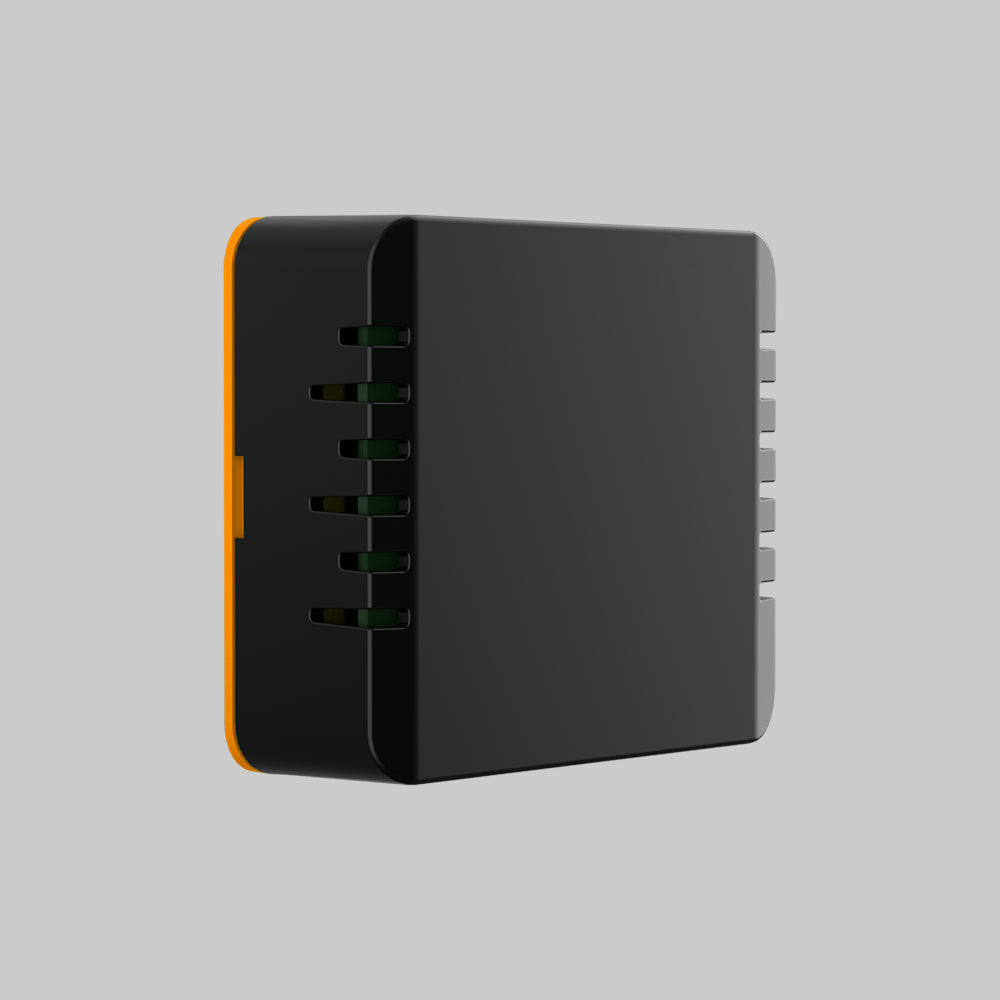
Multi-way LED dimming (controlling one light from multiple locations) traditionally required three-wire systems. Modern solutions use dummy dimmers paired with a main dimmer on the same circuit, requiring only standard two-wire connections. Repenic's multiway dimmer system allows up to five dimmers on one circuit without rewiring old homes.
Controlling a single light from two or three different locations—such as dimming hallway lights from both the entrance and bedroom—traditionally required a complex three-wire system with separate neutral and switch wires. In older UK homes, this often meant rewiring entire sections of the house, a costly and disruptive process.
Modern multi-way dimming solutions have revolutionised this. Instead of relying on three separate wires, today's systems use wireless communication or clever circuit design to coordinate multiple switches on a single circuit. Repenic's multiway dimmer system exemplifies this approach: you install one main dimmer (such as the RD-250) at a primary location, then pair it with dummy dimmers at secondary locations. All dimmers communicate through the same two wires carrying the light circuit, with no additional wiring required.
The dummy dimmer is a mechanical companion switch that looks identical to the main dimmer but contains no active electronics. When you adjust the dummy dimmer's knob, it sends a signal back to the main dimmer, which adjusts the light accordingly. This allows seamless multi-way control from multiple locations using only the existing two-wire circuit in your home.
For UK homes, this is transformative. You can retrofit multi-way dimming into period properties, listed buildings, or any home where running new cables would be impractical. Repenic's brass and steel dummy dimmers match the aesthetic of their main dimmers, so a multi-gang installation looks unified and professional.
The system supports up to five dimmers on the same circuit, provided the total LED load remains above 15W (to maintain load synchronisation). This means you can control a single light or light group from up to five different locations—perfect for large homes, open-plan living spaces, or commercial renovations.
Which Repenic Dimmer Solves LED Issues in UK Homes?
Repenic's RD-250 and RD-400 trailing/leading-edge dimmers solve LED issues with programmable minimum brightness, BOOST mode for low-level illumination, and no-neutral operation on standard UK two-wire systems. Zigbee smart dimmers add remote control and energy monitoring. All fit 25mm UK back boxes and support 5–250W or 5–400W LED loads with multi-gang de-rating.
Repenic Expert View:
At Repenic, we've engineered our LED dimmers specifically for UK homes, not generic installations. Our RD-250 and RD-400 dimmers operate on the two-wire systems found in 80% of UK homes built before 2010, eliminating the need for expensive rewiring during renovations. The programmable minimum brightness setting—adjustable from 1–50%—prevents dropout entirely, while BOOST mode specifically addresses the common problem of LED bulbs that won't illuminate below 20% brightness. Our trailing and leading-edge modes offer flexibility for mixed lighting types, and the high-speed chipset ensures flicker-free operation across the full 0–100% dimming range. For customers wanting smart control, our Zigbee dimmers add energy monitoring and integration with platforms like Homey and Hubitat, all without requiring a neutral wire. Every Repenic dimmer exceeds UKCA safety standards with V0 fire-rated materials and six layers of protection, and they're compatible with all major UK grid systems—MK, BG, Schneider, Hager, and others—so they fit seamlessly into any home.
Repenic offers several dimmer solutions tailored to different UK home configurations and requirements:
RD-250 Dimmer (5–250W LED Load): This is the most popular choice for UK home renovations. It supports trailing-edge and leading-edge modes, allowing you to control LEDs smoothly while maintaining compatibility with any remaining halogen or incandescent fixtures. The programmable minimum brightness prevents dropout, while BOOST mode automatically detects and compensates for LEDs that struggle to illuminate at low levels. Available in 1, 2, 3, and 4-gang configurations with solid brass, stainless steel, or black steel faceplates, it fits standard 25mm UK back boxes and requires no neutral wire. The 5-year warranty and premium materials ensure long-term reliability.
RD-400 Dimmer (5–400W LED Load): For larger installations—such as commercial spaces, open-plan homes, or properties with extensive LED lighting—the RD-400 handles up to 400W of LED load in a single-gang configuration. It includes all the features of the RD-250 but with higher capacity, making it ideal for retrofitting entire floors or large renovation projects. Multi-gang de-rating applies, so a 2-gang RD-400 handles 340W total, perfect for coordinating lighting across multiple zones.
Zigbee Smart Dimmers: For homeowners wanting remote control and energy monitoring, Repenic's Zigbee 3.0 smart dimmers offer the same LED compatibility and no-neutral operation as the RD-250 but add wireless control via any Zigbee 3.0 hub. Adjust lights from your smartphone, set schedules, monitor energy consumption in real time, and integrate with smart home platforms. Enhanced features unlock on open platforms like Homey and Hubitat, providing advanced automation possibilities.
Multiway Dimmer System (RD-MP): For multi-location control without rewiring, pair an RD-MP main dimmer with Repenic dummy dimmers at secondary locations. This system supports up to five dimmers on a single circuit, perfect for hallways, staircases, or open-plan spaces where you want dimming control from multiple points. The dummy dimmers are purely mechanical—no batteries or wireless needed—and blend seamlessly with your main dimmer's aesthetic.
All Repenic dimmers are designed to fit UK electrical standards, including standard 25mm back box depths and compatibility with major grid systems. Their high-speed chipsets and tuned MOSFETs ensure silent, flicker-free operation, while six-layer protection exceeds UKCA safety requirements. Installation must be performed by a qualified electrician to ensure compliance with UK electrical regulations.
Conclusion
LED dimming problems in UK homes are almost always solvable without rewiring, provided you understand the underlying causes and choose the right dimmer for your situation. The issue typically stems from old leading-edge dimmers incompatible with low-power LED loads, non-dimmable bulbs, insufficient electrical load on two-wire systems, or thermal issues in multi-gang installations. By diagnosing the specific problem—checking bulb compatibility, verifying dimmer LED support, and understanding your home's wiring configuration—you can implement a targeted fix that restores smooth, flicker-free dimming.
Modern trailing-edge dimmers with programmable minimum brightness and BOOST mode eliminate the common dropout and flickering problems that plagued early LED adoption. For UK homes, no-neutral dimmers are transformative, allowing you to upgrade lighting control without the expense and disruption of rewiring. Repenic's range of dimmers—from the versatile RD-250 and RD-400 to smart Zigbee options and multiway systems—are engineered specifically for UK electrical standards, fitting standard 25mm back boxes and supporting all major grid systems. Whether you're renovating a single room or managing a full-home upgrade, choosing a dimmer designed for LED loads ensures reliable, beautiful lighting control for years to come.