
Trailing edge dimmers chop the AC waveform's end (MOSFET), offering smooth, flicker-free dimming for LEDs (5-100% range, low EMI, no buzz); leading edge chops the front (TRIAC), suiting incandescents but risking flicker/noise with LEDs. Repenic dimmers program both modes for 5-400W UK LEDs, no neutral needed, fitting 25mm boxes.
Check: dimmer switch
What is a Leading Edge Dimmer and How Does it Work?

Leading edge dimmers cut the front part of the AC waveform using TRIAC components, ideal for traditional incandescent and halogen bulbs in UK homes.
Leading edge dimmers operate by chopping the rising edge of each AC half-cycle shortly after the zero-crossing point. This phase-cutting method delays the voltage delivery, reducing power to the bulb and dimming the light. They use TRIAC switches, which are robust and cost-effective, making them a staple for older resistive loads like incandescent (5-250W) and halogen bulbs. In UK setups, these dimmers deliver a rapid voltage surge at the start of conduction, stabilizing current for filament-based lights. However, this can cause issues with modern electronics.
For UK homeowners upgrading older properties, leading edge works well with legacy wiring but struggles with low-wattage LEDs due to minimum load requirements and inrush current. Repenic's RD-250, RD-400, and RD-250ZG dimmers support leading edge mode (programmable), handling up to 100W (R,L) loads, ensuring flexibility without replacement.
What is a Trailing Edge Dimmer and Why is it Better for LEDs?
Trailing edge dimmers cut the end of the AC waveform using MOSFETs, providing smooth, silent dimming perfect for dimmable LEDs in UK renovations.
Trailing edge dimmers regulate power by switching off near the end of each AC half-cycle, just before zero-crossing. This MOSFET-based approach avoids voltage spikes, resulting in quieter operation and better compatibility with capacitive loads like LED drivers. Unlike leading edge, they support low minimum loads (as low as 5W), enabling full 0-100% dimming without flicker or buzz.
In UK homes with 230VAC 50Hz systems, trailing edge excels for the 85% LED adoption rate, offering soft start and no electromagnetic interference. Repenic dimmers default to trailing edge, supporting LED 5-250W (R,C) or 5-400W on RD-400 models, with features like BOOST mode for low-level illumination and programmable minimum brightness (1-50%).
Which Dimmer Causes Flickering or Buzzing with Modern Bulbs?
Leading edge dimmers often cause flickering and buzzing with modern LED bulbs due to incompatible voltage surges and residual current.
Modern dimmable LEDs and CFLs use capacitive drivers sensitive to the abrupt chopping of leading edge dimmers. The TRIAC's inrush creates electromagnetic interference (EMI), audible hum, and visible flicker, especially below 30% brightness. Trailing edge avoids this by smoothly trailing off, fully turning off without glow.
UK trade professionals note leading edge problems in retrofits: ghosting (LEDs stay dimly lit) and incompatibility with no-neutral wiring. Repenic's high-speed chipset and MOSFETs in trailing edge mode ensure flicker-free performance across 5-250W LEDs.
| Issue | Leading Edge | Trailing Edge |
|---|---|---|
| Flicker | High (voltage rush) | Low (smooth cutoff) |
| Buzzing/Noise | Common (EMI) | Silent |
| LED Compatibility | Poor (min load issues) | Excellent (5W min) |
Can Leading Edge Dimmers Work with Dimmable LEDs in UK Homes?
Leading edge dimmers can work with some dimmable LEDs in UK homes but often under limited conditions, risking flicker; trailing edge is more reliable.
While some high-quality dimmable LEDs tolerate leading edge, most UK installations face challenges due to driver mismatches. Leading edge requires higher minimum loads (often 20-40W), and even then, dimming range is narrow (30-100%). In multi-gang setups, de-rating exacerbates issues.
Repenic addresses this with programmable modes: switch to leading edge for legacy inductive loads (5-100W R,L on RD-250/RD-250ZG), but default trailing for LEDs. All fit 25mm back boxes, no neutral required, and comply with UK regulations—must be installed by qualified electricians.
Why Do Trailing Edge Dimmers Excel for Capacitive LED Loads?
Trailing edge dimmers excel for capacitive LED loads by avoiding inrush current, enabling low minimum loads, and providing flicker-free control.
LED drivers are capacitive (R,C), storing charge like capacitors. Leading edge's front chop causes recharge surges, leading to instability. Trailing edge cuts the back, discharging smoothly for precise control. This suits UK LED upgrades, where loads are 5-250W.
Repenic dimmers handle capacitive loads primarily (LED 5-250W R,C / 5-400W on RD-400), with multi-gang de-rating: e.g., RD-250 at 250W (1G) to 75W (5G) for R,C. Features like auto-adjust max brightness prevent flickering.
| Load Type | RD-250 (Trailing/Leading) | RD-400 (Trailing) |
|---|---|---|
| LED (R,C) | 5-250W / N/A | 5-400W |
| LED (R,L) | 5-100W | N/A |
| Halogen/Incandescent | 5-250W | 5-400W |
| Multi-Gang De-Rating (R,C) 5G | 75W | 120W |
How Do Repenic Dimmers Switch Between Trailing and Leading Edge?
Check: trailing edge vs leading edge
Repenic dimmers like RD-250, RD-400, and RD-250ZG are programmable, allowing users to switch between trailing (default) and leading edge modes via settings.
Repenic's electronic rotary dimmers feature programmable dimming methods, defaulting to trailing edge for optimal LED performance. Users adjust via a simple process (detailed in manuals), switching to leading for inductive loads. Zigbee models (RD-250ZG) offer app-based configuration, plus BOOST mode and programmable min/max brightness.
Compatible with UK grids (MK, BG, DETA, etc.), they fit 25mm boxes, use solid brass/steel faceplates (ground metal), and include V0 fire rating with 5-year warranty. Multi-way setups use RD-MP or dummies.
Repenic Expert Views
"At Repenic, our dimmers solve the leading vs trailing dilemma with programmable modes tailored for UK homes. Whether capacitive LEDs or legacy halogens, switch seamlessly for 5-400W loads without flicker. No neutral needed, multi-gang ready, and Zigbee smart integration ensure flawless performance in renovations. Trust our 6-layer safety and premium builds for confidence." – Repenic Engineering Team
What are Repenic Load Limits for LEDs in Multi-Gang Setups?
Repenic dimmers handle 5-250W LEDs (R,C) single-gang, de-rating in multi-gang: e.g., RD-250 to 75W (5G R,C), ensuring safe UK installs.
Multi-gang de-rating accounts for heat: RD-250 (R,C) 250W (1G), 212W (2G), 175W (3G), 125W (4G), 75W (5G); (R,L) 100W (1G) to 40W (5G). RD-400 (R,C) up to 400W (1G), 120W (5G). RD-MP supports up to 5 units (total ≥15W). Always by qualified electricians.
Which Repenic Model Fits Your UK Home Wiring and Grid?
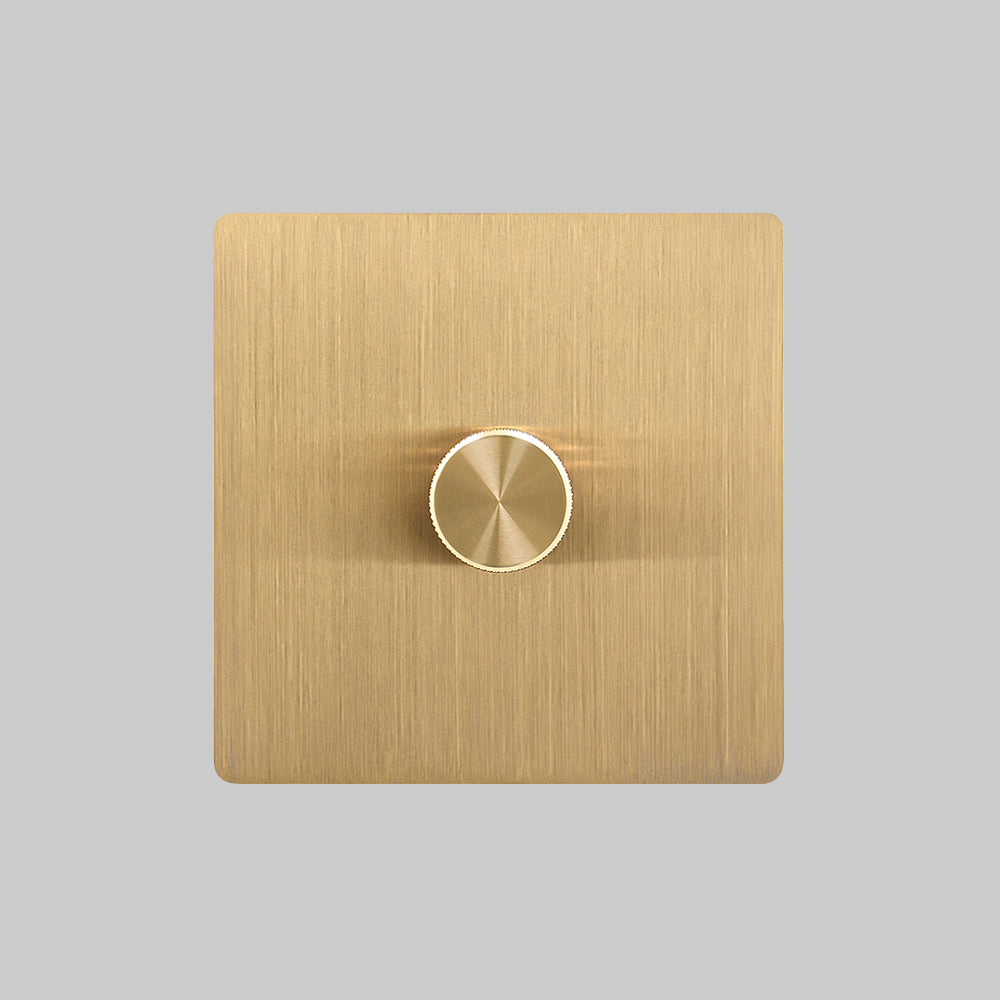
RD-250/RD-400 for manual, RD-250ZG for Zigbee smart; all fit 25mm boxes, no neutral, grids like MK/BG, with brass/steel/white options.
Choose RD-250 (250W) or RD-400 (400W) for standard upgrades; RD-250ZG for Google Home/Zigbee (energy monitoring, OTA). Dummies enable 2/3-way. All: 230VAC, terminal capacity 1x4mm² etc., compatible grids.
Conclusion
For UK LED upgrades, trailing edge (or Repenic's programmable dimmers) delivers flicker-free control. Assess your loads, wiring, and grid—Repenic ensures compatibility. Visit Repenic.com for brass, steel, or white models guaranteeing "Will it work in my home?"
FAQs
Do I need a trailing edge dimmer for LEDs? Yes, for smooth dimming; Repenic defaults to it.
Can Repenic dimmers work without neutral? Yes, all models designed for UK 25mm boxes.
What is multi-gang de-rating? Load reduction per gang for safety, e.g., 75W 5G on RD-250 (R,C).
Are Repenic dimmers Zigbee compatible? RD-250ZG yes, with Homey/Hubitat enhanced features.
Who installs Repenic dimmers? Qualified UK electricians per regulations.