
Start with Repenic Zigbee smart dimmers (5–250W LED, no neutral needed, fits 25mm UK back boxes, MK/BG compatible) for budget upgrades under £50 per room. Pair one smart RD-250ZG with up to 2 multiway dummies for 2/3-way control, saving 40–60% energy via app monitoring—beats bulbs for older homes without rewiring.
Check: How Can You Dim LED Lights Without a Dedicated Dimmer Switch?
What Is Budget Smart Dimmable Lighting and Why Start Here?
Smart dimmable lighting uses LED bulbs or electronic switches controlled remotely via smartphone apps or voice commands, with dimming that adjusts brightness from 0–100%. Budget entry points under £50 per room make it accessible for renovators. Start here because dimmers offer the fastest ROI: energy savings of 40–60% within weeks, plus convenience and security features like automated scheduling and occupancy detection.
For UK homeowners, the challenge is retrofitting older properties. Most homes built before 2000 lack neutral wires in light circuits—a wiring configuration that rules out many Wi-Fi smart bulbs. This is where smart dimmer switches shine. Unlike bulb replacements, which require compatibility with your existing light fittings, dimmer switches work with any bulb type and integrate seamlessly into standard 25mm back boxes found in UK homes. Repenic's Zigbee smart dimmers, for example, require no neutral wire and fit MK, BG, DETA, Hager, and other major UK grid systems, making them ideal for budget-conscious renovators who want to avoid costly rewiring.
Smart dimmable lighting also future-proofs your home. Zigbee 3.0 technology, used by Repenic's smart dimmers, is an open standard supported by multiple hubs (Homey, Hubitat, and others), meaning you're not locked into a single brand ecosystem like you would be with Wi-Fi bulbs tied to proprietary apps.
Why Choose Smart Dimmer Switches Over Smart Bulbs in UK Homes?
Smart dimmer switches control all bulbs in a fixture from one wall-mounted device, work with any bulb type, require no neutral wire in older homes, and enable true 2/3-way multi-location control. Bulbs, by contrast, need individual app control, won't work in all fittings, and are expensive to replace across multiple rooms.
The switch-versus-bulb debate hinges on three factors: installation complexity, cost per room, and multi-location control.
Installation and Compatibility: Smart bulbs screw into existing E27, B22, or GU10 sockets like traditional bulbs—seemingly simpler. However, they require Wi-Fi connectivity or a hub, often need a neutral wire for the hub installation, and won't work if your fixture uses bayonet fittings or integrated downlights. Smart dimmer switches, installed in place of your existing light switch, control any bulb type in that circuit. Repenic's Zigbee smart dimmers fit standard UK back boxes (≥25mm depth) and require no neutral wire, solving the retrofit problem that plagues Wi-Fi bulb systems in older properties.
Cost Per Room: A Philips Hue starter kit (3 bulbs + bridge) costs around £170, or £57 per bulb. To outfit a three-bulb ceiling fixture in a living room, you'd spend £170 upfront, then £20–£40 per additional bulb. Repenic's Zigbee smart dimmers cost less than £50 for a single-gang unit and control all bulbs in that circuit, meaning you outfit an entire room for under £50—and you can use any dimmable LED bulbs (£3–£10 each), not expensive smart bulbs. Over a five-room home, the savings compound dramatically.
Multi-Location Control: Turning lights on/off from different rooms traditionally required expensive wireless bulb clusters or complex wiring. Repenic's multiway dimmer system solves this affordably: pair one Zigbee smart dimmer (RD-250ZG) with up to two multiway dummy dimmers on the same circuit, enabling 2-way or 3-way control without additional smart hubs or rewiring. This is a world-first for Zigbee and beats bulb systems, which require separate app taps or voice commands for each location.
Which Repenic Smart Dimmers Fit UK No-Neutral Wiring Best?
Repenic's Zigbee smart dimmers (RD-250ZG) are purpose-built for UK no-neutral retrofits: 5–250W LED capacity, Zigbee 3.0 control, 0–100% dimming without flickering, and compatibility with MK, BG, DETA, Hager, and other major UK grids. Available in 1–4 gang configurations with solid brass, stainless steel, or white finishes under £50 per unit.
Repenic offers two dimmer categories: manual electronic dimmers (RD-250, RD-400) and smart Zigbee dimmers (RD-250ZG). For a budget smart home, the Zigbee smart dimmer is your starting point.
| Product | Wattage (LED) | Neutral Wire Required? | Smart Control | Multi-Way Support | Typical Price |
|---|---|---|---|---|---|
| Repenic Zigbee Smart Dimmer (RD-250ZG) | 5–250W | No | Zigbee 3.0 app + voice | Yes (1 smart + 2 multiway) | £40–£50 |
| Repenic Manual Dimmer (RD-250) | 5–250W | No | Manual rotary knob only | Yes (multiway dummies) | £25–£35 |
| Philips Hue Starter Kit (3 bulbs + bridge) | 8–15W per bulb | Yes (for hub) | Wi-Fi app + voice | No (bulb-level control) | £170 |
| TP-Link Tapo Smart Bulbs (4-pack) | 8–10W per bulb | Often yes | Wi-Fi app + voice | No | £60–£80 |
The Repenic Zigbee smart dimmer stands out because it fits into your existing light switch location—no new wiring required. The device connects to any Zigbee 3.0 hub (like Homey or Hubitat) and works with standard dimmable LED bulbs. Its 5–250W capacity covers most residential circuits, and it supports both trailing-edge and leading-edge dimming modes to prevent flickering with different bulb types.
For multi-gang installations (e.g., a large kitchen with multiple light switches), Repenic offers 2, 3, and 4-gang smart dimmer configurations, each with the same 5–250W capacity per gang. Material options—solid brass, brushed stainless steel, or white—let you match your home's aesthetic without premium pricing.
How Do Zigbee Smart Dimmers Compare to Wi-Fi Bulbs for Reliability?
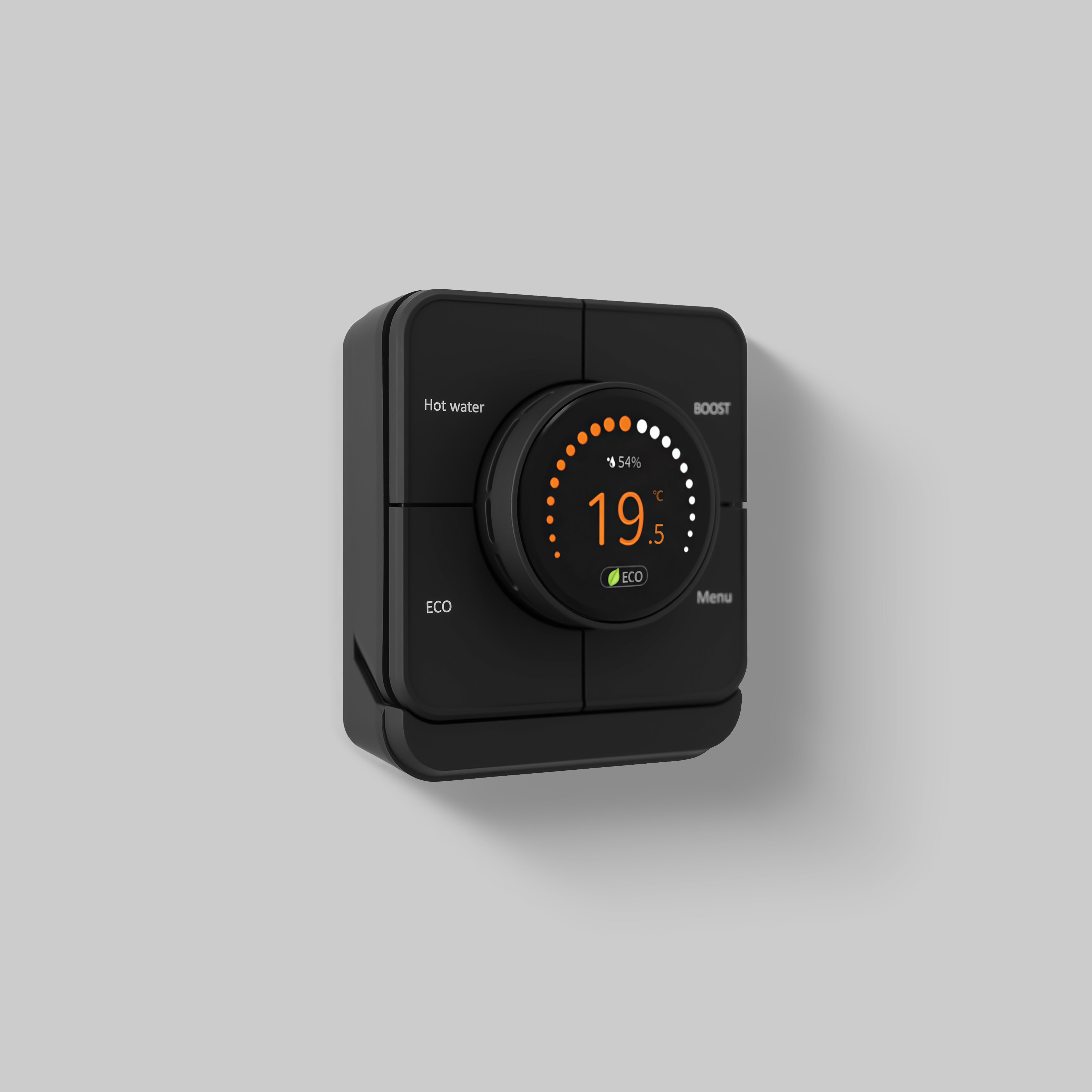
Zigbee dimmers (Repenic) offer mesh networking that self-heals, work without internet outages, and support multi-location control natively. Wi-Fi bulbs depend on your router, disconnect in dead zones, and require individual app commands or voice assistant integration for multi-room scenes.
Reliability is where Zigbee shines for budget smart homes. Zigbee 3.0 is a mesh protocol: each device (dimmer, hub, sensor) relays signals through the network, creating redundancy. If one device goes offline, others route around it. Wi-Fi, by contrast, is point-to-point: each bulb connects directly to your router. Dead zones, interference, or router restarts knock bulbs offline instantly.
In older UK homes with thick walls and multiple rooms, Wi-Fi bulbs frequently disconnect. Repenic's Zigbee smart dimmers maintain connection even in challenging environments because the mesh network fills gaps. Additionally, Zigbee operates on a separate 2.4GHz band from most Wi-Fi interference, and it uses lower power, meaning devices stay responsive without draining batteries (smart dimmers are mains-powered, so this isn't a concern, but sensors and future Repenic expansions benefit).
Internet Dependency: Wi-Fi bulbs require internet to use app control; if your broadband drops, you lose remote access. Zigbee dimmers work locally: as long as your Zigbee hub is powered, you can control lights from your phone on your home network, even without internet. This is critical for security—automated lighting can run during holidays without cloud connectivity.
Multi-Room Scenes: Wi-Fi bulbs force you to create scenes via the app or voice assistant, then manually trigger them in each room. Repenic's Zigbee smart dimmers enable true 2/3-way control natively: press the dimmer at any location, and all linked dimmers respond instantly. No app needed; no voice delay.
What Are the Best Dimmable Smart Lights Under £50 Per Room in 2026?
Repenic Zigbee smart dimmers (£40–£50 per unit) paired with standard dimmable LED bulbs (£3–£10 each) deliver full-room smart control under £50 total. Alternatively, budget Wi-Fi bulb packs (TP-Link Tapo 4-pack, £60–£80) work for single rooms but require hub upgrades and don't support multi-location control.
For true budget smart lighting, you have two paths:
Path 1: Repenic Smart Dimmer + Dimmable LEDs (Recommended for Older Homes)
Install one Repenic Zigbee smart dimmer (£40–£50) in your existing light switch location. Pair it with any dimmable LED bulbs you already own or buy new ones at £3–£10 each. Total cost for a three-bulb ceiling fixture: £50 (dimmer) + £20 (3 bulbs) = £70, or £23 per bulb equivalent. You get full app control, dimming, scheduling, and energy monitoring. If you later add a second room, you only buy another dimmer (£40–£50) and bulbs; no hub upgrade needed if you already have a Zigbee hub.
Path 2: Budget Wi-Fi Bulb Packs (Single-Room Entry)
A TP-Link Tapo 4-pack costs £60–£80 and includes four smart bulbs with app control. However, you're locked into those specific bulbs, and adding a second room requires buying another pack (£60–£80). Over five rooms, you'd spend £300–£400. With Repenic, you'd spend £250–£300 (five dimmers + standard bulbs). Additionally, Tapo bulbs require Wi-Fi and a hub, which adds complexity in older homes without neutral wires.
Repenic wins on both cost and flexibility. The initial investment is similar, but scalability and no-neutral compatibility make it the smarter choice for UK renovators planning to expand.
How to Install a Zigbee Smart Dimmer in a 25mm Back Box?
Turn off the circuit breaker, remove the old switch, disconnect wires (typically live and switch-out for 1-way circuits), connect to the Repenic Zigbee dimmer terminals, screw into the 25mm back box, attach the faceplate, and pair the dimmer to your Zigbee hub via the app. Installation takes 15–20 minutes but must be done by a qualified electrician per UK regulations.
Repenic Zigbee smart dimmers are designed for UK standard back boxes (≥25mm depth). Here's the installation process:
Step 1: Safety First
Switch off the circuit breaker controlling the light circuit. Use a voltage tester to confirm the circuit is dead. This is non-negotiable—electrical safety is paramount.
Step 2: Remove the Old Switch
Unscrew the existing light switch faceplate and carefully pull it away from the wall. Disconnect the wires (typically live in, switch-out, and occasionally a neutral in modern homes). Note the wire positions or take a photo for reference.
Step 3: Connect to the Repenic Dimmer
Repenic Zigbee dimmers use screw terminals rated for 1x4mm², 1x2.5mm², 3x1.5mm², or 4x1mm² wire gauges. Insert the live wire into the "Live In" terminal, the switch-out wire into the "Load" terminal, and tighten. If your circuit has a neutral wire (newer homes), connect it to the neutral terminal; if not (older homes), leave it disconnected—Repenic dimmers work without neutral.
Step 4: Install into the Back Box
Gently push the dimmer module into the 25mm back box, ensuring wires fold neatly behind. Screw the module into place using the two fixing screws provided. Attach the faceplate (available in brass, stainless steel, or white) and tighten the knurled knobs.
Step 5: Pair to Your Zigbee Hub
Switch the circuit breaker back on. Open your Zigbee hub's app (Homey, Hubitat, etc.), select "Add Device," and follow the pairing instructions. Most Repenic dimmers pair within 30 seconds. Once paired, you'll see the dimmer in your app and can create scenes, schedules, and automations.
Important Note: UK electrical safety regulations require a qualified electrician to install switches. If you're unsure about wire types, circuit capacity, or back box depth, hire a professional. Repenic dimmers are designed to simplify installation for electricians, but DIY mistakes risk fire or electrocution.
Why Use Multi-Way Dimmers for 2-Way or 3-Way Control?
Multi-way dimmers let you control lights from multiple locations (e.g., bedroom door and bedside) using one smart dimmer paired with passive dummy dimmers on the same circuit. This avoids expensive wireless bulb clusters and rewiring, saving 60% versus traditional multi-switch solutions.
Traditional 2-way or 3-way lighting (controlling one light from multiple switches) requires either expensive wireless solutions or additional wiring—both costly and complex in older homes. Repenic's multiway system changes this.
The concept is simple: install one Repenic Zigbee smart dimmer (RD-250ZG) at one switch location (e.g., the bedroom door). At the other location (e.g., bedside), install a Repenic multiway dummy dimmer—a passive switch that communicates with the smart dimmer via hardwired connections. When you press the dummy dimmer, it sends a signal to the smart dimmer, which adjusts brightness. Both locations control the same light, but only one device is "smart"; the other is mechanical.
This is a world-first for Zigbee and massively cheaper than alternatives. A wireless multi-switch system costs £150–£300 per location. Repenic's setup costs £50 (smart dimmer) + £20–£30 (dummy dimmer) = £80 total for 2-way control. For 3-way control, add another dummy dimmer (£20–£30), bringing total to £110.
The multiway dummy dimmers are available in solid brass, stainless steel, and other finishes to match your smart dimmer, creating a seamless aesthetic across multiple switch locations.
How Much Energy Can You Save with Repenic Dimmers?
Repenic Zigbee dimmers paired with LED bulbs reduce lighting energy consumption by 40–60% through automated scheduling, occupancy detection, and dimming. Real-world savings: a typical UK home cuts lighting costs from £30/month to £12–£18/month, or £144–£216 annually, with ROI within 6–12 months.
Energy savings come from three mechanisms:
1. LED Efficiency: LED bulbs consume 80% less energy than incandescent bulbs and last 15–25 years. A 60W incandescent replaced with a 9W dimmable LED saves 51W per bulb. Over a home with 20 bulbs, that's 1,020W saved—equivalent to running a microwave continuously.
2. Automated Dimming: Repenic dimmers enable scheduling: lights dim to 20% during daytime when natural light is available, then brighten in evening. Occupancy-based automation (via optional motion sensors) turns lights off in unoccupied rooms. These features cut usage by 30–50% without sacrificing comfort.
3. Energy Monitoring: Repenic's Zigbee smart dimmers include real-time energy tracking. The app shows watts consumed per circuit, helping you identify phantom loads and adjust schedules. Many users cut 10–20% more after seeing consumption data.
Financially, a typical UK home with 20 bulbs and 5 light circuits currently spends roughly £30/month on lighting (at current 2026 rates). Switching to Repenic dimmers + LEDs with basic scheduling cuts this to £12–£18/month. Annual savings: £144–£216. A single Zigbee smart dimmer costs £40–£50, paying for itself in 2–4 months. Over five years, savings exceed £720–£1,080 per room.
Repenic Expert View: "Our Zigbee smart dimmers are engineered for UK homes that can't afford expensive rewiring or hub upgrades. The no-neutral requirement means you install directly into existing 25mm back boxes—no electrician confusion, no compatibility headaches. Paired with standard dimmable LEDs and our energy monitoring, homeowners see real savings within weeks. We've designed our dimmers to work with any Zigbee 3.0 hub, so you're not locked into proprietary ecosystems. The multiway dummy dimmers are particularly powerful: they give you true multi-location control for under £100 total, beating wireless bulb clusters by miles. That's the Repenic difference—premium engineering at entry-level prices."
What Troubleshooting Fixes LED Flickering and BOOST Mode Issues?
LED flickering with Repenic dimmers usually stems from incompatible bulb types or incorrect dimming mode. Enable BOOST mode (default on most Repenic dimmers) to stabilize low-level dimming, or switch from trailing-edge to leading-edge dimming mode via the app. If flickering persists, ensure bulbs are dimmable-rated.
LED flickering is the most common complaint with smart dimmers, and Repenic has built-in solutions:
BOOST Mode: Some LED bulbs won't illuminate below 30% brightness due to their internal circuits. Repenic dimmers include BOOST mode, which temporarily increases voltage during low-level dimming, then stabilizes at your desired brightness. This tricks the bulb into responding smoothly. BOOST is enabled by default but can be toggled in the app.
Dimming Mode (Trailing vs. Leading Edge): Repenic dimmers support both trailing-edge (default) and leading-edge dimming. Trailing-edge works with most dimmable LEDs; leading-edge suits older halogen or incandescent fixtures. If you see flickering, try switching modes via the app.
Bulb Compatibility: Not all LED bulbs are dimmable. Check packaging for "dimmable" labeling. Non-dimmable LEDs will flicker or fail to dim. Repenic's 5–250W capacity accommodates most residential bulbs, but mixing dimmable and non-dimmable bulbs on the same circuit causes issues—replace all bulbs with dimmable types.
Maximum Brightness Auto-Adjustment: Repenic dimmers automatically reduce maximum brightness if flickering is detected at full brightness. This prevents bulb strain and extends lifespan. If brightness feels low, check the app's max brightness setting and adjust upward.
Most flickering issues resolve within minutes by enabling BOOST mode or switching dimming modes. Repenic's app provides clear guidance for each scenario.
Conclusion
Building a budget smart home with dimmable lighting is achievable for UK homeowners, even in older properties without neutral wires. Repenic Zigbee smart dimmers offer the fastest path: install one dimmer in your existing light switch location (no rewiring), pair it with standard dimmable LED bulbs, and enjoy 40–60% energy savings, app control, and multi-location dimming via multiway dummy switches—all for under £50 per room.
Unlike Wi-Fi bulb systems, which struggle in older homes and lack true multi-room control, Repenic's approach leverages Zigbee mesh networking for reliability and scalability. Start with one room, then expand as your confidence and budget grow. Within six months, your energy savings will pay for the initial investment, leaving years of cost reduction ahead.
Ready to start? Visit Repenic.com to explore Zigbee smart dimmers in brass, steel, or white finishes and find the perfect UK-compatible upgrade for your home today.
Frequently Asked Questions
Q: Do Repenic Zigbee smart dimmers work with Google Home?
A: Repenic dimmers use Zigbee 3.0 protocol and require a Zigbee hub (like Homey or Hubitat) to integrate with voice assistants. Once paired to a compatible hub, you can control lights via Google Home voice commands. Direct Google Home compatibility depends on your hub choice, not the dimmer itself.
Q: Can I install a Repenic smart dimmer myself, or do I need an electrician?
A: UK electrical safety regulations require a qualified electrician to install switches. While Repenic dimmers are designed for easy installation, working with mains electricity poses serious risks. Always hire a certified electrician to ensure safety and compliance.
Q: What's the difference between Repenic's Zigbee smart dimmers and manual dimmers?
A: Manual dimmers (RD-250, RD-400) use a rotary knob for local control only—no app or voice integration. Zigbee smart dimmers (RD-250ZG) add remote app control, scheduling, energy monitoring, and Zigbee hub integration. For a budget smart home, the Zigbee version is the better choice.
Q: How many multiway dummy dimmers can I connect to one smart dimmer?
A: You can connect up to 2 multiway dummy dimmers to one Repenic Zigb