
Yes, you can dim LED lights in the UK if they are dimmable and paired with a compatible trailing or leading edge dimmer like Repenic's RD-250 (5–250W LED) or RD-400 (5–400W). These fit standard 25mm back boxes, require no neutral wire, and feature BOOST mode and programmable brightness to eliminate flicker—ideal for MK/BG grids in renovations. Always use a qualified electrician for installation.
Check: dimmer switch
What Are Dimmable LED Lights and How Do They Differ from Non-Dimmable Ones?
Dimmable LED bulbs and fixtures are designed to work with external dimmer switches, allowing you to adjust brightness from 0–100%. Non-dimmable LEDs have drivers that only recognize ON/OFF states and will fail if current is reduced, making dimming impossible regardless of the dimmer used.
Not all LED lights can be dimmed. The key difference lies in the LED driver—the component that converts mains electricity into the low-voltage constant current required for LEDs to operate. Dimmable LED drivers are engineered to handle reductions in current and adjust brightness smoothly, while non-dimmable drivers attempt to maintain steady current and will eventually overheat and fail if you try to dim them.
When shopping for dimmable LEDs in the UK, look for packaging or product specifications that explicitly state "dimmable" or display a dimming symbol (though no universal standard exists). If the bulb or fixture is labeled "non-dimmable," it cannot be dimmed under any circumstances—upgrading to a dimmable model is your only option.
Most dimmable LED bulbs offer a dimming range between 10–100% brightness, meaning they may not dim to complete darkness. This is a safety feature built into the driver to prevent the LED from cutting out unexpectedly.
Why Do Some LED Lights Flicker or Buzz When Dimmed?
Flickering and buzzing occur when a non-dimmable LED or an older incandescent-style dimmer (leading edge/TRIAC) is paired with low-wattage LEDs, creating incompatibility. The dimmer chops the AC waveform, causing vibrations and unstable current, especially below 5W loads or with minimum brightness set too low.
LED flickering is one of the most common complaints when upgrading to LED lighting in UK homes. The problem typically stems from one of three causes:
1. Wrong Dimmer Type for LEDs: Traditional incandescent dimmers (leading edge or TRIAC dimmers) phase-cut the AC waveform at the start, reducing voltage. This works fine for heated filaments but creates a choppy, unstable current for LEDs, especially at low brightness levels. The result is visible flicker or an audible buzz.
2. Minimum Load Too Low: Many older dimmers require a minimum load of 40–60W to function properly. Modern dimmable LEDs can operate at as little as 5W, falling below this threshold and causing the dimmer to misbehave. Repenic dimmers, for example, are engineered to work reliably with loads as low as 5W, eliminating this problem.
3. Programmable Minimum Brightness Not Set Correctly: If your dimmer allows you to set a programmable minimum brightness level, setting it too low (below the LED's safe operating point) will trigger flicker. Repenic dimmers include a BOOST mode feature that automatically stabilizes low-level dimming, preventing flicker before it starts.
Switching to a trailing edge dimmer designed for LED use, or upgrading to a modern dimmer with BOOST mode and programmable minimum brightness settings, resolves flicker in 95% of cases.
What Is a Trailing Edge Dimmer and Why Is It Best for UK LED Lights?
A trailing edge dimmer (reverse phase-cut or ELV dimmer) cuts the AC waveform at the end rather than the start, creating a smoother current transition ideal for low-wattage LEDs. It eliminates buzzing and flickering, provides quieter operation, and is the recommended choice for modern LED installations in UK homes.
To understand why trailing edge is superior for LEDs, it helps to compare the two main dimming methods used in UK homes:
| Dimmer Type | How It Works | Best For | LED Compatibility | Common Issues |
|---|---|---|---|---|
| Leading Edge (TRIAC/MLV) | Cuts AC waveform at the start (leading edge), reducing voltage to the load | High-wattage incandescent and halogen bulbs | Poor with low-wattage LEDs; requires minimum 40–60W load | Flickering, buzzing, incompatibility with modern LED drivers |
| Trailing Edge (ELV) | Cuts AC waveform at the end (trailing edge), creating a smooth current ramp | Modern dimmable LEDs, CFLs, and low-wattage lighting | Excellent; works reliably from 5W upwards | Rare; designed specifically for LED compatibility |
Trailing edge dimmers are the standard in modern LED installations because they provide a much smoother current transition to the LED driver. This smoother waveform allows the driver to adjust brightness without the vibrations and instability that cause flicker and buzz. Most importantly, trailing edge dimmers work reliably with LED loads as low as 5W—perfect for contemporary energy-efficient lighting.
Repenic's dimmer switches, including the RD-250 and RD-400 models, are programmable to operate in either trailing edge (default) or leading edge mode, giving you flexibility if you have mixed lighting types in your home. However, for LED-only installations, trailing edge is always the recommended setting.
Can You Use a Dimmer Switch with No Neutral Wire for LEDs in UK Homes?
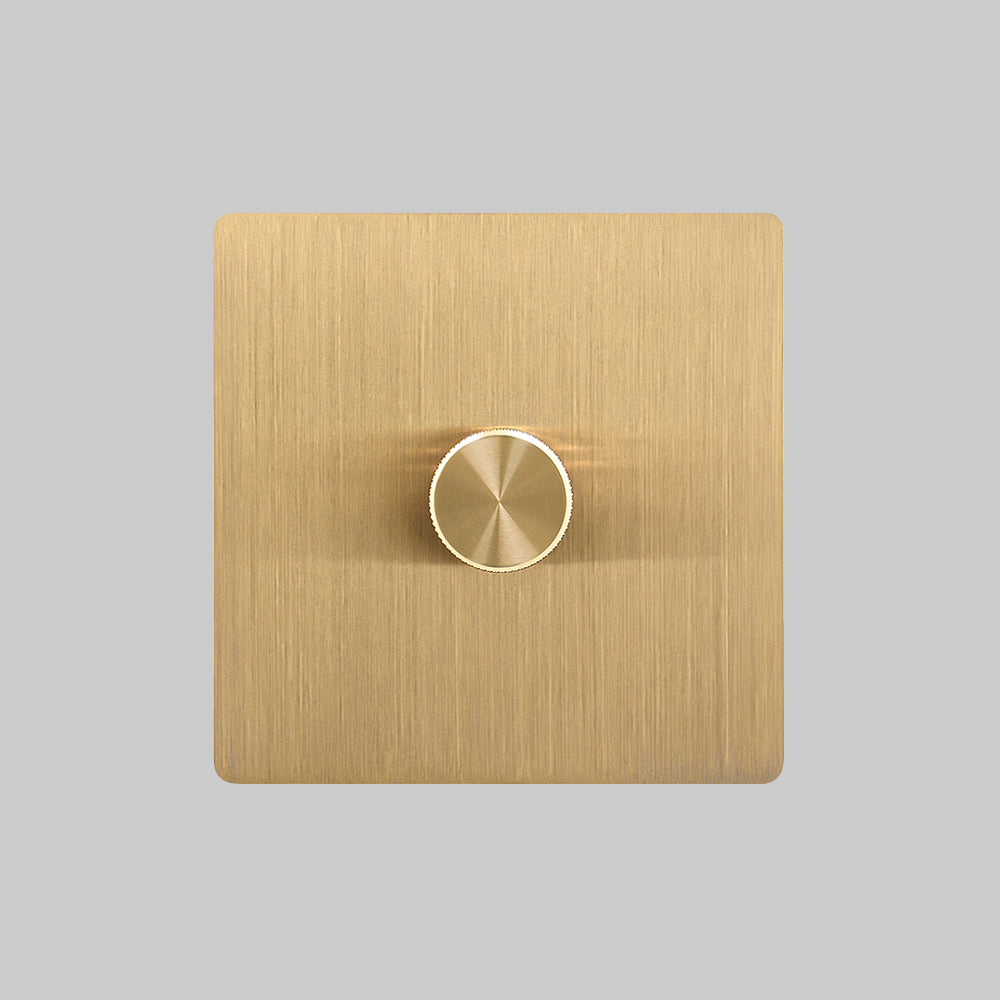
Yes. Modern UK dimmer switches, including Repenic models, are designed to work without a neutral wire, making them ideal for older UK homes where neutral is not available at the light switch. This simplifies installation and avoids costly rewiring.
One of the biggest installation challenges in UK home renovations is the lack of a neutral wire at light switch locations. Many older homes were wired with only live, earth, and switch wires—no neutral. This made installing certain smart or electronic dimmers impossible, forcing homeowners to either rewire at great expense or accept outdated dimming technology.
Repenic's LED-compatible dimmer switches are engineered to operate without a neutral wire, drawing minimal power from the load itself to stay active. This means you can upgrade to a modern, flicker-free trailing edge dimmer without any rewiring. Simply switch out your old dimmer for a Repenic RD-250 or RD-400, and you're done—no electrician call-backs for cable upgrades.
This no-neutral design also applies to Repenic's Zigbee Smart Dimmers, which offer full smart home integration (compatible with Zigbee 3.0 platforms like Homey and Hubitat) while maintaining the same simple installation. You get cutting-edge LED dimming technology and smart control without the rewiring headache.
How Do You Set Up Multiway Dimming for LEDs in Hallways or Landings?
Use Repenic's Multiway Dimmer (RD-MP) paired with dummy dimmers at secondary locations. Up to 5 units can be wired on the same circuit, allowing dimming control from multiple points without complex intermediate wiring or additional neutral cables.
Multiway lighting—controlling the same light from two or more locations (e.g., hallway, landing, bedroom entrance)—is common in UK homes. Traditional multiway setups require intermediate switches and complex wiring. With Repenic's Multiway Dimmer system, you get full dimming control from every switch location, making it ideal for renovations.
How the System Works:
The Repenic Multiway Dimmer (RD-MP) acts as the primary control point and allows up to 4 additional Multiway Dimmers or dummy dimmers to be wired on the same circuit. Each unit can dim the LEDs independently, and all switches communicate seamlessly. The total load on the circuit must be at least 15W (easily met by modern dimmable LEDs), and the maximum wire distance from dimmer to light is 50 meters.
For aesthetic uniformity, pair the RD-MP with Repenic Dummy Dimmers in solid brass, black steel, or white steel finishes. The dummy dimmers feature the same iconic rotary knob design as the main dimmer, creating a cohesive look across a multi-gang panel while functioning as secondary on/off or dimming controls.
Installation Tip: In the same circuit, the RD-MP can only be used with other RD-MP units or the Zigbee Smart Dimmer (RD-250ZG). Do not mix with other switch or dimmer types, as this will cause wiring conflicts.
What Makes Repenic Dimmers Ideal for Dimmable LEDs in Renovations?
Repenic dimmers combine trailing/leading edge flexibility, BOOST mode for low-level LED stabilization, programmable min/max brightness to eliminate flicker, and premium materials (solid brass, stainless steel) that match high-end renovation aesthetics. All fit standard 25mm UK back boxes, require no neutral, and carry a 5-year warranty.
Renovating a kitchen, living room, or hallway lighting in a UK home demands more than just a functional dimmer—it requires reliability, aesthetics, and compatibility with modern LED systems. Repenic dimmers are purpose-built for this challenge.
Key Features for LED Compatibility:
BOOST Mode: This intelligent feature automatically detects when an LED is struggling to illuminate at very low brightness levels and provides a controlled power boost to stabilize it. This prevents the flickering and dropout that plague older dimmers with modern LEDs. Once you release the dimmer knob, BOOST mode disengages, and the LED returns to your desired brightness level.
Programmable Minimum and Maximum Brightness: You set the lowest brightness level your LEDs can safely operate at (typically 1–50% on Repenic dimmers) and the highest level before flicker occurs. The dimmer automatically constrains brightness within this safe window, protecting both the LEDs and the driver from stress.
Auto-Adjust Maximum Brightness: Repenic dimmers monitor your LED load and automatically adjust the maximum brightness threshold to prevent flickering caused by high-wattage surges. This is especially useful in multi-gang setups where load varies.
Soft Start Technology: When you turn on the lights, Repenic dimmers gradually ramp up power rather than applying full voltage instantly. This protects LED drivers and extends bulb lifespan by reducing thermal stress.
Premium Materials and UK Design: Available in 100% solid brushed brass, solid brushed stainless steel, and white steel finishes, Repenic dimmers complement luxury renovations while delivering professional-grade performance. All models fit standard UK 25mm back boxes and are compatible with MK, BG, DETA, Hager, Hamilton, Crabtree, Schneider, and Wandsworth grid systems—covering virtually every UK home.
Safety and Warranty: Every Repenic dimmer is V0 fire-rated, built with six layers of intelligent protection against surges and overloads, and backed by a 5-year warranty. Installation must be carried out by a qualified electrician per UK Building Regulations.
Which Repenic Dimmer Models Support the Highest LED Loads (Up to 400W)?
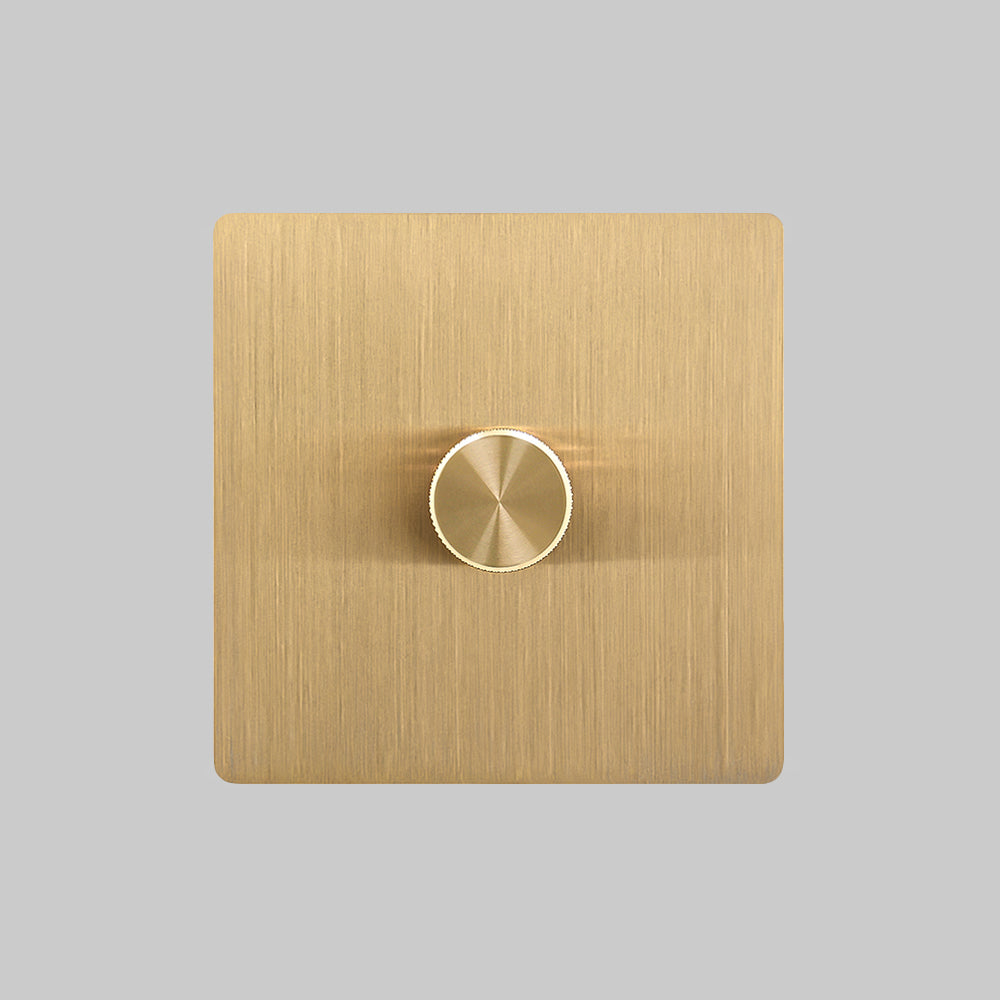
The Repenic RD-400 dimmer supports LED loads from 5–400W, making it ideal for large multi-gang installations or high-load commercial spaces. The RD-250 covers 5–250W and is sufficient for most residential renovations. Both are available in 1, 2, 3, and 4 Gang configurations with de-rating for multi-gang setups.
Choosing the right wattage rating is crucial for reliable dimming performance. Repenic offers two primary dimmer models to cover different installation scenarios:
| Model | LED Load Range | Halogen/Incandescent | 1 Gang (Max) | 2 Gang (Max) | 3 Gang (Max) | 4 Gang (Max) | Best For |
|---|---|---|---|---|---|---|---|
| RD-250 | 5–250W (R,C) | 5–250W | 250W | 212W | 175W | 125W | Most residential kitchens, living rooms, bedrooms; standard renovations |
| RD-400 | 5–400W (R,C) | 5–400W | 400W | 340W | 280W | 200W | Large open-plan spaces, commercial installations, high-load multi-gang panels |
Understanding De-Rating: When multiple dimmers are installed in the same gang box (e.g., a 2-gang or 3-gang plate), the maximum load each dimmer can handle is reduced. This is called de-rating and prevents excessive heat buildup in the confined space. For example, an RD-250 in a 2-gang configuration can handle a maximum of 212W per dimmer, not the full 250W. Always account for de-rating when specifying dimmers for multi-gang installations.
For most UK residential renovations—a kitchen with under-cabinet and pendant lighting, a living room with ceiling and wall lights, or a bedroom with bedside and overhead dimming—the RD-250 is more than adequate. The RD-400 is reserved for larger spaces, whole-floor installations, or commercial applications where total LED load exceeds 250W per dimmer.
How Does BOOST Mode and Programmable Brightness Fix LED Dimming Issues?
BOOST mode provides an automatic power surge when LEDs fail to illuminate at very low brightness, preventing dropout and flicker. Programmable minimum/maximum brightness settings constrain the dimming range to safe operating limits for your specific LEDs, eliminating instability across the full 0–100% range.
Many homeowners experience frustration when upgrading to dimmable LEDs: the lights either flicker at low levels, won't dim below a certain point, or buzz audibly. These issues stem from a mismatch between the dimmer's operating range and the LED driver's tolerance window. Repenic's BOOST and programmable brightness features solve this by creating a custom "safe zone" for your lighting.
How BOOST Mode Works: When you dim the lights very low (typically below 20% brightness), the LED driver may struggle to maintain stable current. BOOST mode detects this struggle and automatically injects a brief, controlled power pulse to stabilize the LED. You won't see the pulse; it happens in milliseconds. The result is smooth, flicker-free dimming all the way down to your programmed minimum brightness level. Once you stop adjusting the dimmer, BOOST mode disengages and returns to normal operation.
How Programmable Minimum Brightness Works: Using the setup button on the back of a Repenic dimmer, you can set the lowest brightness level your LEDs should reach. For example, if your LEDs start to flicker below 15% brightness, you program the minimum to 15%. Now, when you dim the lights, they will never go below that threshold, eliminating flicker entirely. Similarly, you can set a maximum brightness level to prevent overshooting and causing the driver to overheat.
Real-World Example: A kitchen renovation with 12 dimmable LED spotlights (each 4W) may flicker when dimmed below 30% because the total load drops to 1.2W—below the dimmer's stable operating range. By enabling BOOST mode and setting the programmable minimum to 30%, the dimmer automatically prevents the load from dropping below safe levels, and the lights dim smoothly without any flicker.
Repenic Expert Views: "LED dimming failures in UK homes are almost never due to the LEDs themselves—they're due to the dimmer not being designed for modern LED drivers. When we engineered Repenic dimmers, we started with the question: 'What do real LED installations need?' The answer was BOOST mode for stubborn low-level dimming, programmable brightness limits to match each customer's specific LEDs, and trailing edge technology that works from 5W upwards. We also built in auto-return-to-previous-brightness, so your lights remember your preferred setting even after a power cut. These aren't luxury features; they're essentials for flicker-free, reliable dimming in 2026 UK homes. Combined with our solid brass and stainless steel finishes and multi-way capabilities, Repenic dimmers turn LED dimming from a frustration into an invisible part of your home's lighting experience."
Conclusion
Check: can you dim led lights
Yes, you can absolutely dim LED lights in the UK—but only if you choose dimmable LEDs and pair them with a compatible dimmer designed for modern LED drivers. The key to flicker-free, reliable performance is understanding the difference between trailing and leading edge dimmers, recognizing the critical role of the LED driver, and selecting a dimmer with features like BOOST mode and programmable brightness to handle the unique demands of low-wattage LEDs.
Repenic dimmers are purpose-built for this challenge, offering trailing/leading edge flexibility, intelligent BOOST mode, programmable min/max brightness, and premium materials that elevate any UK home renovation. With no neutral wire required, compatibility with all major UK grid systems, and a 5-year warranty, they represent the gold standard for residential LED dimming.
Whether you're upgrading a single room or managing a full-home renovation, the investment in a quality LED-compatible dimmer pays dividends in ambiance, energy savings, and the peace of mind that comes from flicker-free lighting that simply works.
Frequently Asked Questions
Q: Can I use my old incandescent dimmer with new dimmable LED bulbs?
A: Not reliably. Old incandescent dimmers (leading edge/TRIAC) were designed for high-wattage bulbs and often cause flickering or buzzing with low-wattage LEDs. Upgrading to a trailing edge dimmer like Repenic's RD-250 or RD-400 eliminates these issues and is the recommended solution.
Q: Do all dimmable LED bulbs work with all dimmers?
A: No. Dimmable LED bulbs must be paired with a compatible dimmer type. Always check the LED bulb's packaging to confirm which dimmer types are recommended. Repenic dimmers work with all standard dimmable LEDs rated for trailing or leading edge dimming.
Q: What's the minimum LED load a Repenic dimmer can handle?
A: Repenic dimmers are engineered to work reliably with LED loads as low as 5W, making them ideal for modern energy-efficient lighting. This is significantly lower than older dimmers, which typically require 40–60W minimum.
Q: Do I need a neutral wire to install a Repenic dimmer?
A: No. Repenic dimmers are designed to work without a neutral wire, which is ideal for older UK homes where neutral is not available at light switch locations. This eliminates costly rewiring during renovations.
Q: Can Repenic dimmers control lights from multiple locations (e.g., hallway and landing)?
A: Yes. The Repenic Multiway Dimmer (RD-MP) supports up to 5 units on the same circuit, allowing dimming control from multiple points. Pair it with Repenic Dummy Dimmers for a cohesive, multi-gang aesthetic.