
Lights on dimmer flicker mainly due to incompatible LEDs, wrong dimming type (use trailing edge for LEDs), low load, or loose wiring. Fix by checking dimmable bulbs, adjusting minimum brightness, or upgrading to Repenic dimmers with BOOST mode, programmable limits, and MOSFET tech—no neutral needed for UK homes.
Check: dimmer switch
Why Do Lights Flicker on Dimmer Switches?
Flickering occurs when the dimmer and bulb cannot communicate electrically, causing unstable current flow. Modern LED bulbs behave very differently from the incandescent bulbs that older dimmers were designed for. When voltage drops unpredictably or the dimmer's load falls below its minimum threshold, LEDs struggle to maintain stable illumination, resulting in visible flicker or buzzing noise from the switch itself.
This is one of the most common lighting complaints in UK homes, particularly during renovations when homeowners upgrade to energy-efficient LEDs but keep older dimmer switches. The good news is that flickering is almost always fixable through troubleshooting or a straightforward dimmer upgrade.
What Causes LED Lights to Flicker on Dimmers?
LED flicker stems from five main causes: incompatible dimmers, low load conditions, poor-quality bulbs, wiring faults, and interference from other devices on the circuit. Understanding which factor is at play helps you target the right solution quickly.
Incompatible dimmer switches designed for incandescent bulbs lack the electronics needed to regulate LED current properly. LEDs require constant, stable voltage—something older phase-cut dimmers (especially leading-edge types) cannot always deliver. Low load conditions occur when you have too few bulbs or low-wattage LEDs on a circuit; many dimmers need a minimum load (often 40–100W) to function correctly. Poor-quality LED bulbs contain cheap drivers that cannot handle voltage fluctuations, amplifying flicker even on compatible dimmers. Loose wiring connections interrupt current flow, and missing neutral wires—common in older UK properties—can destabilise LED loads. Finally, electromagnetic interference from nearby devices can trigger sporadic flickering.
In UK homes, the absence of a neutral wire in older installations is a frequent culprit, which is why modern dimmers designed without neutral requirements (like Repenic's range) have become essential for seamless retrofits.
Is It Leading Edge or Trailing Edge Dimming Causing Flicker?
Trailing-edge dimmers are far superior for LEDs; leading-edge dimmers often cause flicker because they chop voltage at the start of the AC cycle, destabilising LED drivers. Understanding the difference is key to choosing the right dimmer.
Leading-edge dimmers (also called forward-phase dimmers) cut voltage at the beginning of each AC cycle. This works well for resistive loads like incandescent bulbs but creates electrical noise and instability for LEDs, leading to buzzing and flicker. Trailing-edge dimmers (reverse-phase) cut voltage at the end of the cycle, providing smoother, more controlled power delivery—ideal for LED drivers. Trailing-edge dimmers are more sophisticated and expensive but deliver the flicker-free performance that modern LED installations demand.
When upgrading your dimmer, always specify trailing-edge compatibility or ensure the dimmer supports both modes and defaults to trailing-edge for LEDs. Repenic dimmers support both trailing and leading-edge modes, with trailing-edge as the default—a critical feature for UK homes transitioning to LED lighting.
Why Do Lights Flicker at Low Dimmer Levels?
At low brightness, LED drivers struggle to regulate current because voltage has dropped so far that the driver cannot maintain stable output, causing visible flicker. This is the most frustrating scenario for homeowners: lights work fine at full brightness but flicker annoyingly when dimmed down.
The root cause is that most standard dimmers were designed assuming a minimum load of 40–100W. Below that threshold, the dimmer's circuitry cannot function reliably. With LEDs consuming only 5–15W per bulb, you can easily fall below this minimum, especially in single-bulb rooms. Additionally, cheap LED drivers lack the sophistication to handle the reduced voltage that trailing-edge dimmers deliver at low levels.
The solution involves three approaches: (1) adjust the dimmer's minimum brightness setting upward to avoid the unstable zone, (2) use the BOOST mode feature found on modern dimmers like Repenic's range, which temporarily increases voltage to help LEDs ignite at low levels, or (3) upgrade to high-quality dimmable LEDs with advanced drivers. Repenic dimmers include programmable minimum brightness (1–50% range) and BOOST mode specifically to solve this problem without requiring neutral wires or complex rewiring.
How Does Dimmer Overload Cause Flickering?
Overloading occurs when total bulb wattage exceeds the dimmer's rated capacity, causing the dimmer to cut out or flicker as a safety protection. This is less common than under-load issues but equally important to check.
Every dimmer has a maximum wattage rating. For example, Repenic's 250W dimmers handle up to 250W of incandescent or halogen load, but LED loads are de-rated lower due to their different electrical characteristics. In multi-gang installations (2-gang, 3-gang, or 4-gang), the per-gang limit drops further. If you exceed the rated load, the dimmer's thermal protection activates, reducing brightness or causing flicker to prevent overheating.
| Installation Type | Repenic RD-250 LED Load (R,C) | Repenic RD-400 LED Load (R,C) |
|---|---|---|
| 1-Gang | 250W | 400W |
| 2-Gang | 212W | 340W |
| 3-Gang | 175W | 280W |
| 4-Gang | 125W | 200W |
| 5-Gang | 75W | 120W |
To avoid overload flicker, calculate your total LED wattage (bulbs × watts per bulb) and ensure it stays within your dimmer's rating for your installation type. If you're close to the limit, consider upgrading to a higher-capacity dimmer like Repenic's 400W option, which provides headroom for future bulb additions.
Can Loose Wiring Make Dimmer Lights Flicker?
Yes, loose connections interrupt current flow and cause intermittent flicker or complete blackouts. Wiring faults are a common but easily overlooked cause, particularly in older installations.
Loose terminal connections at the dimmer switch, light fitting, or junction box create micro-interruptions in the electrical circuit. These appear as rapid flickering or strobing, often worse when you touch or move the switch. Poor-quality or corroded wire connections introduce electrical resistance, destabilising voltage delivery to LEDs. In older UK homes, missing neutral wires are another wiring issue: many properties pre-date neutral-wire standards, making it impossible to use certain dimmers. This is why Repenic dimmers are engineered to work without a neutral wire—a crucial advantage for UK retrofit projects.
To diagnose wiring issues, check that all terminal screws on your dimmer are tight (use a small screwdriver and apply firm, even pressure). If flicker persists and you suspect deeper wiring problems—such as missing neutrals or corroded connections—consult a qualified electrician. Never attempt complex rewiring yourself; UK electrical work must comply with Building Regulations and should be certified by a professional.
Why Do Older Dimmers Flicker with Modern LEDs?
Older dimmers were engineered for incandescent bulbs' resistive loads and cannot regulate the complex electronic drivers inside modern LEDs, causing incompatibility and flicker. This generational mismatch is the primary reason flickering has become so common as homes upgrade to LEDs.
Incandescent bulbs are simple resistors: they consume power proportionally to voltage. Older dimmers exploit this by cutting the AC voltage waveform (phase-cut control), and the bulb naturally dims. LEDs, by contrast, contain sophisticated electronic drivers that expect stable voltage. When an old dimmer delivers chopped, unstable voltage, the LED driver cannot maintain consistent current, resulting in visible flicker or complete failure to dim smoothly.
Additionally, older dimmers often lack the minimum load tolerance that modern LED circuits demand. A dimmer designed for 40W incandescent bulbs expects at least that load to function; a single 5W LED falls far short, triggering flicker or non-operation. Modern dimmers like Repenic's range include high-speed chipsets and tuned MOSFETs that actively regulate current in real-time, adjusting for LED driver characteristics and low loads automatically. This is why upgrading to an LED-compatible dimmer is almost always the most reliable fix.
How Can Repenic Dimmers Stop Lights Flickering?
Repenic dimmers eliminate flicker through trailing-edge dimming, programmable minimum brightness, BOOST mode, and MOSFET-based real-time current regulation—all without requiring a neutral wire. Here's how Repenic's engineering solves the problem:
Trailing-edge dimming is the default mode on all Repenic dimmers, providing smooth, stable voltage delivery ideal for LED drivers. Programmable minimum brightness (1–50% range) lets you adjust where the dimmer operates, avoiding the unstable low-voltage zone that triggers flicker. BOOST mode temporarily increases voltage during low-level dimming to help LED drivers initialise without flicker—solving the "won't dim below 50%" problem that frustrates many homeowners.
High-speed chipsets and tuned MOSFETs monitor current in real-time, automatically adjusting to match your LED load. This active regulation means Repenic dimmers adapt to whatever bulbs you install, whether cheap or premium LEDs. No neutral wire requirement is crucial for UK homes: older properties often lack neutral wires in dimmer circuits, making retrofit impossible with standard dimmers. Repenic dimmers work in these scenarios, eliminating the need for costly rewiring.
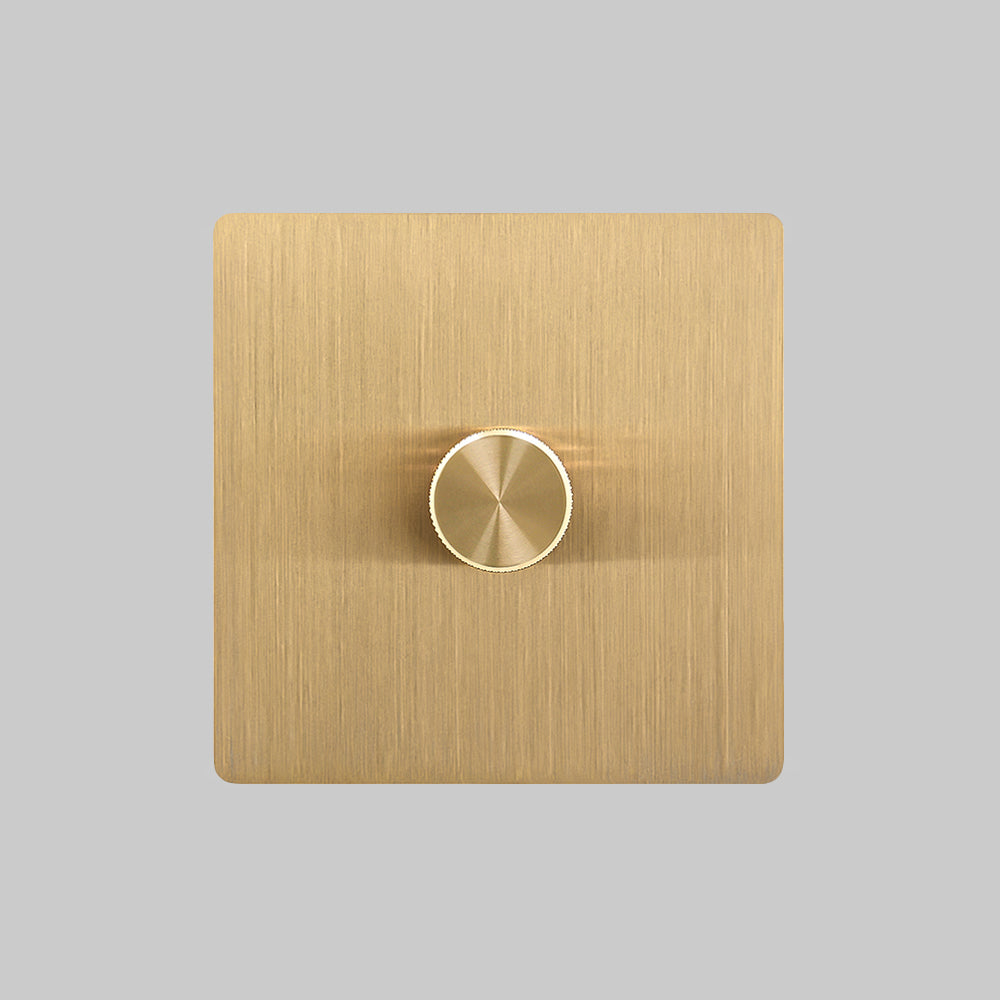
Repenic offers multiple ranges to suit your needs: the Dimmer Switch series (Black Steel, Solid Brass, White Steel, 250W/400W) for manual control with premium materials and flicker-free performance; the Smart Dimmer series (Zigbee 3.0) for Google Home and smart home integration with energy monitoring and advanced scheduling; and Dummy Dimmer companions (Brass and Steel) for multi-location 2-way or 3-way control without smart features. All are grid-compatible with MK, BG, DETA, Hager, Hamilton, Crabtree, Schneider, and Wandsworth systems—covering virtually all UK installations.
| Repenic Dimmer Type | LED Load (R,C) | Key Feature | Best For |
|---|---|---|---|
| Dimmer Switch (250W) | 5–250W | Programmable min/max, BOOST mode, trailing/leading edge | Single-location manual control, budget-conscious upgrades |
| Dimmer Switch (400W) | 5–400W | Higher capacity, same anti-flicker features | High-load rooms, future-proofing |
| Smart Dimmer (Zigbee 3.0) | 5–250W | Google Home integration, energy monitoring, OTA updates | Tech-forward homeowners, smart home ecosystems |
| Dummy Dimmer (Brass/Steel) | 6A (switch only) | Mechanical 2-way/intermediate control, matches dimmer aesthetics | Multi-location setups paired with Repenic dimmers |
All Repenic dimmers feature V0 fire-rated materials, 6-layer safety protection, and a 5-year warranty—exceeding UK electrical standards. Installation requires a qualified electrician and compliance with Building Regulations, but the process is straightforward, especially since no neutral wire is needed.
When Should You Replace a Flickering Dimmer Switch?
Replace your dimmer if flicker persists after checking bulb quality, wiring connections, and load conditions, or if your dimmer is 10+ years old and incompatible with LEDs. Here's a practical decision tree:
Keep your dimmer if: Flicker only appears occasionally, occurs only with one bulb (which might be faulty), or stops after tightening terminal connections. In these cases, the dimmer itself is likely sound.
Replace your dimmer if: Flicker happens consistently across multiple bulbs, occurs at specific brightness levels (especially low dimming), or is accompanied by buzzing noise from the switch. These are signs of fundamental incompatibility or age-related wear. Additionally, if your dimmer is older than 10 years and lacks LED-specific features (like BOOST mode or programmable minimum brightness), upgrading will almost certainly solve the problem.
Consider upgrading to a Smart Dimmer if: You want Google Home voice control, energy monitoring, or automated lighting scenes. Repenic's Zigbee dimmers integrate seamlessly with smart home platforms, adding convenience and efficiency alongside flicker-free performance.
Installation should always be carried out by a qualified electrician registered with a UK competent person scheme (such as NICEIC, ELECSA, or BSI). This ensures compliance with Building Regulations and gives you peace of mind that the work is safe and certified.
Repenic Expert Views
""Flickering LED dimmer lights frustrate countless UK homeowners, but the solution is almost always straightforward: pairing the right components. At Repenic, we've engineered our entire dimmer range—from manual Dimmer Switches to Zigbee Smart Dimmers—to solve LED incompatibility at its root. Our trailing-edge default, programmable minimum brightness, and BOOST mode eliminate flicker across low, medium, and high dimming levels. Critically, all Repenic dimmers work without neutral wires, a game-changer for older UK homes where neutral wires are absent or inaccessible. We combine premium materials—solid brass and stainless steel faceplates—with intelligent MOSFET-based current regulation and V0 fire-rated safety, ensuring your lighting is both beautiful and reliable. Whether you're upgrading a single room or managing a full renovation, Repenic provides the confidence that your lights will perform flawlessly, every time."
— Repenic Lighting Specialist
Conclusion
Check: lights on dimmer flicker
Flickering lights on dimmer switches are a common but entirely solvable problem in UK homes. The cause usually lies in one of five areas: incompatible dimmers, low load conditions, poor-quality bulbs, wiring faults, or the wrong dimming type (leading-edge instead of trailing-edge). Troubleshooting is straightforward—check your bulbs and connections first—but upgrading to a modern, LED-compatible dimmer is the most reliable permanent fix.
Repenic dimmers are engineered specifically for UK homes, eliminating flicker through trailing-edge dimming, programmable brightness controls, BOOST mode, and real-time MOSFET regulation. Crucially, they work without neutral wires, making them ideal for retrofit projects in older properties. Whether you choose a manual Dimmer Switch or a smart Zigbee model, you'll enjoy flicker-free dimming, premium build quality, and the confidence of a 5-year warranty backed by UK electrical safety standards.
If flickering persists after basic troubleshooting, or if your dimmer is aging and incompatible with LEDs, contact a qualified electrician to discuss upgrading to Repenic. Your lights will thank you.
Frequently Asked Questions
Why do my LED lights flicker only when dimmed low?
LED drivers struggle to regulate current at very low voltages. Standard dimmers deliver reduced voltage that destabilises the driver, causing flicker. Repenic dimmers solve this with programmable minimum brightness and BOOST mode, maintaining stable current even at low levels without requiring a neutral wire.
Can I fix flickering without replacing my dimmer?
Sometimes. Try tightening terminal connections, checking that bulbs are dimmable-rated, and confirming your total wattage doesn't exceed the dimmer's limit. If flicker persists across multiple bulbs, upgrading to an LED-compatible dimmer like Repenic's range is the most reliable solution.
What's the difference between trailing-edge and leading-edge dimmers?
Trailing-edge dimmers cut voltage at the end of the AC cycle, providing smooth, stable power ideal for LEDs. Leading-edge dimmers cut at the start, creating electrical noise and instability that triggers LED flicker. Always choose trailing-edge for LEDs; Repenic dimmers default to trailing-edge mode.
Do I need a neutral wire for a Repenic dimmer?
No. All Repenic dimmers are engineered to work without a neutral wire, making them perfect for older UK homes where neutral wires are absent or inaccessible. This eliminates costly rewiring during renovations.
Will a Repenic dimmer work with my existing light fittings and grid system?
Yes. Repenic dimmers are compatible with all major UK grid systems (MK, BG, DETA, Hager, Hamilton, Crabtree, Schneider, Wandsworth) and fit standard 25mm back boxes. Installation by a qualified electrician ensures seamless integration with your existing wiring and fittings.