
Toggle switches provide firm mechanical feedback with a satisfying "click," ideal for UK renovations, while rockers offer smooth pressing but less tactile precision. Repenic's rotary knob dimmers (brass/steel, 5-250W) excel with knurled grips, no-neutral wiring, Zigbee multi-way control, and 25mm box fit for LED lights on MK/BG grids—perfect upgrade over rockers.
Check: Dummy dimmer - Solid brass 1/2/3/4 Gang
What Is a Toggle Light Switch and How Does It Differ from Rocker?
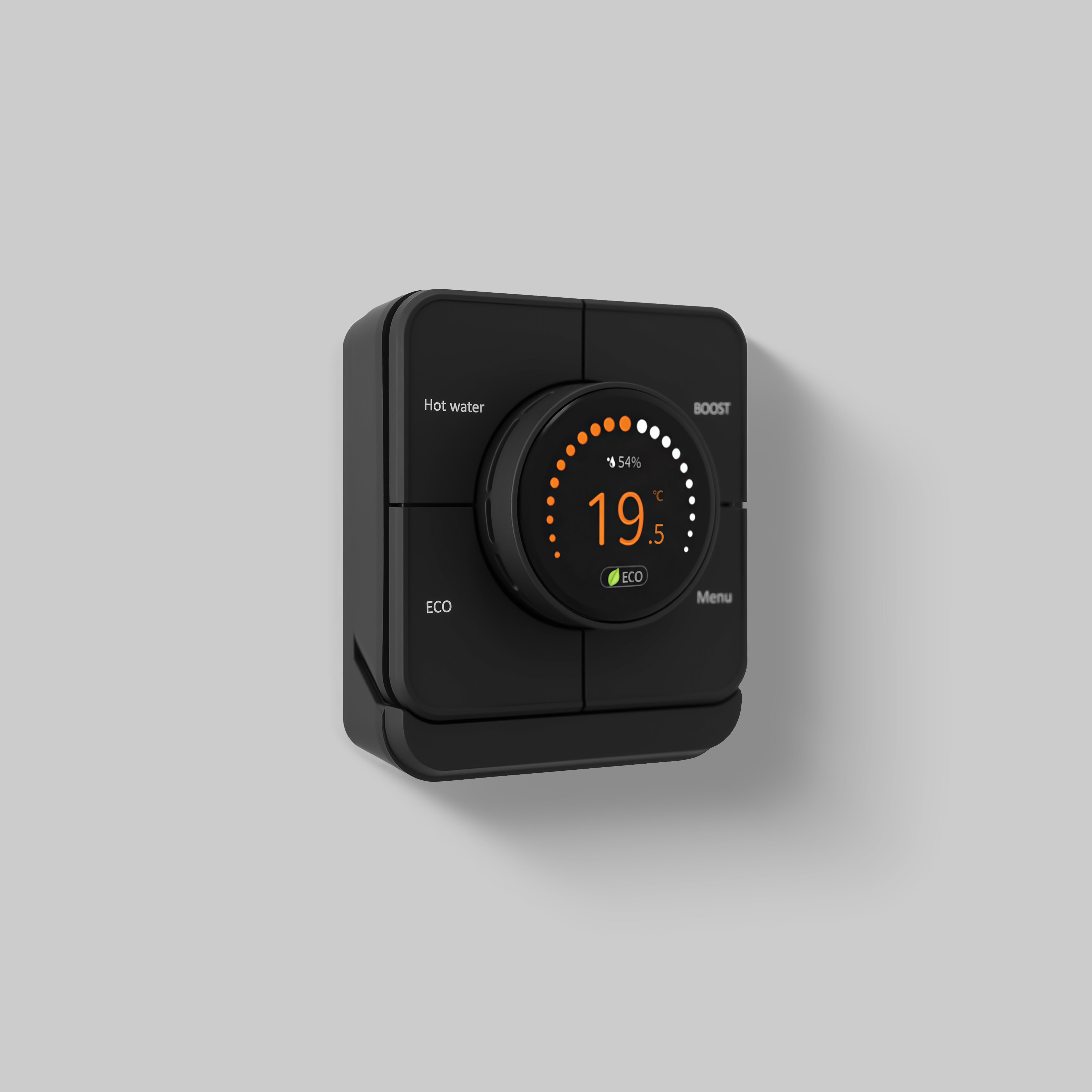
Toggle switches feature a protruding lever that flips up and down with firm mechanical action, delivering strong tactile feedback. Rocker switches have a flat panel that rocks back and forth with a gentle press, offering smooth operation but minimal tactile cues. Toggles suit traditional and industrial aesthetics; rockers favour modern, minimalist design.
The distinction between these two switch types runs deeper than appearance. Toggle switches operate with a distinct up-and-down lever motion, requiring deliberate finger action to engage the switch. This mechanical design creates a pronounced "click" or "snap" feeling—users can sense precisely when the circuit engages or disengages without looking. The lever protrudes from the faceplate, making it immediately obvious whether the switch is in the "on" or "off" position.
Rocker switches, by contrast, feature a flat panel that rocks over a central pivot point. Pressing one side activates the circuit; pressing the other deactivates it. The action is smooth and requires minimal effort—ideal for those with limited mobility or when hands are full. However, this ease of use comes at the cost of tactile feedback; users may need visual confirmation (illuminated indicators, labelling) to confirm the switch state.
In UK homes, toggle switches have historically dominated traditional properties, lending warmth and character to period properties and vintage-inspired interiors. Rocker switches have gained popularity in modern renovations for their sleek, integrated appearance and ergonomic design. The choice often reflects both functional preference and aesthetic alignment with your home's style.
Why Do Toggle Switches Offer Better Tactile Feedback in UK Homes?
Toggle switches deliver superior tactile feedback through their mechanical lever action, which produces a definite "click" and firm resistance. This allows users to sense switch engagement by feel alone—critical in hallways, bedrooms, or when hands are occupied. The robust mechanical design is particularly valued in UK homes where multi-way setups require reliable, intuitive control across multiple locations.
Tactile feedback is the physical sensation you experience when operating a switch. With toggle switches, this feedback is pronounced: the lever resists slightly as you move it, then "snaps" into position with an audible click. This mechanical certainty means you know immediately—without glancing at the switch—whether you've successfully turned the light on or off. For UK homeowners, this is invaluable in dimly lit hallways, stairwells, or bedrooms where visual confirmation isn't always practical.
The lever design also provides ergonomic advantages. Because you're gripping and flipping a protruding lever, you have greater control and can operate the switch with precision, even when wearing gloves or carrying items. The mechanical resistance prevents accidental activation—a concern in busy family homes or commercial settings where switches might be bumped.
Rocker switches, by contrast, require only a gentle press with minimal resistance. While this suits users with arthritis or reduced hand strength, it offers little tactile confirmation. Many users report uncertainty about whether they've successfully activated the switch, necessitating a glance or a second press. In multi-gang installations common in UK kitchens and bathrooms, this ambiguity can be frustrating.
For electricians and trade professionals installing multi-way setups in UK homes, toggle-style controls—particularly Repenic's rotary knob dimmers with knurled brass or steel finishes—provide the mechanical precision required for reliable, intuitive operation across multiple switching locations. The knurled texture of premium metal knobs further enhances grip and tactile confidence.
Which Toggle Style Wins for UK Renovations: Rotary or Traditional?
Rotary knob dimmers are winning UK renovations over traditional flip-levers because they combine superior tactile control with modern LED dimming capabilities and smart home integration. Rotary designs fit standard 25mm back boxes, work without neutral wiring, and offer premium brass/steel finishes matching contemporary UK interiors—advantages traditional toggles cannot match.
During UK home renovations, electricians and homeowners face a choice: restore traditional flip-lever toggles or upgrade to modern rotary dimmers. The rotary approach is increasingly favoured for several compelling reasons.
Traditional flip-lever toggles deliver authentic mechanical feedback and suit period properties perfectly. However, they lack dimming capability and cannot integrate with smart home systems like Google Home or Zigbee platforms. In a 2026 renovation context—where LED retrofits and smart lighting are standard expectations—traditional toggles feel functionally limited.
Rotary knob dimmers represent the evolution of toggle-style switching. They preserve the firm, mechanical tactile experience (especially models with knurled brass or steel knobs) while adding sophisticated functionality. Repenic's rotary dimmers, for example, offer 5-250W or 400W LED compatibility, programmable brightness levels, and Zigbee 3.0 smart control—all in a compact form factor fitting UK grids like MK, BG, DETA, and Hager without requiring a neutral wire.
For multi-gang setups in kitchens and bathrooms—common renovation focal points—rotary dimmers excel. Repenic's 2, 3, and 4-gang configurations maintain consistent knurled knob aesthetics across the panel, creating a cohesive, premium appearance. The rotary action provides the same satisfying mechanical feedback as traditional toggles, but with modern efficiency and control. This hybrid approach wins renovations because it respects UK aesthetic preferences while delivering 21st-century functionality.
How Do Toggle Dimmers Handle LED Loads Without Flickering?
Modern toggle-style rotary dimmers use high-speed chipsets and tuned MOSFETs to eliminate flickering when dimming LED bulbs. Repenic's dimmers feature programmable minimum brightness settings, auto-adjust maximum brightness, and BOOST mode to ensure even stubborn LEDs illuminate smoothly across the full 0-100% range without buzzing or flicker.
LED dimming is notoriously challenging. Unlike traditional incandescent or halogen bulbs, LEDs require precise electronic control to dim smoothly. Incompatible dimmers often cause flickering, buzzing, or failure to dim below a certain threshold—frustrating issues in UK homes where LED retrofits are now standard.
Toggle-style rotary dimmers address this through advanced electronics. Repenic's range, for instance, incorporates a high-speed chipset and tuned MOSFET technology that communicates with LED drivers in real-time. This ensures smooth, flicker-free dimming across the entire 0-100% brightness range. The dimmers support both trailing-edge and leading-edge dimming modes, adapting to different LED types and driver configurations.
Additional features enhance LED performance. Programmable minimum brightness (set between 1-50%) prevents the "dead zone" where LEDs won't illuminate at very low levels. If a bulb refuses to light at low brightness, BOOST mode automatically compensates, gradually increasing voltage until the LED activates smoothly. Auto-adjust maximum brightness prevents flickering at high levels by limiting the dimming signal when necessary.
Rocker switches, by comparison, typically offer binary on/off control without dimming capability. If dimming is desired, users must purchase separate rocker dimmers—a less cohesive solution than integrated rotary dimmer controls, particularly in multi-gang UK installations where aesthetic consistency matters.
Can Toggle Switches Fit Standard 25mm UK Back Boxes Easily?
Yes, modern toggle-style rotary dimmers are specifically engineered for UK standards, fitting comfortably in standard 25mm back boxes (the minimum depth requirement). Repenic's rotary dimmers, compatible with MK, BG, DETA, Hager, and other leading UK grids, install seamlessly without requiring back box modifications or neutral wiring—a critical advantage during renovations.
UK building regulations mandate minimum back box depths of 25mm for electrical installations. This constraint has historically limited switch choices, particularly in older properties or tight renovation scenarios. However, modern toggle-style dimmers are designed with this limitation in mind.
Repenic's rotary dimmer range exemplifies this UK-centric engineering. The compact module design fits standard 25mm back boxes without modification, and the faceplate (available in solid brass, black steel, or white steel finishes) mounts flush with the wall surface. This compatibility extends across all major UK grid systems: MK, BG, DETA, Hager, Hamilton, Crabtree, Schneider, and Wandsworth. Whether your home features Victorian-era wiring or modern circuits, these dimmers integrate seamlessly.
An additional advantage is the no-neutral-wire requirement. Traditional UK homes often lack a neutral conductor at switch locations—a wiring limitation that complicates smart switch installation. Repenic's dimmers operate on live and switched-live connections alone, eliminating the need for costly re-wiring during renovations. This is particularly valuable in multi-gang setups where adding neutral lines would be prohibitively expensive.
Rocker switches, while also available in compact designs, do not typically offer the same level of UK-specific engineering. Many rocker options are designed for international markets and may require back box adapters or neutral wiring, adding installation complexity and cost.
What Makes Brass Knurled Toggle Dimmers Superior to Plastic Rockers?
Brass knurled toggle dimmers deliver premium tactile and aesthetic superiority: knurled brass knobs provide superior grip texture and mechanical feedback, solid brass faceplates age beautifully and resist corrosion, and the rotary action combines toggle-like precision with modern LED dimming. Plastic rockers lack this tactile richness and cannot match the longevity or design prestige of brass.
Material quality fundamentally separates premium switches from commodity products. Repenic's solid brass dimmer range exemplifies this distinction. Each unit features a 100% solid brushed brass faceplate and knurled brass knob—genuine metal, not plating. This construction delivers multiple benefits.
Tactile Experience: Knurled brass knobs have a textured surface that provides superior grip and mechanical feedback. As you rotate the knob to adjust brightness, the knurled texture engages your fingertips, enhancing the sense of control. This is fundamentally different from smooth plastic rocker buttons, which offer minimal tactile engagement.
Aesthetic Longevity: Brass ages gracefully, developing a natural patina over years that many homeowners find attractive. Unlike plastic, which can discolour, crack, or become brittle, solid brass improves with age. For UK homeowners investing in premium renovations, this longevity justifies the initial cost.
Durability and Corrosion Resistance: Brass resists oxidation and corrosion far better than painted steel or plastic. In kitchens and bathrooms—high-moisture environments—this durability is invaluable. Plastic rockers can degrade, discolour, or fail in humid conditions; brass dimmers maintain functionality and appearance indefinitely.
Design Integration: Brass finishes complement contemporary and traditional UK interiors equally. Whether your renovation embraces industrial minimalism or period authenticity, brass rotary dimmers integrate cohesively. Plastic rockers, by contrast, often appear utilitarian and dated within months.
Repenic's brass dimmers are available in 1, 2, 3, and 4-gang configurations, supporting 5-250W or 400W LED loads with trailing/leading-edge dimming. The premium construction justifies the investment for homeowners and professionals prioritising quality and longevity.
Are Zigbee Toggle Dimmers Compatible with Google Home in Multi-Way?
Yes, Repenic's Zigbee 3.0 smart rotary dimmers integrate seamlessly with Google Home and other Zigbee-compatible platforms. In multi-way setups, up to one smart dimmer can pair with two Repenic multiway dimmers on the same circuit, enabling remote control, scheduling, and voice commands while preserving tactile toggle-style operation from any location.
Smart home integration is increasingly expected in UK renovations. Homeowners want to control lights via smartphone, voice assistant, or automation routines alongside traditional switch operation. Zigbee 3.0 technology—an open-standard wireless protocol supported by Google Home, Amazon Alexa, and platforms like Homey and Hubitat—makes this possible without proprietary ecosystems.
Repenic's Zigbee 3.0 smart dimmer (RD-250ZG) is a rotary-knob-style unit that delivers this integration. It operates on 5-250W LED loads (or 5-100W resistive/inductive loads), supports trailing/leading-edge dimming, and requires no neutral wire—critical for UK installations. The knurled rotary knob preserves tactile feedback, so users can physically adjust brightness at the switch or remotely via Google Home commands.
For multi-way control—a common requirement in UK hallways, staircases, and open-plan kitchens—Repenic offers a sophisticated solution. Up to one smart dimmer (RD-250ZG) can operate on the same circuit with up to two Repenic multiway dimmers (RD-MP), enabling three-way or four-way control. Each location has a physical switch (preserving tactile operation), and the smart dimmer coordinates all units, allowing remote control from any location.
This multi-way Zigbee setup is unique to Repenic and represents a significant advantage over standard rocker switches, which typically require proprietary hubs or cannot support multi-location smart control without extensive re-wiring. For UK renovations targeting smart home integration, this capability is transformative.
Which Repenic Toggle Products Are Best for No-Neutral UK Wiring?
Check: How Can You Dim a Light Bulb Without a Traditional Dimmer Switch?
Repenic's entire rotary dimmer range operates without neutral wiring, making them ideal for UK homes lacking neutral at switch locations. The RD-250 (250W), RD-400 (400W), multiway RD-MP, and smart Zigbee RD-250ZG all function on live/switched-live connections alone, eliminating costly re-wiring during renovations while delivering premium tactile control and LED compatibility.
Many UK homes—particularly Victorian and Edwardian properties—were wired without neutral conductors at switch locations. This historical wiring limitation has historically restricted smart switch and dimmer options, forcing homeowners to choose between expensive re-wiring or accepting basic on/off control.
Repenic's design philosophy addresses this constraint directly. All rotary dimmer models operate without neutral wiring:
RD-250 (250W Standard Dimmer): Supports 5-250W LED (resistive/capacitive), 5-250W halogen, and 5-250W incandescent loads. Programmable minimum/maximum brightness, BOOST mode, and trailing/leading-edge dimming make it ideal for LED retrofits. Available in 1, 2, 3, or 4-gang configurations with solid brass, black steel, or white steel faceplates. No neutral required.
RD-400 (400W Standard Dimmer): Identical to the RD-250 but supports higher loads: 5-400W LED (resistive/capacitive) and 5-400W halogen. Suitable for larger rooms or multiple light circuits. Multi-gang de-rating applies (e.g., 2-gang = 340W, 3-gang = 280W). No neutral required.
RD-MP (Multiway Dimmer): Enables up to five units on the same circuit for sophisticated multi-location control. Supports 5-250W LED loads. Can integrate with one Zigbee smart dimmer (RD-250ZG) for remote control alongside physical tactile operation. No neutral required.
RD-250ZG (Zigbee 3.0 Smart Dimmer): The premium no-neutral option, combining rotary tactile control with Zigbee 3.0 smart integration. Supports 5-250W LED (resistive/capacitive) loads, pairs with Google Home and other Zigbee platforms, includes energy monitoring and OTA firmware updates, and can coordinate with up to two multiway dimmers for multi-location smart control. No neutral required.
All models are designed for UK grids (MK, BG, DETA, Hager, Hamilton, Crabtree, Schneider, Wandsworth) and fit standard 25mm back boxes. This no-neutral compatibility makes Repenic's range the pragmatic choice for UK renovations where re-wiring is impractical or cost-prohibitive.
| Repenic Model | Load Capacity | Dimming Modes | Smart Features | Neutral Required? | Best For |
|---|---|---|---|---|---|
| RD-250 | 5–250W LED / Halogen / Incandescent | Trailing / Leading Edge | None (manual) | No | Standard LED retrofits, single-location control |
| RD-400 | 5–400W LED / Halogen / Incandescent | Trailing / Leading Edge | None (manual) | No | High-load circuits, multi-light rooms |
| RD-MP | 5–250W LED (up to 5 units per circuit) | Trailing / Leading Edge | Compatible with RD-250ZG for smart control | No | Multi-way hallways, staircases, open-plan kitchens |
| RD-250ZG | 5–250W LED / 5–100W Resistive/Inductive | Trailing / Leading Edge | Zigbee 3.0, Google Home, energy monitoring, OTA updates | No | Smart home integration, premium multi-way setups |
How to Install Toggle Switches in Multi-Gang UK Setups Safely?
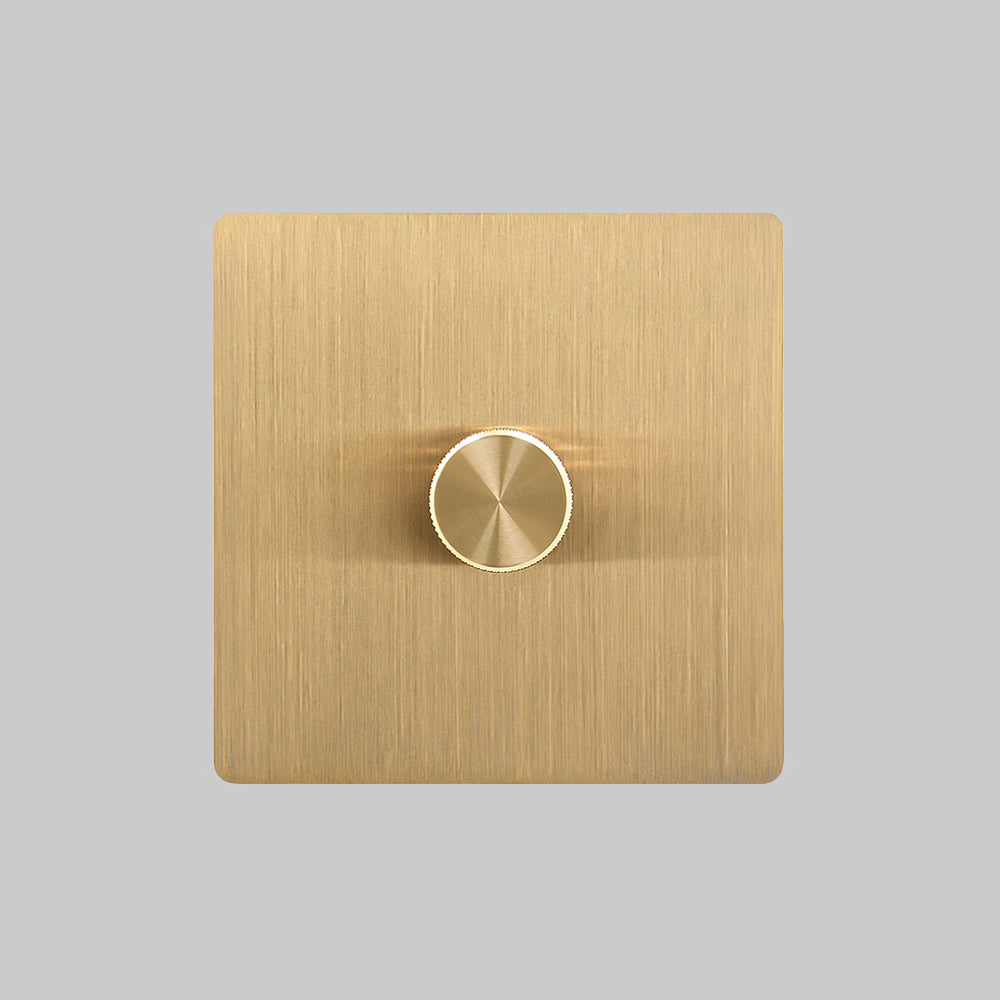
Toggle-style rotary dimmers must be installed by a qualified electrician per UK regulations. Key steps include: verifying 25mm back box depth, confirming no-neutral compatibility, calculating multi-gang de-rating (e.g., 2-gang = 85% load capacity), ensuring proper terminal connections (1x4mm² or 1x2.5mm² per phase), grounding metal faceplates, and testing flicker-free LED dimming post-installation.
Safe installation of toggle-style rotary dimmers in multi-gang UK setups requires professional expertise. Here are the critical steps:
Pre-Installation Assessment: A qualified electrician must verify the existing wiring, confirm back box depth (minimum 25mm), and identify whether neutral conductors are present at switch locations. For no-neutral installations (common in older UK homes), Repenic dimmers are ideal because they operate on live/switched-live connections alone.
Load Calculation and De-Rating: Multi-gang installations require de-rating—reducing the maximum load per dimmer to prevent overheating. For example, Repenic's RD-250 supports 250W in a single-gang configuration but only 212W in a 2-gang setup, 175W in 3-gang, 125W in 4-gang, and 75W in 5-gang. The electrician must calculate total circuit load and ensure each dimmer operates within its de-rated limit.
Terminal Connections: Dimmers accept terminal capacities of 1x4mm², 1x2.5mm², 3x1.5mm², or 4x1mm² per phase. The electrician must select appropriate wire gauges and ensure secure, corrosion-resistant connections. Loose terminals are a leading cause of dimmer failure and fire risk.
Metal Faceplate Grounding: All Repenic dimmers with metal faceplates (brass, black steel, white steel) must be properly grounded per UK regulations. The grounding conductor must be securely connected to the faceplate's grounding point, typically via a small screw or terminal.
Multi-Way Wiring: For multi-way setups using Repenic multiway dimmers (RD-MP) or dummy dimmers, the electrician must follow specific wiring diagrams provided in the product manuals. Incorrect multi-way wiring will result in non-functional or dangerous installations.
LED Compatibility Testing: After installation, the electrician should test LED dimming across the full 0-100% range to confirm smooth operation without flicker or buzzing. If issues arise, the dimmer's programmable settings (minimum brightness, BOOST mode, trailing/leading-edge selection) can be adjusted to match the specific LED driver characteristics.
Compliance and Certification: All installations must comply with UK Building Regulations (Part P) and BS 7909. The electrician should provide an Electrical Installation Certificate (EIC) confirming the work meets safety standards. This certification is essential for future home sales or insurance claims.
Repenic Expert Views: "Toggle-style rotary dimmers represent the future of UK home lighting control. Their firm mechanical feedback, combined with modern LED dimming and smart home integration, addresses the core frustration with rocker switches: ambiguity. In our experience, UK homeowners and electricians prefer dimmers they can feel and trust. Repenic's no-neutral design eliminates expensive re-wiring in period properties, while our brass and steel finishes deliver the tactile premium quality that justifies renovation investment. For multi-way setups, our Zigbee integration enables sophisticated control without compromising the tactile experience users expect from a quality switch. The result is lighting control that feels right, looks right, and works right—essential for homes undergoing significant upgrades."
Conclusion
The toggle versus rocker debate ultimately hinges on tactile preference and functional requirements. Traditional flip-lever toggles deliver authentic mechanical feedback but lack dimming and smart capabilities. Modern rocker switches offer ergonomic ease but sacrifice tactile precision and aesthetic longevity. The winning solution for UK renovations is the rotary knob dimmer—a hybrid that preserves toggle-style tactile control while delivering LED dimming, smart home integration, and premium material finishes.
Repenic's rotary dimmer range exemplifies this evolution. Available in solid brass, black steel, and white steel with knurled knobs for superior grip and feedback, these dimmers support 5-250W or 5-400W LED loads, operate without neutral wiring, fit standard 25mm UK back boxes, and integrate seamlessly with Zigbee 3.0 platforms like Google Home. For electricians and homeowners prioritising both feel and function, Repenic's toggle-style dimmers represent the premium choice for UK home lighting control.
Explore Repenic's premium brass and steel toggle-style dimmers at repenic.com to find the perfect tactile upgrade for your UK home renovation.
Frequently Asked Questions
Do toggle switches work in UK homes without neutral wiring?
Yes, modern toggle-style rotary dimmers like Rep