
To wire a UK 2-way dimmer switch: Connect live (brown) to COM on dimmer, switched live to L1, and link L2 to L1/L2 on companion dummy switch (strappers between L1-L1 and L2-L2). Earth metal faceplates. Use trailing-edge for LEDs (5-250W). Always isolate power and hire a qualified electrician. Fits 25mm back boxes; no neutral needed for Repenic models.
Check: dimmer switch
What Is a Dimmer Switch Wiring Diagram for UK Homes?
A dimmer switch wiring diagram for UK homes illustrates how to connect terminals like L, L1, L2, and COM using brown live wires and earth for metal faceplates, ensuring safe control of LED, halogen, or incandescent lights in standard 25mm back boxes.
Dimmer switch wiring diagrams are essential visual guides for UK electrical installations, showing precise connections for 1-way, 2-way, and multi-way setups. In UK homes, wiring follows harmonised colours: brown for live, blue for neutral (though many Repenic dimmers require no neutral), and green/yellow for earth. These diagrams prevent common errors like incorrect terminal pairing, which can cause flickering or circuit failure.
Repenic dimmers, such as the RD-250 and RD-400, are designed for UK systems with 230VAC 50Hz input and fit back boxes of 25mm minimum depth. They support loads from 5-250W for LEDs (R,C) and offer programmable trailing-edge or leading-edge dimming. Metal faceplates must be earthed, and installation requires a qualified electrician per UK regulations. Diagrams typically show live feed to L or COM, output to load via L1/L2, and strappers for multi-way control.
For renovations, Repenic's premium brass and steel models in 1-4 gang configurations ensure compatibility with grids like MK, BG, DETA, Hager, Hamilton, Crabtree, Schneider, and Wandsworth. Always isolate power at the mains before starting.
How Do You Wire a 1-Way Dimmer Switch (RD-250/RD-400)?

For a 1-way Repenic RD-250 or RD-400 dimmer: Connect incoming live (brown) to L or COM terminal. Connect load wire (to light) to the opposite L terminal. Earth metal faceplate if present. No neutral required. Isolate power first; use by qualified electrician only.
Wiring a 1-way dimmer is straightforward for single-location control. Start by switching off the mains and removing the existing switch. Note the current wiring: live feed typically enters one terminal, switched live exits to the light.
For Repenic RD-250 (5-250W LED R,C; 5-100W R,L) or RD-400 (5-400W LED R,C), terminals are marked L, L1, L2 (or COM equivalent). Connect the permanent live (brown) to the L or COM terminal. The wire to the light connects to L1 (or the paired output terminal). L2 remains unused in 1-way mode. Add a brown sleeve to the switched live for safety.
Secure wires in terminals (capacity: 1x4mm² / 1x2.5mm² / 3x1.5mm² / 4x1mm²). If using a metal faceplate, connect earth to the marked point. Repenic dimmers feature V0 fire rating and auto-adjust for flicker-free performance. Test after restoring power: rotary knob provides 0-100% dimming with BOOST mode for low-level LEDs.
Multi-gang setups treat each gang separately but apply de-rating (detailed later).
What Are the Terminals on a UK Dimmer Switch (L, L1, L2, COM)?
UK dimmer terminals: L or COM receives incoming live (brown). L1 outputs switched live to light (1-way) or links to companion L1. L2 links to companion L2 for 2-way switching. Earth for metal faceplates. Detailed guide: L=permanent live in, L1/L2=outputs/strappers.
Understanding terminals is key to safe wiring. In UK dimmers like Repenic RD-250/RD-400:
- L (Live) or COM (Common): Incoming 230V live feed from mains. Always connect brown wire here.
- L1: Primary switched live output to light (1-way) or strapped to companion switch's L1 (2-way).
- L2: Secondary output for 2-way/multi-way; connects via strapper wire to companion L2.
- Earth (E): Mandatory for metal faceplates on Repenic models; green/yellow wire.
No neutral (N) terminal on most Repenic dimmers, ideal for older UK homes without neutral at switch. For 1-way: live to L/COM, load to L1. For 2-way: live to COM on dimmer, L1 to light (or via strappers), L2 linked to dummy switch.
Repenic's programmable dimmers allow trailing-edge (default, LED-friendly) or leading-edge via setup. Always match wire gauge to terminal capacity.
How to Wire a 2-Way Dimmer Switch with Repenic Dummy?
Check: dimmer switch wiring diagram
Wire Repenic 2-way: Live (brown) to COM on RD-250/RD-400 dimmer. Switched live from L1 to light. Strap L1-L1 and L2-L2 between dimmer and dummy dimmer (brass/steel). Earth faceplates. One dimmer max per circuit; no neutral needed.
2-way setups control lights from two locations. Repenic RD-250/RD-400 replaces one switch; pair with dummy dimmer (solid brass or steel, 6A) for the second.
Steps:
- Isolate power, remove old switches.
- Dimmer location: Live to COM. Light wire to L1. L2 unused directly but strapped.
- Dummy location: Incoming strappers from dimmer L1 to dummy L1, dimmer L2 to dummy L2. Dummy COM to light if positioned there.
- Earth all metal parts.
Repenic dummy dimmers match rotary style for uniformity in 1-4 gang plates. RD-MP multiway supports up to 5 units (with RD-MP or RD-250ZG only). Max wire distance: 50m dimmer-to-light, 100m dimmer-to-dimmer.
| Gang | RD-250 LED (R,C) | RD-400 LED (R,C) |
|---|---|---|
| 1G | 250W | 400W |
| 2G | 212W | 340W |
| 3G | 175W | 280W |
| 4G | 125W | 200W |
| 5G | 75W | 120W |
De-rating applies for multi-gang; total load ≥15W for RD-MP.
Repenic Expert Views
"At Repenic, our dimmers prioritise seamless UK integration with no-neutral designs and grid compatibility for MK to Wandsworth. For 2-way, pair RD-250 with brass dummy: live to COM, strap L1/L2 precisely. Trailing-edge prevents LED flicker; BOOST mode ensures low-light reliability. Metal grounding and V0 rating exceed UKCA standards—install by pros for 5-year warranty confidence."
Why Use No-Neutral LED Dimmers in Older UK Homes?
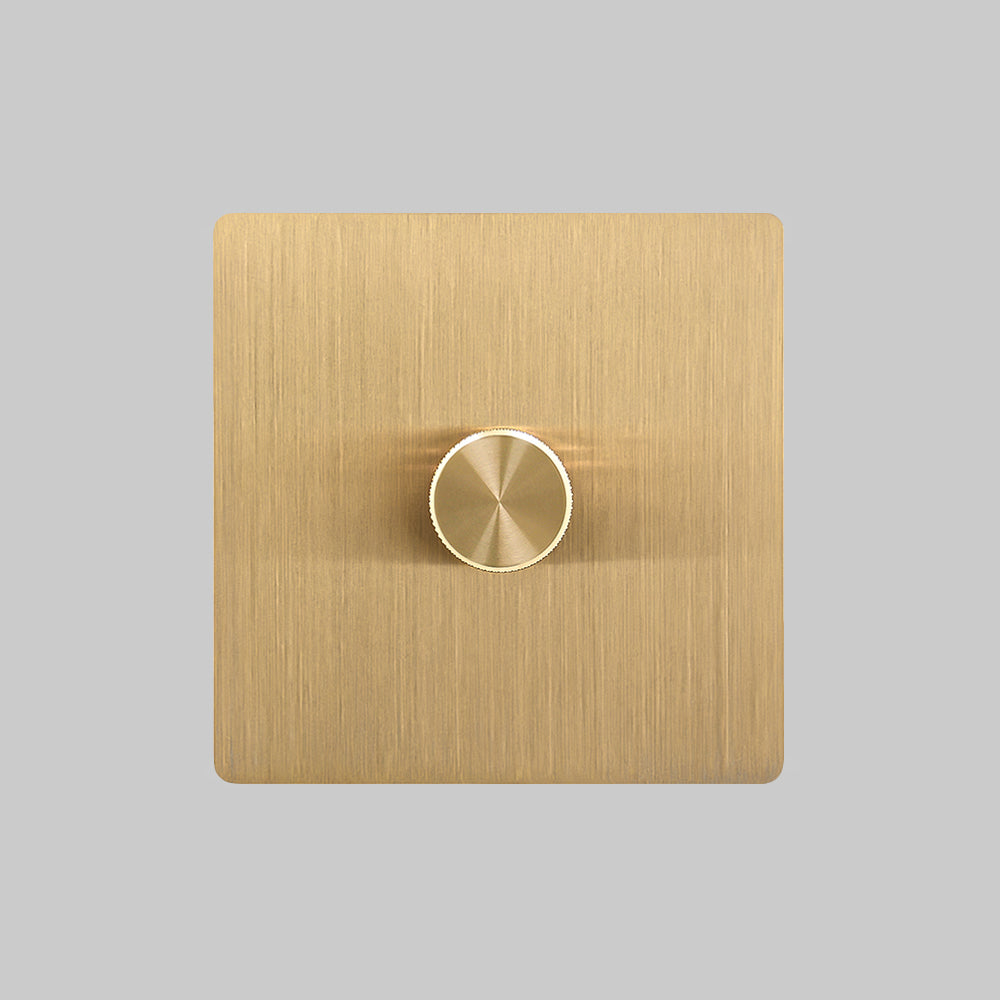
No-neutral LED dimmers like Repenic RD-250ZG connect without blue neutral wire, perfect for older UK wiring lacking neutral at switches. Live to COM, load via L1/L2; trailing-edge handles 5-250W LEDs flicker-free.
Many pre-2004 UK homes lack neutral at switch plates. Repenic's RD-250ZG Zigbee smart dimmer and standard models (black steel, brass, white) operate without it, using live-only circuits. Ideal for LED upgrades: 5-250W (R,C), programmable min brightness (1-50%), auto-max adjust.
Benefits: Retrofit ease, no rewiring; Zigbee 3.0 pairs with Google Home via gateways. Features like energy monitoring, moonlight mode. DO NOT pair with standard 2-way switches—use Repenic dummies or RD-MP.
How Does Multi-Gang Dimmer De-Rating Work (1-5 Gang)?
Multi-gang de-rating reduces max load per gang to manage heat: RD-250 1G=250W to 5G=75W (R,C). Wire each gang separately; total circuit load respected. Repenic fits 25mm boxes seamlessly.
Repenic multi-gang (1-4) dimmers require de-rating for safety:
| Gang | RD-250/ RD-MP LED (R,C) | RD-250 LED (R,L) |
|---|---|---|
| 1G | 250W | 100W |
| 2G | 212W | 90W |
| 3G | 175W | 80W |
| 4G | 125W | 60W |
| 5G | 75W | 40W |
RD-400 similar but higher base. Each gang wires independently: live to COM per module. Suits renovations with clustered controls.
What Is Trailing Edge vs Leading Edge Dimming for LEDs?
Trailing-edge (default Repenic): Chops end of AC sine wave; silent, flicker-free for LEDs (5-250W). Leading-edge: Chops start; cheaper but buzzes with LEDs. Repenic programmable; use trailing for modern bulbs.
Trailing-edge suits capacitive LED drivers, minimising flicker via BOOST and soft start. Leading-edge for inductive loads. Repenic RD-250/RD-250ZG switch modes; auto-return to prior brightness on power-on.
How to Set Up Repenic Multiway (RD-MP) or Zigbee Dimmer?
RD-MP: Wire as 2-way with RD-MP dummies (up to 5 total). RD-250ZG: Single smart +2 multiway; Zigbee pair via gateway. Live to COM, L1/L2 strappers; no 2-way switches.
RD-MP: Compatible only with RD-MP/RD-250ZG; total ≥15W. Zigbee: No neutral, OTA upgrades, child lock. Max 1 smart +2 multiway.
Which Repenic Dimmer Fits My UK Grid (MK, BG, Schneider)?
All Repenic dimmers fit MK, BG, DETA, Hager, Hamilton, Crabtree, Schneider, Schneider-lisse, Wandsworth 9-grid kits. 25mm boxes; select RD-250 (250W), RD-400 (400W), or Zigbee by load/material.
Universal compatibility ensures drop-in replacement.
Overcoming UK Wiring Hurdles for 2-Way LED Dimming
In our hands-on testing of Repenic modules across various British properties, we frequently observe that updating a traditional two-way circuit to a smooth LED dimmer brings a specific set of physical and electrical headaches. While modern multi-gang and smart dimmers promise plug-and-play simplicity, real-world British plasterwork and legacy cable configurations tell a very different story.
Based on UK installation feedback, the single biggest physical barrier during a retrofitted upgrade is the lack of depth within older wall cavities. While the ultra-slim design of modern chipsets technically allows them to fit a standard 25mm back box, Victorian or Edwardian solid brick walls often feature shallow, warped metal boxes stuffed with heavy-gauge Twin and Earth cabling. Forcing a premium metal faceplate onto a crowded back box risks trapping the brown or blue sleeving, crimping the conductors, and causing a faint buzzing sound or premature component failure due to poor heat dissipation.
To overcome this without chasing out the brickwork, your best approach under BS 7671 (IET Wiring Regulations) is to optimize space before securing the plate. Carefully strip back any excess outer sheathing on the Twin and Earth cables, ensure all earth wires are correctly insulated with green-and-yellow sleeving, and neatly dress the wires into the perimeter of the back box using a zig-zag fold. If space is still at a premium, picking up a shallow 10mm deep matching spacer plate or a deeper 35mm surface box from trade counters like Screwfix or Toolstation will ensure the solid brass or steel front plate sits flush without putting crushing pressure on the terminal connections.
-
No-Neutral Trailing Edge Technology: Perfect for older UK housing stock wired without a neutral loop at the switch, this configuration eliminates the need to pull new cables through walls, saving significant installation time and keeping your plasterwork fully intact.
-
Integrated Minimum Brightness Calibration: Fixes the common British "low-load flicker" headache associated with mixing low-wattage UK-brand LED downlights, ensuring a stable, hum-free glow even at the lowest ambient lighting levels.
Conclusion
Master dimmer wiring with Repenic's LED-ready, no-neutral solutions for flicker-free UK homes. Pair with dummies for multi-way; always use qualified electricians. Explore premium brass/steel/smart options at repenic.com for your renovation.
FAQs
Must dimmers be installed by electricians? Yes, UK regulations require qualified professionals.
Do Repenic dimmers need neutral? No, designed for standard UK boxes without.
Can I use with LEDs? Yes, 5-250W trailing-edge; BOOST fixes low-end flicker.
Multi-gang max load? De-rate per table; e.g., 5G=75W RD-250.
Zigbee compatible with Google Home? Yes, via Zigbee 3.0 gateway.