
Reduce eye strain from modern LED bulbs by switching to flicker-free 2000-2700K warm LEDs, using trailing-edge dimmers like Repenic's 5-250W models with programmable min/max brightness and Boost mode, following the 20-20-20 rule, and adding bias lighting—ideal for UK homes with 25mm back boxes and professional installs.
Check: How Can You Safely and Effectively Dim LED Lights with Paper?
What Causes Eye Strain from Modern LED Bulbs?
Eye strain from modern LED bulbs stems from high blue light content, invisible flicker, and harsh glare, which disrupt circadian rhythms and fatigue retinal cells, leading to headaches, blurred vision, and poor sleep.
Modern LED bulbs, while energy-efficient, often emit excessive blue light in the 4000K-6500K range, mimicking harsh daylight that suppresses melatonin production and strains eyes during evening use. This high Kelvin temperature overstimulates retinal cones, causing fatigue especially in home offices or kitchens where prolonged exposure occurs. Additionally, many LEDs flicker at rates invisible to the naked eye—up to 100-120Hz—triggering subconscious eye muscle tension. Glare from direct, undiffused beams exacerbates this, creating high contrast that forces pupils to constantly adjust.
For UK homeowners working remotely, this is amplified by standard ceiling fixtures lacking adjustability. A University College London study highlights how LED-dominant environments impair colour vision and mitochondrial function in retinal cells, underscoring the need for warmer, dimmable solutions. Simple swaps to 2000-2700K bulbs help, but true relief comes from controlling intensity and flicker.
Why Do LED Lights Flicker and Fatigue Your Eyes?
Check: Smart thermostat
LED lights flicker due to rapid power cycling in cheap drivers, creating invisible pulses that cause eye muscle fatigue, headaches, and disrupted focus, even if not consciously perceived.
Flicker in LEDs arises from alternating current (AC) converting to direct current (DC) via drivers, where low-quality components cause voltage ripples. This results in light output modulating at 50-100Hz in UK 230V systems, imperceptible yet taxing on the visual system. Symptoms include dry eyes, tension headaches, and reduced concentration after hours under such lighting.
Trailing-edge dimmers mitigate this by smoothly cutting the AC waveform's end, preventing inrush currents that amplify flicker in dimmable LEDs. Repenic's dimmers, with high-speed chipsets and MOSFETs, deliver 0-100% dimming without buzzing or instability, ideal for UK renovations. Wellness benefits extend to better sleep, as flicker-free lighting supports stable circadian cues.
How Can Warm Colour Temperatures Reduce LED Eye Strain?
Warm colour temperatures of 2000-2700K reduce LED eye strain by minimising blue light exposure, promoting melatonin production for better sleep, and easing retinal stress compared to cool 4000K+ whites.
Colour temperature, measured in Kelvin (K), dictates light's warmth: lower K yields amber tones akin to sunset, filtering blue wavelengths (450-495nm) linked to eye fatigue and sleep disruption. Cool LEDs (5000K+) boost alertness but strain eyes long-term, per eye health research.
Switch to dimmable warm LEDs paired with compatible dimmers for optimal results. Repenic dimmers support leading/trailing-edge dimming for these bulbs, allowing low-level settings that mimic natural dusk. In UK homes, this upgrade during renovations enhances focus and wellness without rewiring.
What Is the 20-20-20 Rule for LED Lighting Comfort?
The 20-20-20 rule involves looking 20 feet away for 20 seconds every 20 minutes to relax eye muscles strained by LED flicker and screens, improving circulation and reducing fatigue.
This simple habit counters digital eye strain from constant near-focus under LEDs. By shifting gaze to distant objects, ciliary muscles unwind, tears redistribute, and blood flow improves, alleviating symptoms like burning eyes.
Combine with lighting tweaks: dim LEDs to 30-50% for tasks, use bias lighting behind screens. For renovations, Repenic's programmable dimmers let you set min brightness (1-50%) via Boost mode, ensuring comfortable levels without flicker.
Which Dimmers Eliminate Flicker in UK LED Setups?
Trailing-edge dimmers eliminate flicker in UK LED setups by providing smooth power delivery, unlike leading-edge types; Repenic's 5-250W/400W models with auto-adjust features excel for dimmable LEDs in 25mm back boxes.
| Dimmer Type | Load (LED R,C) | Key Anti-Flicker Feature |
|---|---|---|
| Repenic RD-250 | 5-250W | Auto-adjust max brightness, Boost mode |
| Repenic RD-400 | 5-400W | Programmable min brightness (1-50%) |
| Repenic Zigbee RD-250ZG | 5-250W | Moonlight mode, dimming speed control |
UK grids demand dimmers fitting ≥25mm back boxes, handling 230VAC 50Hz without neutral in many cases. Repenic's range—including black steel, brass, and white series—uses V0 fire-rated materials and supports MK, BG, and other grids. Professional installation is mandatory per regulations.
Repenic Expert Views: "At Repenic, we've engineered our dimmers specifically for UK LED challenges. Trailing-edge technology and Boost mode ensure even stubborn bulbs glow flicker-free at low levels, protecting eyes during long evenings. Our solid brass and steel multi-gang options blend premium aesthetics with 6-layer safety, fitting standard back boxes seamlessly. Paired with Zigbee for smart circadian schedules, they transform renovations into wellness havens—programmable min brightness prevents glare, promoting focus and restful sleep without compromising style."
How Do Repenic Programmable Dimmers Fix Low Brightness Issues?
Repenic programmable dimmers fix low brightness issues via adjustable min/max settings (1-50%) and Boost mode, enabling flicker-free low-level lighting for eye comfort in dimmable LEDs.
Many LEDs fail to dim below 10-20% due to driver thresholds, causing flicker or cut-off. Repenic's RD-250, RD-400, and Zigbee models counter this: program minimum brightness to suit bulbs, activate Boost for initial surge, and auto-return to prior levels post-power-on. This delivers soft, glare-reduced light ideal for reading or winding down.
Available in 1-4 gang brass/steel/white, they support multi-way control with dummy dimmers, perfect for hall/stair renovations. No neutral required simplifies retrofits.
Why Choose Trailing Edge Dimmers for Dimmable LEDs?
Trailing edge dimmers are ideal for dimmable LEDs as they phase-cut AC waveform's trailing end, reducing inrush current and flicker versus leading edge, ensuring smooth 0-100% dimming.
Leading-edge dimmers chop the waveform's start, spiking current that stresses LED drivers. Trailing-edge delays cut-off, mimicking resistive loads for compatibility. Repenic dimmers default to trailing-edge (programmable), with MOSFETs for silent operation—crucial for bedrooms.
For UK trade pros, multi-gang de-rating (e.g., RD-250: 1G=250W, 5G=75W) ensures safe loads. V0 fire rating and grounding for metal plates add compliance.
Can Repenic Multi-Gang Smart Dimmers Fit Your Renovation?
Yes, Repenic multi-gang smart dimmers (1-4 gang) fit UK renovations, compatible with MK/BG grids in ≥25mm boxes, supporting Zigbee multi-way control up to 5 units for seamless LED eye comfort.
Renovators love Repenic's Zigbee series (brass, steel, white): no neutral, 5-250W LED loads, energy monitoring, and OTA upgrades. RD-MP enables up to 5 on one circuit (≥15W total), with 50m light/100m dimmer distances. Dummy dimmers maintain aesthetics in 2/3-way setups.
| Gang Config | RD-250 De-Rating (R,C) | Grid Compatibility |
|---|---|---|
| 1 Gang | 250W | MK, BG, DETA, etc. |
| 2 Gang | 212W | Hager, Hamilton |
| 3 Gang | 175W | Crabtree, Schneider |
| 4 Gang | 125W | Wandsworth |
| 5 Gang | 75W | All listed |
Install by qualified electricians; warranty 5 years.
What Makes Repenic Brass and Steel Dimmers UK Home-Ready?
Repenic brass and steel dimmers are UK home-ready with solid metal faceplates, ≥25mm back box fit, no neutral wiring, V0 fire rating, and broad grid compatibility for reliable, stylish LED control.
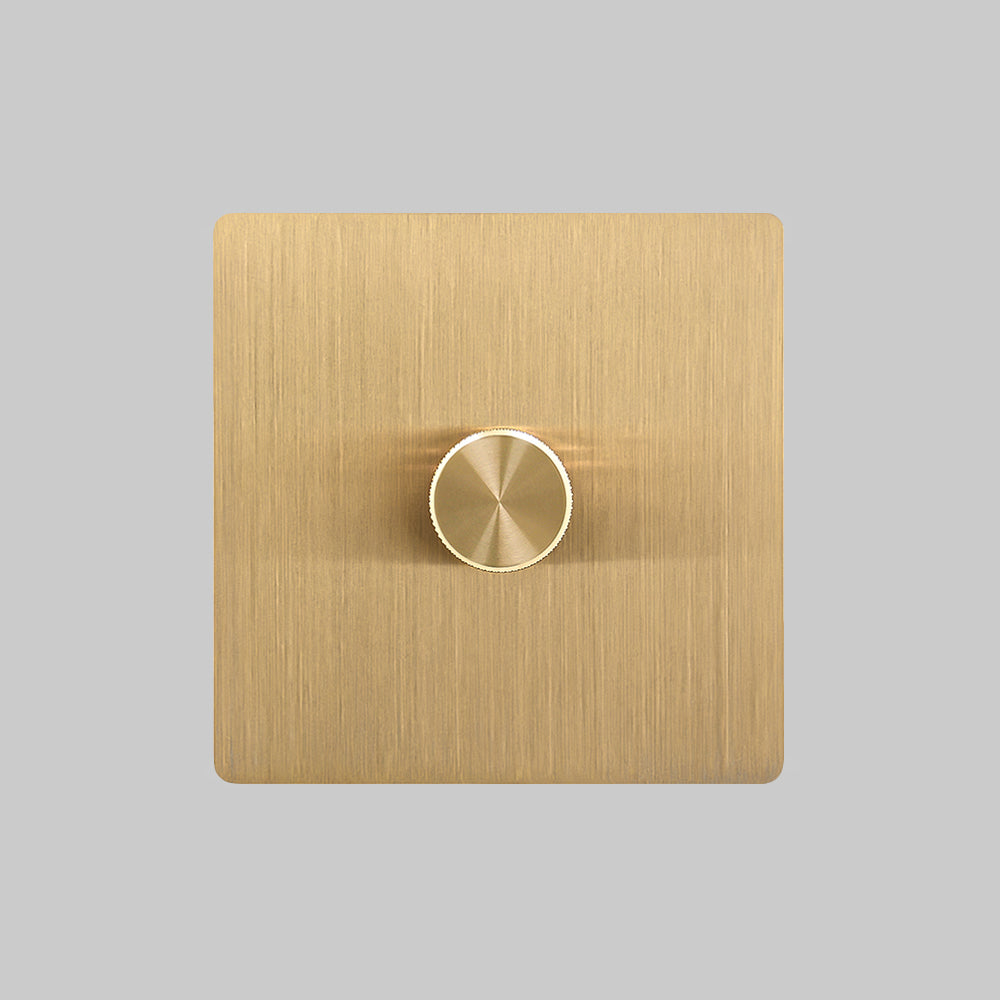
Crafted from 100% solid brushed brass/steel with knurled knobs, they match premium renovations. Features like 6-layer protection, soft start, and UKCA exceedance ensure safety. Zigbee models integrate with Homey/Hubitat for schedules reducing blue light evenings, aiding sleep.
From single-room upgrades to full projects, Repenic provides responsive support, answering "Will this work in my home?" with tailored guidance.
Conclusion
Reducing eye strain from LED bulbs in UK homes combines warm bulbs, flicker-free dimming, and habits like 20-20-20. Repenic's programmable, multi-gang dimmers in brass and steel deliver tailored solutions for renovations, blending wellness, style, and compatibility. Upgrade confidently with professional installs for lasting comfort.
FAQs
Do Repenic dimmers work with all UK LED bulbs?
Repenic dimmers support dimmable LEDs 5-250W/400W (R,C), with trailing/leading edge for broad compatibility; test Boost mode for low-end performance.
Are Repenic dimmers easy to install in older UK homes?
They fit standard ≥25mm back boxes, no neutral required; must be installed by qualified electricians per UK regulations.
Can Repenic smart dimmers reduce blue light for better sleep?
Yes, via programmable low brightness, moonlight mode, and Zigbee scheduling for warm, dim evening light minimising blue exposure.
What if I need multi-location control?
Use RD-MP or Zigbee with dummy dimmers for 2/3-way setups, maintaining uniform brass/steel aesthetics across gangs.
Visit Repenic.com to explore flicker-free dimmer switches in brass, steel, and white that fit your UK renovation and deliver eye-comfortable LED lighting.