
Repenic LED dimmers support 5-250W (RD-250) or 5-400W (RD-400) dimmable LEDs with trailing/leading edge modes; de-rate for multi-gang (e.g., 2-gang=212W). Calculate total LED wattage under max load, ensure minimum 5W total, use Boost mode for flicker-free low light. Always use dimmable LEDs and install by qualified electrician.
Check: how many led lights can be on one dimmer
What Is an LED-Compatible Dimmer Switch?

An LED-compatible dimmer switch is designed for dimmable LED bulbs, supporting trailing or leading edge dimming technology to handle low wattage loads from 5W minimum without flickering or buzzing. Repenic dimmers like RD-250 and RD-400 fit UK 230VAC systems, require no neutral wire, and offer programmable brightness for smooth control.
Traditional dimmers were built for incandescent or halogen bulbs, which draw steady power. LEDs, however, use drivers that create challenges like inrush current—brief high surges when powering on—and very low minimum loads. An LED-compatible dimmer uses advanced electronics, such as MOSFETs and high-speed chipsets, to manage these efficiently.
Repenic's dimmer switches, available in solid brass, black steel, white steel, and Zigbee smart variants, are tailored for UK homes. They support loads from 5-250W or 5-400W for dimmable LEDs, with features like Boost mode to ignite low-level lighting and auto-adjust for flicker-free performance. All models fit standard 25mm back boxes and are compatible with popular UK grids including MK, BG, DETA, Hager, Hamilton, Crabtree, Schneider, Schneider-lisse, and Wandsworth.
Key to compatibility is using dimmable LEDs only—non-dimmable ones can cause buzzing or failure. Repenic dimmers exceed UKCA standards with V0 fire-rated materials and six layers of protection against surges and overloads.
Why Do LED Lights Flicker on Old Dimmers?
LED lights flicker on old dimmers due to incompatible dimming methods (leading edge on modern switched-mode power supplies), high inrush current overwhelming the dimmer, or loads below the minimum threshold. Trailing edge dimmers like Repenic's solve this with programmable minimum brightness (1-50%) and Boost mode for stable low-end performance.
Old dimmers often use leading edge technology, chopping the power wave's front, which clashes with LED drivers designed for smoother trailing edge cuts at the wave's end. This mismatch causes flickering, especially at low brightness, or complete failure to light up.
Inrush current exacerbates issues: LEDs spike power on startup, far exceeding steady-state draw. Combined with minimum load requirements (often 5-10W total), a single 5W LED might not trigger the dimmer properly. Repenic addresses this head-on. Their RD-250 and RD-400 dimmers are programmable for trailing or leading edge, with Boost mode (default off) to power reluctant bulbs at low levels. Auto-max brightness adjustment prevents overload flickering, and soft start protects bulbs.
For UK renovations, this means seamless upgrades without rewiring. Smart Zigbee models add energy monitoring to track usage, helping spot inefficient setups early.
How Many LED Lights Fit on a 250W Dimmer?
On a 250W dimmer like Repenic RD-250, calculate total wattage of dimmable LEDs—must stay under 250W max (de-rated for multi-gang) and above 5W minimum. Example: 20 x 10W LEDs = 200W (safe); account for inrush current by staying 20% under max for safety.
Determining safe LED count starts with total wattage, not bulb quantity, as LEDs vary (5W GU10s to 20W+ panels). Repenic RD-250 handles 5-250W trailing edge (R,C) or 5-100W leading edge (R,L) dimmable LEDs. Always sum actual bulb ratings.
Practical Calculation Steps:
- Check bulb wattage (e.g., 5W, 7W, 10W).
- Multiply by number of bulbs: total ≤ dimmer max.
- Factor minimum: total ≥5W.
- Apply 20% safety margin for inrush current.
- De-rate for multi-gang (see table below).
| Example Setup | Bulbs | Total Wattage | Safe on RD-250? |
|---|---|---|---|
| Spotlights (kitchen) | 25 x 5W | 125W | Yes (1-gang) |
| Downlights (living room) | 15 x 7W | 105W | Yes |
| Panels (bedroom) | 5 x 20W | 100W | Yes |
| Mixed (hallway) | 10 x 10W | 100W | Yes (with Boost) |
Inrush current safety: LEDs can draw 10x steady wattage briefly. Repenic's protection layers and soft start mitigate this, but stay conservative. For 400W RD-400, scale up accordingly (5-400W R,C).
Repenic Expert Views
"At Repenic, we design dimmers for real UK homes where LED upgrades are common but tricky. Our RD-250 and RD-400 handle 5W minimum loads with trailing/leading edge flexibility, preventing inrush-related trips. Multi-gang de-rating ensures safety in 2-5 gang plates, and features like Boost mode fix 90% of flicker cases without electrician callbacks. Always total wattage under max, installed by qualified pros—our 5-year warranty backs it." – Repenic Engineering Lead
What Are Trailing Edge vs Leading Edge Dimmers?
Trailing edge dimmers cut the power wave's end for smooth LED control, ideal for most modern dimmable LEDs; leading edge chops the front, better for older resistive loads but prone to flicker with LEDs. Repenic dimmers are programmable for both, auto-adjusting for compatibility.
Dimming works by clipping AC sine waves. Leading edge (common in cheap dimmers) clips rising edge, suiting incandescents but causing LED buzz/flicker via driver incompatibility. Trailing edge clips falling edge, mimicking natural fade for LEDs.
Repenic's electronic dimmers (RD-250, RD-400, Zigbee RD-250ZG) default to trailing edge but program to leading edge (R,L loads up to 100W). This versatility covers all dimmable LEDs/CFLs. No buzzing thanks to tuned MOSFETs.
How Does Multi-Gang De-Rating Affect LED Loads?
Multi-gang de-rating reduces per-gang capacity due to shared heat: Repenic RD-250 (1G=250W, 2G=212W, 3G=175W, 4G=125W, 5G=75W for R,C). Calculate total LED wattage against de-rated max for safe operation.
In multi-gang plates, heat buildup limits total load. Repenic provides precise de-rating:
| Gangs | RD-250 (R,C) | RD-400 (R,C) | Example LEDs (7W each) |
|---|---|---|---|
| 1-Gang | 250W | 400W | 35 / 57 |
| 2-Gang | 212W | 340W | 30 / 48 |
| 3-Gang | 175W | 280W | 25 / 40 |
| 4-Gang | 125W | 200W | 17 / 28 |
| 5-Gang | 75W | 120W | 10 / 17 |
Metal faceplates must be grounded. Repenic's narrower profiles fit tight UK boxes.
Can You Use LED Dimmers Without a Neutral Wire?
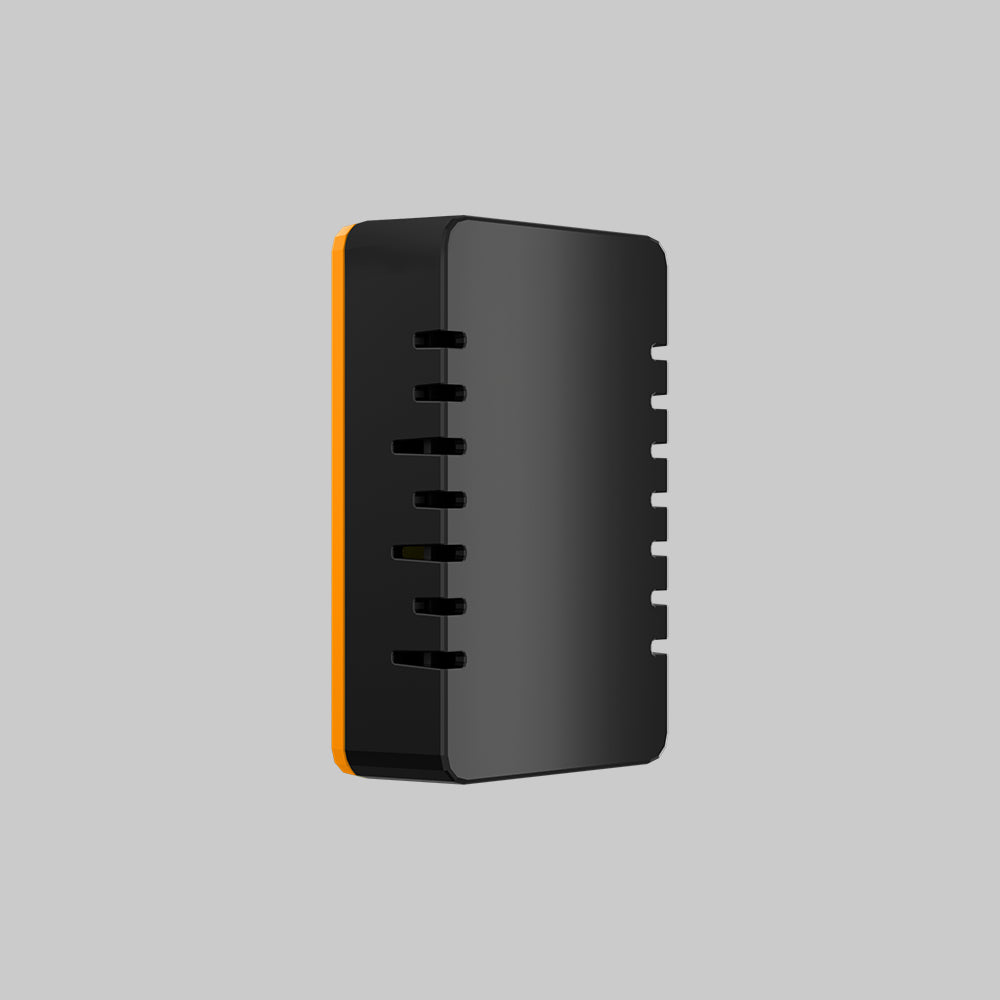
Yes, Repenic LED dimmers like RD-250, RD-400, and Zigbee models require no neutral wire, fitting standard UK 25mm back boxes for easy retrofits in older homes without rewiring.
Many UK properties lack neutrals at switches. Repenic's no-neutral design uses load-side power, simplifying installs. All models (brass, steel, smart) share this, with terminal capacity for 1x4mm² wires. Qualified electrician required per UK regs.
What Causes LED Dimmer Buzzing and How to Fix It?
LED dimmer buzzing stems from incompatible leading edge dimming, poor minimum load, or inrush current; fix with trailing edge dimmers, Boost mode, and ensuring total load ≥5W. Repenic's high-speed chipsets eliminate noise entirely.
Buzzing signals overload or mismatch. Fixes: switch to trailing edge, program min brightness, add load if under 5W. Repenic's silent operation, soft start, and six-layer safety prevent this. For multi-way, use RD-MP or dummy dimmers (brass/steel, 6A).
Which Repenic Dimmer Is Best for UK LED Homes?
Check: led lights on a dimmer switch
For most UK LED homes, choose Repenic RD-400 (5-400W) for larger loads or RD-250 (5-250W) for standard; Zigbee smart for Google Home integration. All offer Boost, no neutral, V0 safety—select brass/steel for style.
RD-250 suits bedrooms (multi-gang friendly). RD-400 for kitchens. Zigbee (black/white/brass) adds multi-way (1 smart +2 dummies), energy tracking, OTA updates. Dummy dimmers ensure uniform multi-location control. 5-year warranty, UKCA compliant.
Conclusion
Upgrading to LED dimmers in your UK home demands precise wattage calculations, inrush awareness, and compatible tech. Repenic delivers flicker-free, no-neutral solutions in premium materials for renovations. Consult a qualified electrician, choose dimmable LEDs, and enjoy reliable control. Explore Repenic's range at repenic.com for your project.
FAQs
1. How do I calculate total wattage for LEDs on a dimmer? Sum individual bulb wattages; keep under de-rated max (e.g., 212W for 2-gang RD-250) and over 5W min.
2. What is inrush current and why does it matter? Startup power surge in LEDs; stay 20% under max load to avoid dimmer trips.
3. Are Repenic dimmers compatible with my MK grid? Yes, all Repenic dimmers work with MK, BG, DETA, and more UK grids.
4. Can I use non-dimmable LEDs? No—only dimmable LEDs for safety and performance.
5. Do Repenic smart dimmers work with Google Home? Yes, via Zigbee 3.0 gateways compatible with Google Home platforms.