
Paper diffuses light effectively due to its fibrous structure causing multiple Mie scattering events that randomize photon directions, softening harsh LED beams into even illumination. Unlike clear materials, paper's random cellulose fibers scatter visible wavelengths (400-700nm) without full absorption, reducing glare—ideal for UK homes pairing with trailing edge dimmers like Repenic's 5-250W models for flicker-free control.
Check: How Can You Safely and Effectively Dim LED Lights with Paper?
What Is Light Diffusion and Why Does It Matter for Home Lighting?
Light diffusion scatters light waves to create soft, even illumination, reducing glare from direct sources like LEDs. In UK homes, it matters for creating ambiance during renovations, preventing eye strain, and enabling smooth dimming without hotspots.
Light diffusion transforms harsh, directional beams into a gentle glow by redirecting photons through scattering. When light hits a translucent material, it doesn't pass straight through; instead, it bounces in random directions, spreading out evenly. This is crucial for modern LED lighting, where point sources create sharp shadows and glare.
For UK homeowners upgrading to dimmable LEDs, diffusion enhances comfort in kitchens, living rooms, or bathrooms. During renovations, pairing diffused light with compatible dimmers ensures flicker-free control. Repenic dimmers, designed for UK 230VAC systems, support this by handling 5-250W LED loads with trailing edge technology, fitting standard 25mm back boxes without neutral wiring.
Without diffusion, even premium LEDs can feel clinical. Diffusion softens this, mimicking natural light while allowing precise control—vital for multi-gang setups in period homes or new builds.
How Does Light Scattering Work in Translucent Materials Like Paper?
Light scattering in translucent materials like paper occurs via multiple interactions where photons bounce off microscopic fibers, randomizing paths through Mie or Rayleigh processes. This creates diffusion without full blockage, ideal for softening LED output in home settings.
Translucent materials allow partial light transmission while scattering the rest. In paper, light enters and encounters cellulose fibers—tiny structures comparable to visible light wavelengths. Each encounter deflects photons slightly, and repeated events lead to diffuse transmission.
Monte Carlo simulations of light transport in semitransparent media show that even thin slabs exhibit diffusive behavior after a short transient, with intensity spreading linearly over time. Paper's opacity arises from these cumulative scatters, not absorption, preserving brightness while eliminating directionality.
For LED applications, this means placing diffusion paper over fixtures diffuses point-source glare. In UK renovations, combine with Repenic's RD-250 or RD-400 dimmers, which offer programmable minimum brightness (1%-50%) to maintain evenness at low levels, preventing flicker in diffused setups.
Why Does Paper's Fibrous Structure Perfectly Scatter Visible Light?
Paper's random cellulose fibers, sized near visible wavelengths (400-700nm), cause repeated Mie scattering that randomizes light paths, creating perfect diffusion. This fibrous chaos outperforms uniform materials for even, glare-free LED illumination.
Paper is made of intertwined cellulose fibers, 10-50 micrometers thick—perfect for interacting with visible light. Unlike smooth plastics, these fibers create a labyrinth where light undergoes multiple deflections. Each fiber acts as a scatterer, bending rays unpredictably.
This structure excels for LEDs because it handles the narrow beam angles common in modern bulbs. Tracing paper, for instance, scatters light effectively when placed directly over lamps, though it may introduce a slight warm hue from selective absorption. Doubling layers increases scattering for softer effects.
Repenic trade professionals note this in renovations: diffused LEDs with paper maintain quality when dimmed via trailing edge dimmers like the RD-250 (5-250W LED), with BOOST mode ensuring low-level glow without dropout.
What Makes Paper Better Than Glass or Plastic for LED Diffusion?
Paper's irregular fibers provide superior multiple scattering over glass or plastic's uniform surfaces, yielding softer, more even diffusion without color distortion or hotspots. It's cost-effective and flexible for DIY LED setups in UK homes.
Glass diffuses via surface etching but often retains directionality; plastics like acrylic scatter less efficiently due to homogeneity. Paper's fibrous randomness ensures photons exit in all directions, ideal for harsh LEDs.
In practice, paper avoids the rigidity of frosted glass, folding easily for custom fixtures. It scatters without heavy absorption, preserving lumen output—key for energy-efficient UK homes.
| Material | Scattering Efficiency | LED Suitability | UK Renovation Use |
|---|---|---|---|
| Paper | High (fibrous Mie) | Excellent, softens glare | DIY flexible, cheap |
| Frosted Glass | Medium (surface) | Good, but rigid | Permanent installs |
| Plastic Sheet | Low (uniform) | Fair, hotspots | Budget but inconsistent |
Repenic dimmers enhance paper diffusion: Zigbee RD-250ZG (5-250W) with energy monitoring tracks output, ensuring compatibility.
How Do Rayleigh and Mie Scattering Explain Paper's Diffusion Magic?
Rayleigh scattering handles small particles (< wavelength) for blue skies; Mie scattering dominates in paper's larger fibers, causing forward-biased but multiple deflections that fully diffuse light. Together, they randomize visible spectrum perfectly.
Rayleigh applies to particles much smaller than light waves, scattering shorter blues more (sky effect). Paper fibers, larger, trigger Mie scattering—wavelength-independent, favoring forward scatter but repeating across fibers for isotropy.
In semitransparent media, boundary conditions tweak the diffusion coefficient, as simulations confirm linear spread even in thin slabs. Paper's mix yields magic: even diffusion across 400-700nm.
For LEDs, Mie-dominant paper prevents color shifts during dimming. Repenic's programmable trailing/leading edge (RD-250) auto-adjusts max brightness, stabilizing scattered light.
Why Do Dimmable LEDs Need Diffusion and Trailing Edge Dimmers?
Dimmable LEDs need diffusion to soften point-source glare; trailing edge dimmers cut current smoothly at cycle end, preventing flicker unlike leading edge's abrupt starts. Essential for UK LED upgrades with paper diffusers.
LEDs emit directional light; diffusion spreads it. Dimming challenges arise from drivers—leading edge can cause flicker. Trailing edge phases out power gently, compatible with 5-250W loads.
In UK homes, no-neutral trailing edge dimmers fit 25mm boxes. Repenic RD-400 (5-400W) with de-rating ensures multi-gang reliability.
| Dimmer Type | LED Load (RD-250) | Multi-Gang De-Rating (R,C) |
|---|---|---|
| Trailing Edge | 5-250W | 1G=250W, 2G=212W, 3G=175W |
| Leading Edge | 5-100W | 1G=100W, 2G=90W, 3G=80W |
What Role Does Programmable Brightness Play in Flicker-Free Diffusion?
Programmable brightness (1-50% min, auto-max) fine-tunes LED drivers to match diffusion, eliminating low-end flicker by boosting weak signals. Repenic's BOOST mode activates this seamlessly.
Diffusion scatters light evenly, but low dim levels expose driver limits. Programmable settings adjust thresholds, BOOST aiding reluctant bulbs. Auto-return recalls levels post-power loss.
For paper-diffused LEDs, this ensures consistency. Repenic Zigbee models add moonlight/sunrise modes for ambiance.
Repenic Expert Views
"At Repenic, we engineer dimmers like the RD-250ZG Zigbee model specifically for UK LED renovations. Programmable min/max brightness prevents flicker in diffused setups, while trailing edge and BOOST mode handle 5-250W loads flawlessly. No neutral needed, fitting 25mm boxes with MK or Schneider grids. Multi-way control via RD-MP extends diffusion across rooms, with OTA upgrades keeping systems future-proof. Our solid brass/steel faceplates blend physics precision with premium aesthetics."
— Repenic Technical Team
How Can Repenic Dimmers Enhance Light Diffusion in UK Homes?
Repenic dimmers enhance diffusion via trailing/leading edge dimming, BOOST mode, and Zigbee multi-way control, ensuring flicker-free performance with paper-diffused LEDs in 25mm UK boxes. Compatible with all major grids.
Repenic's range—RD-250/400, RD-250ZG, RD-MP—supports diffused LEDs without buzzing. Zigbee enables Google Home integration, energy monitoring. Install by qualified electricians; metal plates grounded.
Perfect for renovations: multi-gang de-rating, 5-year warranty, V0 fire rating.
Which Repenic Products Deliver Optimal Diffusion Control?
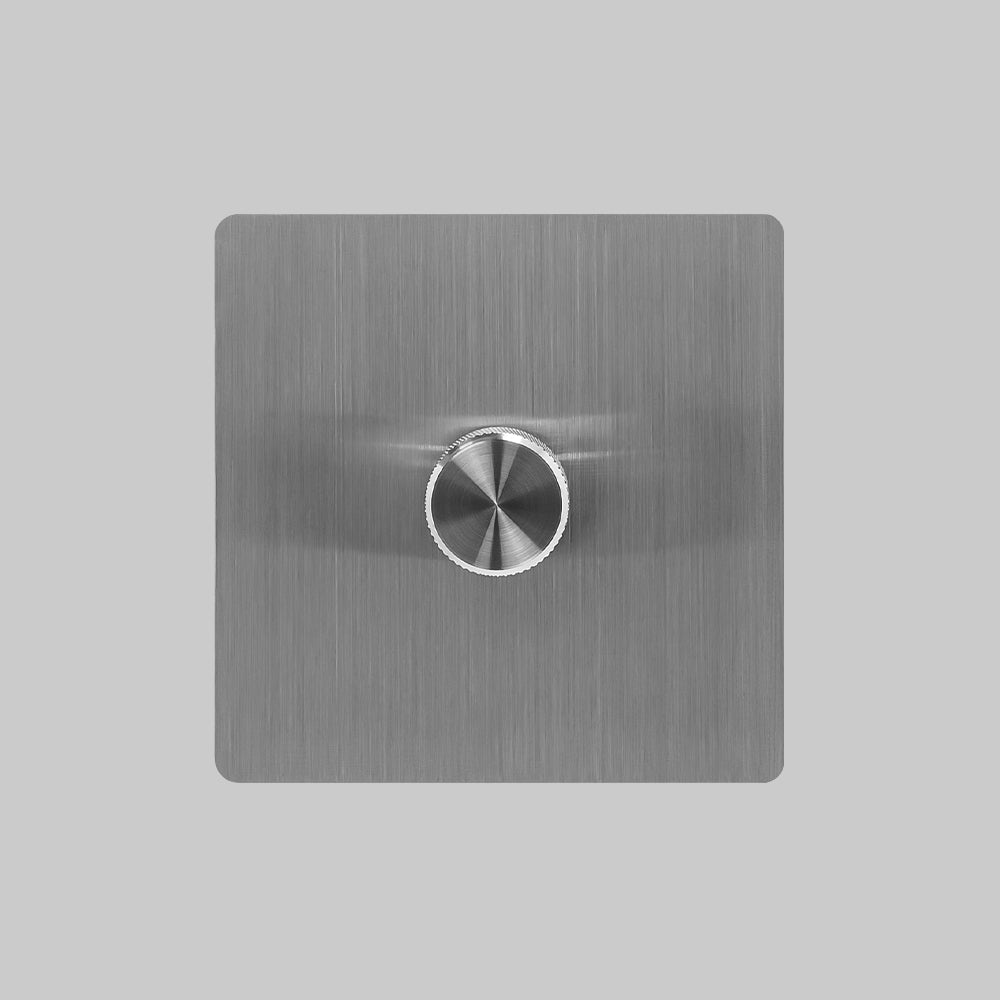
Check: Smart thermostat
Repenic RD-250/RD-400 (250-400W), RD-250ZG Zigbee (5-250W, no neutral), and RD-MP multi-way excel for diffused LEDs, with programmable features for UK homes. Brass/steel finishes available 1-4 gang.
RD-250: 5-250W LED, BOOST, trailing default. RD-400 scales to 400W. Zigbee adds OTA, child lock. Dummy dimmers match for multi-way uniformity.
All fit UK grids (MK, BG, etc.), no neutral, 230VAC.
Conclusion
Mastering paper's diffusion science unlocks superior LED lighting in UK homes. Repenic dimmers bridge theory to practice, delivering flicker-free control tailored for renovations. Choose Repenic for confidence in every upgrade—visit repenic.com for brass, steel, or white options.
FAQs
Can I use tracing paper for LED diffusion? Yes, it scatters effectively but may warm hues; double layers enhance softness.
Do Repenic dimmers work with paper-diffused LEDs? Absolutely—5-250W/400W loads, trailing edge, BOOST ensure flicker-free dimming.
Is neutral wiring needed for Repenic Zigbee dimmers? No, designed for standard UK 25mm boxes without neutral.
How does multi-gang de-rating affect diffused setups? RD-250: 250W (1G) to 75W (5G) for R,C loads—check specs for safe installs.
Are Repenic dimmers compatible with my UK grid? Yes, with MK, BG, DETA, Hager, Hamilton, Crabtree, Schneider, Wandsworth.