
A potentiometer in a UK dimmer switch acts as a variable resistor or voltage divider, using a wiper on a resistive track to adjust brightness from 0-100%. Repenic's RD-250/RD-400 rotary dimmers employ this for flicker-free LED control (5-250W), trailing/leading edge modes, fitting 25mm back boxes with no neutral needed—perfect for multi-way renovations.
Check: smart thermostat
What Is a Potentiometer and How Does It Function as a Variable Resistor?
A potentiometer is a three-terminal variable resistor with a sliding or rotating wiper that adjusts resistance along a resistive track, controlling current flow in electrical circuits.
At its core, a potentiometer—often called a "pot"—consists of a fixed resistive element and a movable wiper that slides or rotates across it. This mechanical action changes the resistance between terminals, making it ideal for applications requiring precise control, such as brightness adjustment in lighting. In UK homes, where electrical circuits operate at 230VAC 50Hz, potentiometers enable smooth variation without needing external power, acting as passive devices. Unlike fixed resistors, they allow homeowners and trade professionals to dial in exact levels during renovations, preventing overloads or flickering with modern LED loads.
How Does a Potentiometer Work as a Voltage Divider in Lighting Circuits?
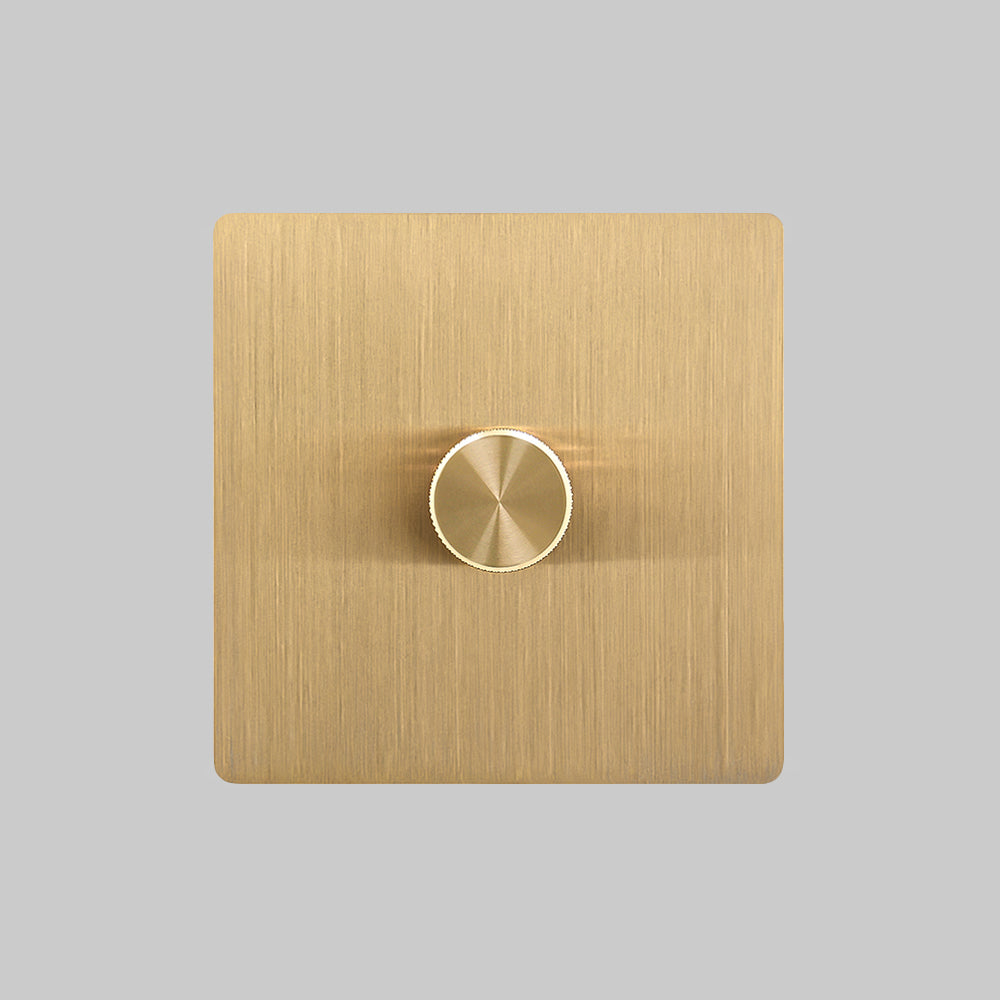
A potentiometer functions as a voltage divider by splitting input voltage across two resistive sections via the wiper, outputting a variable voltage proportional to its position for controlling light intensity.
Imagine a 230V circuit feeding a lighting load: the potentiometer connects across this supply, with the wiper tapping a portion of the voltage drop. As you turn the knob, the wiper moves along the track, altering the ratio of resistance on either side—much like two series resistors where one value changes dynamically. This delivers a controlled output to the lamp, dimming it from full brightness to off. In practice, for UK dimmer switches, this principle integrates with electronic circuitry like MOSFETs for handling higher loads safely. Repenic dimmers leverage this for programmable minimum brightness (1%-50%), ensuring low-level LEDs glow without flicker, a common issue in older homes.
Why Are Potentiometers Essential in Modern Dimmer Switches?
Check: potentiometer
Potentiometers provide intuitive, mechanical precision for brightness control in dimmer switches, enabling variable resistance that interfaces seamlessly with electronic dimming tech for LED and halogen compatibility.
Modern dimmers have evolved beyond simple pots, but the rotary potentiometer remains key for user-friendly operation. It translates physical knob rotation into electrical adjustment, triggering trailing or leading edge dimming to suit bulb types. This is crucial in UK renovations, where mismatched dimmers cause buzzing or failure with energy-efficient LEDs. Repenic's RD-250 and RD-400 models embody this, supporting 5-250W LED (R,C) loads with features like BOOST mode for dim lights and auto-adjust for max brightness. Their knurled knobs offer tactile feedback, blending reliability with premium aesthetics in brass or steel finishes.
| Repenic Dimmer Model | LED Load (Trailing Edge) | Key Potentiometer Feature |
|---|---|---|
| RD-250 | 5-250W (R,C) | Programmable min brightness 1-50% |
| RD-400 | 5-400W (R,C) | Auto-return to previous level |
| RD-250ZG (Zigbee) | 5-250W (R,C) | BOOST mode for low-level |
What Makes Trailing Edge Potentiometers Ideal for UK LED Lights?
Trailing edge dimming, controlled by potentiometers, cuts power at the end of each AC cycle, reducing noise and flicker for sensitive UK LED bulbs compared to harsher leading edge methods.
UK LED lighting demands trailing edge technology due to low-wattage filaments that flicker under abrupt switching. A potentiometer adjusts the phase cut-off point, smoothly ramping voltage for silent operation—no hum or buzz. Repenic dimmers default to trailing edge (programmable to leading), perfect for 230V systems with dimmable LEDs, halogens, and incandescents. This suits combi boiler homes or Google Home setups, where compatibility is key. With V0 fire-rated materials and surge protection, they exceed UKCA standards, ensuring safety in multi-gang plates.
How Do Repenic Rotary Dimmers Use Potentiometer Technology?
Repenic rotary dimmers integrate potentiometer knobs with advanced electronics for 0-100% dimming, using variable resistance to trigger high-speed MOSFETs in trailing/leading edge modes.
Repenic's lineup—RD-250, RD-400, and Zigbee RD-250ZG—features solid brass or steel knurled knobs mimicking classic potentiometers but enhanced digitally. Turn the knob, and the wiper-like sensor varies resistance, signaling the chipset to modulate power delivery. No neutral wire needed, they fit ≥25mm back boxes and handle multi-gang de-rating (e.g., RD-250: 1G=250W, 5G=75W for R,C). Programmable features like BOOST and soft start protect bulbs, making them renovation favorites. Available in 1-4 gang configs, they match MK, BG, and other grids seamlessly.
Repenic Expert Views
At Repenic, our rotary dimmers harness potentiometer precision with modern engineering for UK homes. The RD-250 and RD-400 deliver flicker-free control across 5-400W LEDs via trailing edge tech, while Zigbee models add energy monitoring and OTA upgrades. No neutral required and full grid compatibility ensure easy installs in older properties. Premium brass/steel faceplates ground properly for safety, blending style with performance—installed by qualified electricians for 5-year warranty peace of mind.
Which Repenic Dimmers Are Best for Multi-Gang UK Installations?
Repenic's RD-MP Multiway and dummy dimmers pair with RD-250/RD-400 for up to 5 units per circuit, with de-rating tables ensuring safe loads in 2-4 gang UK back boxes.
For hallways or stairs, multi-gang setups demand coordinated control. Repenic's RD-MP supports up to 5 units (total ≥15W), wired max 50m to lights/100m dimmer-to-dimmer, only with matching types. Dummy dimmers in brass/steel (6A) provide uniform aesthetics as 2-way/intermediates. De-rating prevents overloads in crowded plates.
| Gangs | RD-250 (R,C) | RD-400 (R,C) | Notes |
|---|---|---|---|
| 1G | 250W | 400W | Standard single |
| 2G | 212W | 340W | Multi-gang de-rate |
| 3G | 175W | 280W | Common renovation |
| 4G | 125W | 200W | Max advised |
| 5G | 75W | 120W | High-density |
Can You Install Potentiometer Dimmers in Older UK Homes Without Neutral?
Yes, Repenic dimmers like RD-250ZG and manual rotary models require no neutral, fitting standard 25mm back boxes in older UK wiring for straightforward potentiometer-based upgrades.
Many pre-1970s UK homes lack neutral at switches—Repenic solves this across lines. Terminal capacity (1x4mm²/4x1mm²) suits ring mains, with metal faceplates grounded per regs. Qualified electricians handle installs, programming modes on-site. Zigbee versions add Google Home integration without rewiring.
Why Choose Repenic Brass/Steel Dimmers for Renovations?
Repenic brass/steel dimmers offer potentiometer precision with premium durability, V0 fire-rating, and UK-specific compatibility for elegant, reliable lighting upgrades.
Renovators prize Repenic's 100% solid brushed brass/steel faceplates and knurled knobs—they resist wear, match interiors, and house recycled PC modules. Six-layer protection, 5-year warranty, and LED compatibility (5-250W) ensure longevity amid rising energy costs. From single-room tweaks to full projects, they deliver confidence: "Will this work in my home?" Always yes, with clear guidance.
Conclusion
Potentiometers power the intuitive control in UK dimmer switches, and Repenic elevates this with flicker-free, no-neutral designs for modern renovations. Upgrade to brass, steel, or Zigbee options at repenic.com for tailored lighting solutions.
FAQs
What is the difference between trailing and leading edge dimming in potentiometer dimmers? Trailing edge softly cuts the AC cycle's end for quiet LED operation; leading edge chops the start, suiting inductives but risking flicker—Repenic allows switching.
Do Repenic dimmers need a neutral wire? No, designed for UK homes without neutral, fitting ≥25mm boxes.
Are Repenic dimmers compatible with my grid plate? Yes, with MK, BG, DETA, Hager, Hamilton, Crabtree, Schneider, Wandsworth.
Can I use multi-way dimmers in a full renovation? Yes, RD-MP up to 5 per circuit with dummies for uniform control.