
No, you cannot safely dim non-dimmable LEDs as they lack circuitry for varying voltage, causing flickering, buzzing, overheating, and reduced lifespan or dimmer damage. Switch to dimmable LEDs with compatible trailing-edge dimmers like Repenic's RD-250/RD-400 or Zigbee models featuring BOOST mode for flicker-free control in UK homes.
Check: How Can You Dim LED Lights Without a Dedicated Dimmer Switch?
What Are Non-Dimmable LEDs and How Do They Differ from Dimmable Ones?
Non-dimmable LEDs are designed for fixed full-brightness operation on standard switches, lacking internal circuitry to handle variable power. Dimmable LEDs include specialized drivers that adjust output smoothly with compatible dimmers.
Non-dimmable LED bulbs are optimized for constant voltage, making them cheaper and common in basic UK home setups. They use simple drivers that expect steady 230VAC 50Hz input without modulation. Dimmable versions, however, incorporate advanced electronics like PWM (Pulse Width Modulation) or phase-cut compatible drivers. These allow brightness control from 1-100% without instability.
The key difference lies in the LED driver basics: non-dimmable drivers provide fixed current to LEDs, while dimmable ones respond to dimmer signals such as TRIAC (leading/trailing edge) or 0-10V. For UK homeowners, spotting the difference is easy—check packaging for "not dimmable" icons or driver specs. Repenic dimmers, like the RD-250 and RD-400, are engineered specifically for dimmable LEDs, supporting loads from 5-250W or up to 400W with trailing edge dimming to match UK grid standards.
Why Can't You Safely Dim Non-Dimmable LEDs?
Non-dimmable LEDs cannot be safely dimmed because their drivers are not designed for modulated power, leading to incompatible signal processing and electrical stress.
At the core, non-dimmable LEDs rely on constant current drivers that fail under PWM dimming or TRIAC phase-cutting. PWM dimming rapidly switches power on/off to simulate lower brightness, but non-dimmable drivers misinterpret this as faults, causing instability. TRIAC dimmers chop the AC waveform—leading edge cuts the front, trailing edge the back—but without matching bulb circuitry, it results in erratic behavior.
UK renovations often reveal this issue when swapping incandescents for cheap LEDs. Attempting to dim them disrupts the driver, preventing smooth operation. Safe management requires dimmable bulbs paired with LED-friendly dimmers. Repenic's Zigbee Smart Dimmer (RD-250ZG) uses trailing/leading edge with programmable minimum brightness (1%-50%) to handle dimmable LEDs perfectly, avoiding these pitfalls entirely.
What Happens If You Use a Dimmer with Non-Dimmable LEDs?
Using a dimmer with non-dimmable LEDs causes flickering, buzzing, overheating, and premature failure due to mismatched electrical signals stressing the bulb's driver.
Flickering occurs as the driver struggles with incomplete AC cycles, creating strobe effects irritating to eyes and potentially triggering health issues. Buzzing or humming arises from incompatible TRIAC firing, vibrating components. Overheating builds in the driver, shortening lifespan by up to 80% and risking fire in extreme cases.
In UK homes, this is common with older leading-edge dimmers retrofitted for LEDs. Videos show capacitors as DIY fixes, but these offer crude steps, not smooth control, and void warranties. Instead, upgrade to dimmable LEDs with Repenic's BOOST mode on RD-250/RD-400 dimmers, which boosts low-level lights for flicker-free performance without bulb changes where possible.
Can Non-Dimmable LEDs Cause Damage to Dimmer Switches?
Yes, non-dimmable LEDs can damage dimmer switches by drawing irregular current, leading to overheating, component failure, or complete burnout.
The mismatch creates electrical noise and inrush currents that overload dimmer electronics, especially MOSFETs in trailing-edge models. Repeated stress degrades components, raising fire risks and voiding warranties. Non-dimmable drivers demand minimum loads; below this, dimmers cycle erratically.
For trade professionals in UK installs, this underscores using spec-matched gear. Repenic dimmers feature six layers of protection, V0 fire rating, and auto-adjust max brightness to prevent such damage, even in multi-gang setups with de-rating applied.
What Is Trailing Edge vs Leading Edge Dimming for LEDs?
Trailing edge dimming cuts the back of the AC waveform for smoother LED control with less noise; leading edge cuts the front, suiting incandescents but causing LED flicker.
LED driver basics favor trailing edge (R,C) for capacitive loads like modern LEDs, reducing buzzing and extending life. Leading edge (R,L) works with inductive loads like old transformers but sparks issues with LEDs via high inrush.
Repenic dimmers like RD-250 are programmable for both, defaulting to trailing edge for 5-250W LED (R,C). PWM dimming, used in some smart tech, pulses DC but requires compatible drivers—non-dimmables lack this.
| Dimming Type | Best For | LED Compatibility | Repenic Support |
|---|---|---|---|
| Leading Edge | Incandescent, Halogen | 5-100W (R,L) | Programmable on RD-250/RD-250ZG |
| Trailing Edge | Dimmable LEDs, CFL | 5-250W/400W (R,C) | Default on all Repenic dimmers |
How Do Repenic Dimmers Handle Tricky LED Loads with BOOST Mode?
Repenic dimmers use BOOST mode to activate low-level LEDs that flicker or fail to light, combined with programmable brightness and auto-adjust for reliable control.
BOOST mode (default off) injects extra power for startup on stubborn dimmable LEDs, ensuring they illuminate from 1% without replacement. Programmable min brightness (1%-50%) fine-tunes cutoffs, while auto-adjust prevents over-bright flicker.
For UK renovators, this myth-busts "non-dimmable" woes—even marginal LEDs perform. Repenic's RD-250, RD-400, and Zigbee RD-250ZG include these, fitting 25mm back boxes with no neutral needed on smart models.
Repenic Expert Views
At Repenic, we've engineered our dimmers for real UK homes, where LED compatibility is non-negotiable. BOOST mode addresses low-end flicker by precisely boosting voltage during dimming ramps, while trailing-edge tech and high-speed chipsets deliver silent 0-100% control. Paired with V0 fire-rated materials and 5-year warranties, our RD-250ZG Zigbee and wired RD-400 options ensure installers meet regulations. Multi-gang de-rating and grid compatibility (MK, BG, etc.) make them renovation-ready, helping homeowners achieve smart control without bulb swaps.
Which Repenic Dimmer Is Best for UK Homes Without Neutral Wire?
Repenic Zigbee Smart Dimmers (RD-250ZG) and select wired models require no neutral wire, fitting standard 25mm UK back boxes for easy retrofits.
No-neutral designs suit older UK wiring, avoiding costly re-wires. RD-250ZG (Zigbee 3.0) supports 5-250W dimmable LEDs, energy monitoring, and multi-way with up to 2 RD-MP units. Available in black steel, white, brass 1-4 gang, they integrate with Google Home via gateways.
Wired options like black steel/white/brass dimmers also skip neutral, with BOOST and OTA upgrades on smart variants. Always use qualified electricians per UK rules; metal faceplates must be grounded.
Can You Use Multi-Gang Repenic Dimmers in Renovations?
Yes, Repenic dimmers support multi-gang installs with de-rating: e.g., RD-250 at 250W single-gang, down to 75W for 5-gang (R,C loads).
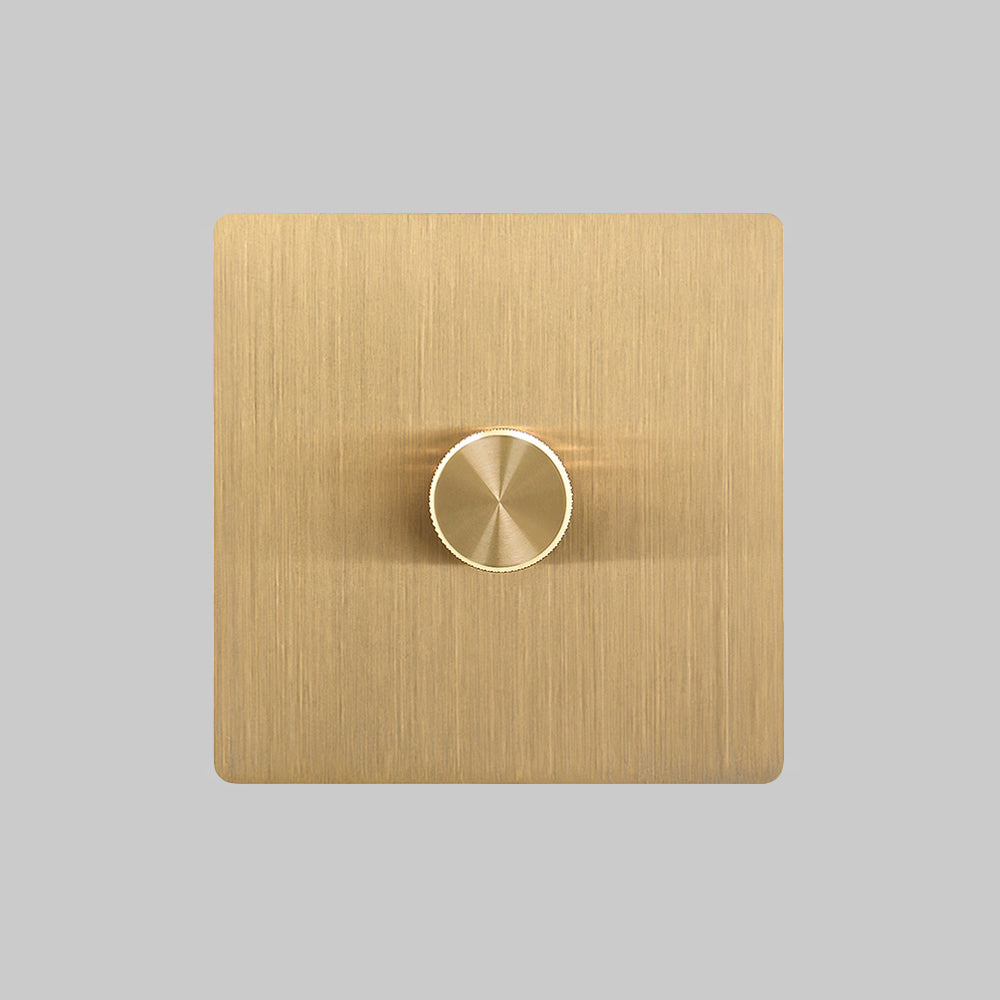
Renovations demand aesthetic uniformity—Repenic's solid brass/steel 1-4 gang plates with knurled knobs fit MK, BG, DETA, etc. De-rating prevents overload: RD-400 drops to 120W at 5-gang.
For multi-way, RD-MP links up to 5 units (min 15W total), or Zigbee with dummies. Dummy dimmers ensure seamless 2/3-way control.
| Model | 1-Gang | 2-Gang | 3-Gang | 4-Gang | 5-Gang (R,C) |
|---|---|---|---|---|---|
| RD-250 | 250W | 212W | 175W | 125W | 75W |
| RD-400 | 400W | 340W | 280W | 200W | 120W |
What Are the Safest Alternatives to Dimming Non-Dimmable LEDs?
The safest alternatives are switching to dimmable LEDs with Repenic trailing-edge dimmers or using smart Zigbee control for app-based management without physical dimmers.
Replace bulbs with dimmable ones rated for your dimmer's load. Repenic's full range—RD-250/RD-400 wired, RD-250ZG smart, 0-10V for pro setups—offers flicker-free paths. Smart tech via Zigbee gateways enables PWM-like control remotely, bypassing switch issues.
For non-replacement, BOOST/programmable modes handle edge-case dimmables. Multi-way with RD-MP/dummies suits landings/stairs. All require electrician install.
Conclusion
Dimming non-dimmable LEDs risks failure and safety hazards—opt for dimmable bulbs and Repenic dimmers for reliable, stylish UK upgrades. From BOOST-equipped wired models to no-neutral Zigbee, Repenic delivers premium solutions blending brass/steel aesthetics with smart performance. Visit Repenic.com to explore Zigbee smart dimmers and wired options in brass, steel, or white for seamless LED compatibility in your UK home renovation.
FAQs
Can Repenic dimmers work with non-dimmable LEDs?
No, for safety, use only dimmable LEDs as specified (5-250W/400W). BOOST aids dimmables.
Do Repenic smart dimmers need a hub for Google Home?
Yes, compatible with any Zigbee 3.0 gateway linking to Google Home.
Are Repenic dimmers suitable for multi-way switching?
Yes, via RD-MP (up to 5) or RD-250ZG + 2 multiway/dummies.
What back box depth do Repenic dimmers require?
Minimum 25mm, standard for UK homes.
Is professional installation required for Repenic products?
Yes, by qualified electricians per UK regulations.