
Not all LED lightbulbs are dimmable—check for a dimmer symbol on the packaging or label stating "dimmable." Use trailing-edge dimmers rated for LEDs (e.g., 5-250W), test for flickering, and follow the 10x rule: max 10 LED watts per rated incandescent watt. Incompatible setups cause flicker; upgrade to LED-specific dimmers like Repenic's no-neutral models for smooth control.
Check: how do i know if my led lights are dimmable
What Does "Dimmable" Mean for LED Lightbulbs?
Dimmable LED lightbulbs are specifically designed to work with compatible dimmer switches, allowing you to adjust brightness from 0-100% without flickering or damage, unlike non-dimmable LEDs which operate only at full power.
LED bulbs convert electricity into light using semiconductors, unlike traditional incandescent bulbs that rely on heating a filament. For dimming, dimmable LEDs include internal drivers that respond to reduced voltage from a dimmer switch. This requires precise engineering to avoid issues like buzzing or premature failure. In UK homes, where LEDs now dominate due to energy efficiency amid rising bills, understanding dimmability ensures seamless upgrades during renovations.
Non-dimmable LEDs lack this circuitry and can overheat or flicker if paired with dimmers. Always verify before installation—most modern dimmable LEDs support trailing-edge dimming, ideal for low-wattage loads common in UK properties.
How Can You Tell If Your LED Bulbs Are Dimmable?
Check the packaging for a dimmer symbol (wavy line or "dimmable" text) or test safely without a dimmer by observing steady light output; incompatible bulbs may flicker even on full power with certain switches.
Decoding packaging symbols is the first step. Look for a circled "D" or wavy line icon indicating dimmability. Labels often state "dimmable LED" explicitly, specifying compatible dimmer types like trailing-edge. Wattage range (e.g., 5-250W LED) and minimum brightness (1-50%) are key clues.
To test without a dimmer:
- Install the bulb in a standard on/off switch and power on—dimmable LEDs should light steadily.
- If available, use a low-voltage tester to simulate dimming; flicker signals incompatibility.
- Consult the manufacturer's list of approved dimmers, common for UK brands.
For safety, avoid direct dimmer tests initially—start with one bulb to prevent overload. Repenic dimmers, like the RD-250 (5-250W LED trailing/leading edge), include BOOST mode for low-level issues, ensuring compatibility across MK, BG, and DETA grids.
Why Do LED Bulbs Flicker with Dimmer Switches?
Check: are led lightbulbs dimmable
LED bulbs flicker with incompatible dimmers due to mismatched phase-cutting (leading vs trailing edge), exceeding minimum load, or poor driver design; fix by switching to trailing-edge dimmers with programmable brightness and BOOST mode.
Flickering occurs when old leading-edge dimmers, designed for high-wattage incandescents, send erratic current to low-power LEDs, causing drivers to misfire. Common in UK retrofits, this shortens bulb life and creates buzzing.
Other causes include total load below the dimmer's minimum (use the 10x rule: 10 LED watts per incandescent watt rated) or mixing bulb brands on one circuit. In multi-gang setups, de-rating reduces capacity—e.g., 2-gang drops to 212W.
Solutions: Trailing-edge dimmers cut power smoothly at the waveform's end, suiting LEDs. Repenic's RD-400 handles 5-400W LED with auto-adjust max brightness and BOOST mode (default off) to ignite stubborn low-level lights, eliminating flicker without rewiring.
What Is the Difference Between Trailing Edge and Leading Edge Dimmers?
Trailing-edge dimmers cut power at the AC waveform's end for smooth LED control without flicker; leading-edge cuts at the start, better for incandescents but prone to buzzing with LEDs.
Both chop the mains sine wave (230V 50Hz in UK homes) to reduce brightness, but method matters:
| Dimmer Type | How It Works | Best For | UK LED Compatibility |
|---|---|---|---|
| Leading Edge | Cuts at waveform start (surge-prone) | Incandescent/Halogen (5-100W LED max) | Limited; causes flicker |
| Trailing Edge | Cuts at waveform end (smooth current) | Dimmable LED/CFL (5-400W) | Excellent; silent operation |
Repenic dimmers (RD-250/RD-400) are programmable for both modes, defaulting to trailing-edge, with features like soft start to protect bulbs. Ideal for UK grids, fitting ≥25mm back boxes without neutral wire.
Which Dimmers Work Best with Dimmable LEDs in UK Homes?
Trailing-edge dimmers rated 5-250W/400W for LED loads, compatible with MK/BG/DETA grids and no-neutral wiring, perform best; Repenic models offer BOOST mode and multi-way control for flicker-free results.
UK homes need dimmers handling low minimum loads (≥5W total) and supporting dimmable LEDs/CFLs. Programmable options adjust min/max brightness (1-50%) to match bulbs.
Repenic excels here: solid brass/steel/white 1-4 gang dimmers (5-250W/400W LED) fit standard back boxes, work with major grids, and include trailing/leading edge support. Zigbee smart versions (RD-250ZG) add energy monitoring and Google Home compatibility via Zigbee 3.0 gateways.
Repenic Expert Views
"At Repenic, we've engineered our dimmers for real UK homes—RD-250 and RD-400 handle 5-400W LED loads with trailing-edge precision, BOOST mode for low-end flicker, and no-neutral design for easy retrofits. Multi-gang de-rating ensures safety (e.g., 2G=212W), while Zigbee models enable smart control without rewiring. Paired with dummy dimmers, they deliver seamless 2/3-way setups in MK or BG grids. Our 5-year warranty and V0 fire rating provide peace of mind for renovators."
How Do You Calculate LED Load for Multi-Gang Dimmers?
Apply the 10x rule (10 LED watts per rated incandescent watt) and de-rate for gangs: e.g., RD-250 at 1G=250W becomes 2G=212W (R,C); total circuit ≥15W for multi-way.
LEDs draw less power, so divide dimmer's max rating by 10. Example: 250W dimmer supports 25W LEDs (e.g., five 5W bulbs).
For multi-gang:
| Gangs | RD-250 (R,C) | RD-400 (R,C) | Notes |
|---|---|---|---|
| 1G | 250W | 400W | Full load |
| 2G | 212W | 340W | De-rated |
| 3G | 175W | 280W | De-rated |
| 4G | 125W | 200W | De-rated |
| 5G | 75W | 120W | Max gangs |
Repenic's RD-MP supports up to 5 units per circuit. Always use qualified electricians per UK regs; metal faceplates must be grounded.
Can You Use LED Dimmers Without a Neutral Wire?
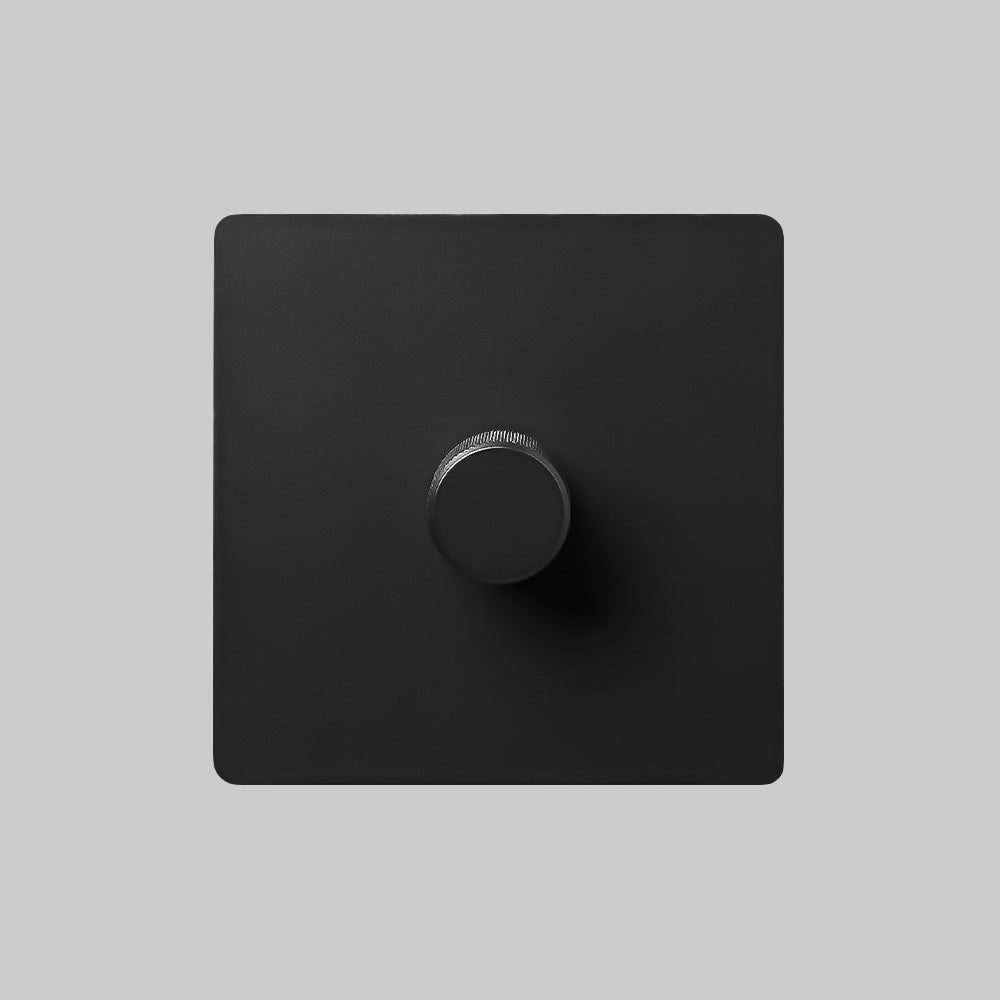
Yes, many modern UK LED dimmers like Repenic's require no neutral, fitting standard 25mm back boxes for easy retrofits in older homes without rewiring.
Traditional dimmers need neutral for low-end stability, but Repenic's (e.g., Zigbee RD-250ZG, manual series) bypass this using advanced circuitry. Specs confirm: 230VAC 50Hz input, terminal capacity 1x4mm², fitting MK/BG/DETA/Hager grids. Multi-way with dummy dimmers (solid brass/steel) enables 2/3-way control up to 50m wire distance.
What Are the Best Repenic Dimmers for LED Compatibility?
Repenic RD-250/RD-400 (5-250W/400W LED, trailing/leading, BOOST mode) and Zigbee smart dimmers (no neutral, multi-way) are top for UK LED setups, available in 1-4 gang brass/steel/white.
Choose RD-250 for standard renovations (programmable brightness, auto-return), RD-400 for higher loads, or Zigbee for smart integration (moonlight/sunrise modes, OTA upgrades). All exceed UKCA with 6-layer safety, V0 rating, 5-year warranty. Dummy dimmers ensure uniform multi-gang aesthetics.
Explore Repenic's LED-compatible dimmers in brass, steel, and white at repenic.com for your UK home upgrade.
Conclusion
Mastering LED dimmability transforms UK home lighting—check symbols, test safely, and pair with trailing-edge dimmers like Repenic's for flicker-free control. Whether manual or smart, these solutions fit your grid and renovation needs without hassle.
FAQs
Are all LED bulbs dimmable? No, only those marked "dimmable" with compatible drivers; check packaging.
Can I use old dimmers with LEDs? Rarely—upgrade to trailing-edge for smooth performance.
What causes LED dimmer buzzing? Incompatible leading-edge types; Repenic's MOSFET tech eliminates it.
Do Repenic dimmers work with Google Home? Zigbee models integrate via gateways supporting Zigbee 3.0.
Is electrician installation required? Yes, per UK regulations for safety and warranty.