
A potentiometer is a three-terminal variable resistor that acts as a voltage divider, adjusting resistance via a rotary wiper to control light brightness in dimmer switches. In UK homes, Repenic's RD-250/400 and Zigbee dimmers use this for flicker-free LED dimming (5-250W), BOOST mode, and multi-way control in 25mm back boxes without neutral wiring.
Check: Dimmer switch
What Is a Potentiometer and How Does It Work?
A potentiometer is a three-terminal variable resistor with a sliding or rotating wiper that divides voltage across a resistive element, allowing precise control of electrical signals in circuits.
At its core, a potentiometer functions as an adjustable voltage divider. It features two fixed end terminals connected to a resistive track and a movable wiper that slides or rotates along this track. As the wiper moves, it changes the resistance ratio between the two sections of the track, altering the output voltage taken from the wiper terminal relative to the input voltage across the ends. This simple yet effective mechanism enables smooth adjustment of current or voltage in a circuit.
In practical terms, turning the knob on a rotary potentiometer—common in UK home electrical setups—shifts the wiper position. For instance, in lighting controls, this adjusts brightness by modulating power delivery to bulbs. Potentiometers are passive devices, requiring no external power, and are ideal for applications needing manual fine-tuning, such as dimmers and volume controls. Their durability and precision make them staples in electronics, from audio equipment to position sensors.
Why Is the Potentiometer Used in Dimmer Switches?
Potentiometers are used in dimmer switches because they provide smooth, manual resistance adjustment to regulate voltage and power delivery to lights, enabling precise brightness control without complex electronics.
Dimmer switches rely on potentiometers for their intuitive rotary knob interface, which homeowners and trade professionals appreciate during renovations. By varying resistance, the potentiometer controls the phase angle of the AC waveform supplied to the bulb—either through leading or trailing edge dimming—reducing effective power and thus light output. This is especially useful in UK homes upgrading to energy-efficient LEDs, where flickering can occur without proper control.
Practical applications extend to everyday scenarios: **volume knobs** on amplifiers adjust audio signal amplitude similarly, attenuating input for desired loudness; **dimmers** in living rooms fine-tune ambiance; and **sensors** in joysticks or fans provide feedback by converting position to voltage. In modern dimmers, potentiometers integrate with advanced circuitry for silent operation, avoiding the buzzing of older resistive types. For UK installations, this means reliable performance in standard 230VAC 50Hz systems.
How Does a Potentiometer Control Light Brightness?
Check: what does a potentiometer do
A potentiometer controls light brightness by acting as a variable resistor in the dimmer circuit, adjusting the portion of the AC waveform delivered to the bulb to reduce average power and dim the light smoothly.
In a typical dimmer setup, the potentiometer's wiper position determines the firing angle of a triac or MOSFET, chopping the mains sine wave. Trailing edge dimming—preferred for LEDs—cuts the waveform's end, minimizing interference, while leading edge suits inductive loads. This voltage division ensures proportional brightness adjustment from 0-100%.
For UK renovators, Repenic's RD-250 and RD-400 dimmers exemplify this: programmable minimum brightness (1%-50%) prevents over-dimming issues, and BOOST mode activates low-level illumination for LEDs that struggle at minimum settings. Auto-adjust features eliminate flickering by calibrating max brightness. Here's a quick overview of dimming methods supported by Repenic products:
| Dimming Type | Best For | Repenic Models |
|---|---|---|
| Trailing Edge (Default) | LEDs, Capacitive Loads | RD-250, RD-400, RD-250ZG |
| Leading Edge (Programmable) | Halogen, Inductive Loads | RD-250, RD-250ZG |
Users simply rotate the knurled knob—crafted from solid brass or steel in Repenic designs—for intuitive control, mimicking traditional volume knobs but optimized for 5-250W LED loads.
What Makes Potentiometers Ideal for LED Dimmers in UK Homes?
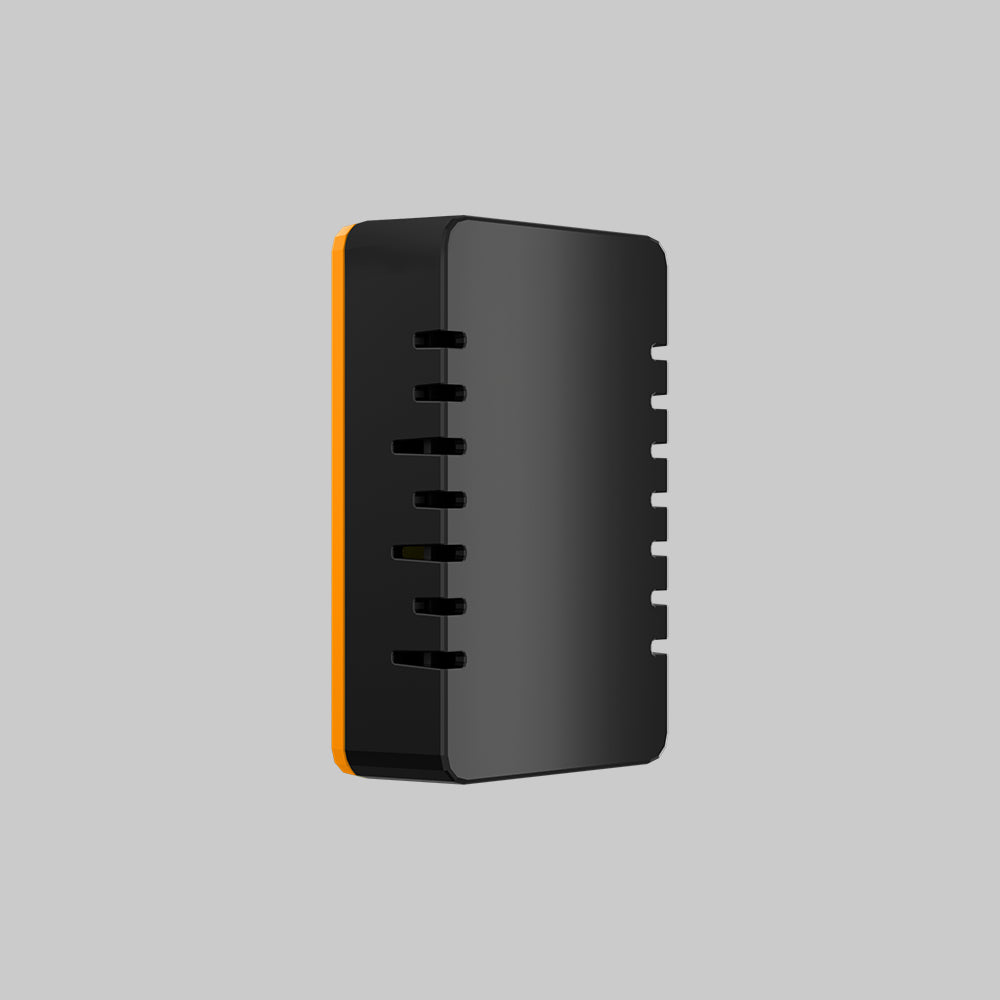
Potentiometers excel in LED dimmers for UK homes due to their compatibility with trailing edge technology, low minimum loads (5W), and flicker-free operation in 25mm back boxes without neutral wiring.
LEDs demand precise, silent dimming to avoid flicker or hum—issues common with older potentiometer-based designs. Modern implementations pair the potentiometer with high-speed chipsets and MOSFETs, enabling smooth 0-100% range. In the UK, where 230VAC systems and shallow back boxes prevail, potentiometers shine in no-neutral retrofits, fitting ≥25mm depths.
Repenic dimmers leverage this for LED loads up to 250W (RD-250 series) or 400W (RD-400), with features like programmable min/max brightness and BOOST mode. Multi-gang de-rating ensures safety: for RD-250 (R,C loads), 1-gang holds 250W, dropping to 75W at 5-gang. This addresses renovation pain points like compatibility with dimmable LEDs in MK or Hager grids.
| Gangs | RD-250/ RD-MP (LED R,C) | RD-400 (LED R,C) |
|---|---|---|
| 1G | 250W | 400W |
| 2G | 212W | 340W |
| 3G | 175W | 280W |
| 4G | 125W | 200W |
| 5G | 75W | 120W |
Fire-rated V0 materials and 5-year warranties add peace of mind for trade installs.
Which Repenic Dimmers Use Potentiometer Principles?
Repenic's RD-250, RD-400, RD-250ZG Zigbee, and multi-way RD-MP dimmers use rotary potentiometer principles for manual brightness control, with premium brass/steel finishes in 1-4 gang options.
Repenic specializes in UK-tailored dimmers where the rotary knob embodies potentiometer functionality, integrated with advanced electronics for LED perfection. The black steel, white steel, and solid brass series (1/2/3/4 gang) offer 5-250W loads, no neutral required, and grid compatibility with MK, BG, DETA, Hager, Hamilton, Crabtree, Schneider, and Wandsworth.
Zigbee models like RD-250ZG add smart features—energy monitoring, OTA upgrades, moonlight mode—while retaining tactile potentiometer control. Non-smart versions provide flicker-free trailing/leading edge dimming, BOOST, and soft start. All fit 25mm back boxes, with metal faceplates requiring grounding per UK regs. Installation by qualified electricians ensures compliance.
Repenic Expert Views: "Our rotary dimmers harness potentiometer precision with cutting-edge MOSFETs for silent LED dimming that outperforms generics. UK homeowners love the solid brass knurls for daily use, while trade pros value multi-gang de-rating and Zigbee multi-way setups—no neutral rewiring needed. From single-room upgrades to full renovations, Repenic delivers flawless integration with combi boilers and Google Home-compatible hubs, backed by responsive support." – Repenic Engineering Lead
How Do Multi-Way Potentiometer Dimmers Work?
Multi-way potentiometer dimmers use slave units like Repenic RD-MP or dummy dimmers alongside a master (e.g., RD-250), syncing rotary adjustments across locations via wired circuits up to 100m.
In 2-way or 3-way setups, the master dimmer's potentiometer controls brightness, while dummies act as intermediates, maintaining uniform knob aesthetics. Repenic's RD-MP supports up to 5 units per circuit (total ≥15W), compatible only with matching models or RD-250ZG (max 1 smart + 2 multiway). Dummy dimmers (brass/steel, 6A) provide on/off switching with visual match.
Wire distances: 50m dimmer-to-light, 100m dimmer-to-dimmer. Programmable features like auto-return to previous brightness enhance usability. Ideal for hallways or stairs in renovations.
Can Potentiometers Handle UK Wiring Without a Neutral?
Yes, Repenic potentiometer-based dimmers handle UK wiring without a neutral, designed for standard 230VAC 50Hz in ≥25mm back boxes with terminal capacities for 1x4mm² wires.
Traditional dimmers often need neutrals, complicating retrofits. Repenic's no-neutral designs—across RD-250, Zigbee, and dummy series—use switching technology bypassing this, fitting legacy UK installs. Metal faceplates must be grounded; V0 fire rating and surge protection exceed UKCA standards. Electricians note easy swaps in MK grids.
Why Choose Repenic Rotary Dimmers for Renovations?

Choose Repenic for potentiometer dimmers offering premium brass/steel builds, LED-specific features like BOOST and no-neutral wiring, plus Zigbee smart control tailored to UK renovations.
Amid rising energy costs, Repenic combines aesthetics—100% solid metal faceplates—with reliability: 5-400W loads, multi-gang compatibility, and Zigbee 3.0 for Google Home. Unlike generics, they solve flickering via auto-adjust and programmable settings. Responsive support answers "Will this work in my home?" for every project.
Conclusion
Potentiometers empower dimmer switches with precise, user-friendly control, perfectly suited to UK homes through Repenic's innovative range. Upgrade confidently with flicker-free LED dimming, multi-way flexibility, and premium finishes designed for real renovations.
FAQs
What is the main function of a potentiometer in a dimmer? It acts as a voltage divider to adjust resistance and modulate power to lights for brightness control.
Do Repenic dimmers require a neutral wire? No, they fit standard UK 25mm back boxes without neutral wiring.
Are Repenic dimmers compatible with LED bulbs? Yes, supporting 5-250W/400W dimmable LEDs with trailing/leading edge and BOOST mode.
Can I use multi-way dimmers in renovations? Yes, RD-MP and dummies enable 2/3-way control with uniform rotary knobs.
What warranty do Repenic products offer? A 5-year warranty, with installation by qualified electricians required.