
In UK 2-way switch wiring, connect brown live to COM on first switch, use 3-core&earth (brown, black, grey) as travellers to L1/L2 on both switches, and link second COM to light's switched live; neutral (blue, brown-sleeved where needed) goes direct to light. Always use a qualified electrician and ground metal faceplates.
Check: 2 way wiring diagram
What Is a 2-Way Switch and Why Use It in UK Homes?
A 2-way switch allows control of a single light from two locations, ideal for hallways and stairs in UK homes. It uses traveller wires between switches for convenient operation without walking back to toggle a single switch.
Perfect for busy UK households, 2-way switching enhances safety and convenience, especially on stairs where turning lights on or off from top and bottom prevents trips in the dark. This setup is standard in modern UK wiring regulations, supporting everything from basic on/off to advanced dimming. Repenic's premium 2-way dimmers and dummy switches fit seamlessly into these circuits, offering LED compatibility and stylish brass or steel finishes that match MK, BG, and other UK grids. Homeowners upgrading during renovations love how these eliminate flickering while fitting standard 25mm back boxes—no neutral wire needed for many models.
What Are the Standard UK Cable Colours for 2-Way Wiring?
UK 2-way wiring uses brown for live, blue for neutral (brown-sleeved for switched live), black/grey for travellers in 3-core&earth cable, and green/yellow for earth. Older red/black may appear but must be updated for safety.
Post-2004 harmonised standards mandate brown live to the first switch's COM, with 3-core&earth (brown, black, grey—all live potential) as travellers linking L1/L2 between switches. The second COM connects to the light's switched live (blue with brown sleeve). Neutral runs directly to the light, and earths connect throughout. Repenic dimmers like the RD-250 follow these exactly, with terminal capacities handling 1x4mm² wires. Always isolate power, use correct sleeving, and ensure metal faceplates are grounded per UK rules. This colour coding prevents confusion during installs in hallways or stairs.
How Does 2-Way Switching Work with 2-Wire vs 3-Wire Control?
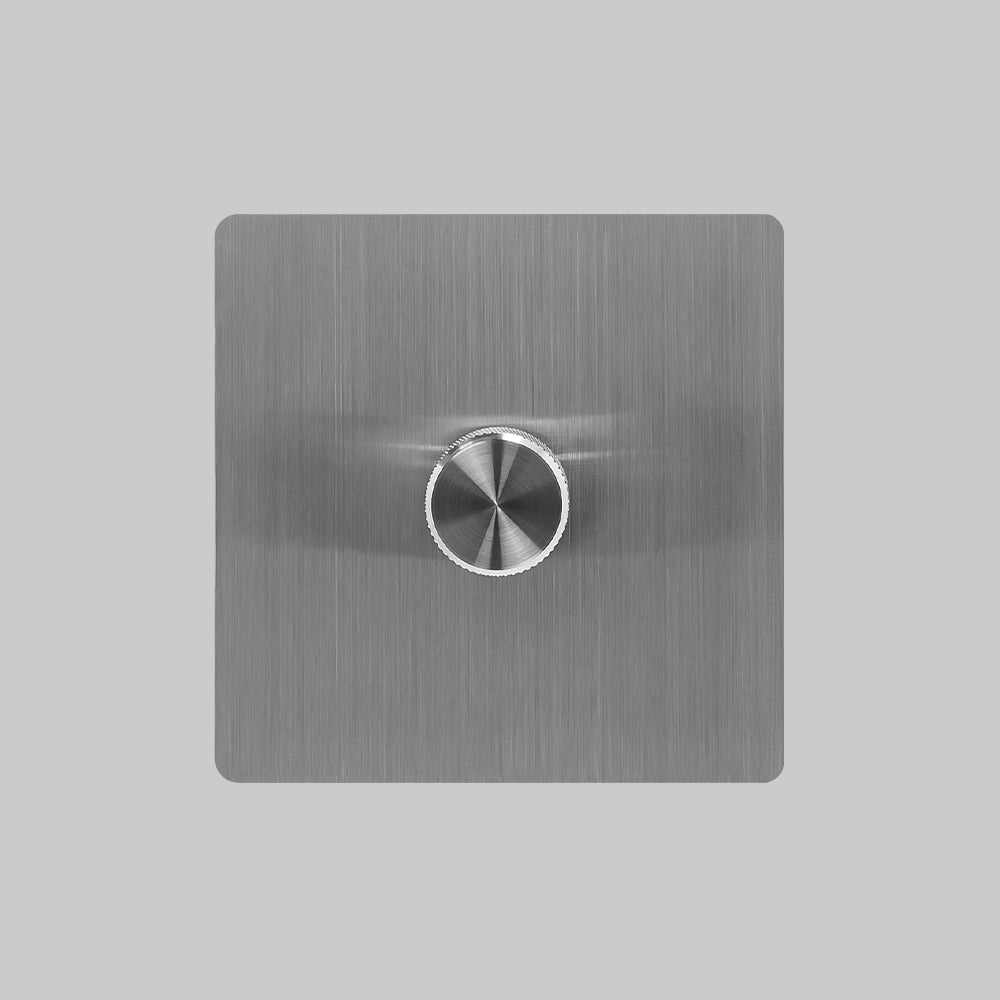
2-way switching uses 2-wire (twin&earth) for simple runs or 3-wire (3-core&earth) for efficient traveller connections. 3-wire is preferred in UK for unbroken cables between switches and lights, minimising junctions.
In 2-wire control, twin&earth runs supply to first switch, then to light and second switch, requiring careful strappers. 3-wire control uses 3-core&earth directly between switches for brown (to COM), black/grey (L1/L2 travellers). From light to first switch: brown line and sleeved blue switched live. This method, common in UK stairs wiring, avoids singles cable and suits Repenic installations. Toggle one switch, it swaps travellers to complete the circuit via the other COM. For dimmers, Repenic RD-400 maintains this logic while adding trailing/leading edge for LEDs.
What Does a Basic 2-Way Switch Wiring Diagram Look Like?
Basic diagram: Power live (brown) to Switch 1 COM; 3-core travellers (black to L1, grey to L2 on both switches); Switch 2 COM to light switched live (sleeved blue); neutral direct to light; earths connected.
Visualise the circuit: Consumer unit feeds brown live via twin&earth to Switch 1 COM. 3-core&earth runs to Switch 2: brown from light to Switch 1 L1/black, sleeved blue from light to Switch 1 L2/grey, brown to Switch 2 COM. Switch 2 L1/black and L2/grey link back. Light gets neutral direct. Dotted lines show toggle positions swapping paths. This hallway/stairs standard supports Repenic dummy dimmers as the second switch for uniform aesthetics.
| Component | Connection | Cable Type |
|---|---|---|
| Supply to Switch 1 | Brown to COM | Twin&Earth |
| Switch 1 to Switch 2 | Black L1, Grey L2, Brown COM | 3-Core&Earth |
| Switch 2 to Light | Brown from COM (sleeved) | Twin&Earth |
| Neutral | Blue direct | Twin&Earth |
How to Wire a Repenic 2-Way Dimmer (RD-250/RD-400) Step-by-Step?
Wire Repenic RD-250/RD-400 like standard 2-way: live to COM, travellers to L1/L2, switched live from second COM. Fits 25mm boxes; use qualified electrician. Program trailing/leading edge post-install.
Step 1: Isolate power. Step 2: Run brown live to dimmer COM (first position). Step 3: Connect 3-core travellers—black L1, grey L2—to matching on second dimmer/dummy. Step 4: Second COM to light switched live (sleeved blue). Neutral direct. Earth metal faceplate. Repenic RD-250 handles 5-250W LEDs, RD-400 up to 400W. Multi-gang de-rates: e.g., 2-gang RD-250 at 212W (R,C). BOOST mode fixes low-level LEDs. Test, then adjust min brightness (1-50%). Ideal for stairs upgrades.
| Model | 1-Gang Load (LED R,C) | 2-Gang | 3-Gang | 4-Gang |
|---|---|---|---|---|
| RD-250 | 250W | 212W | 175W | 125W |
| RD-400 | 400W | 340W | 280W | 200W |
Can You Install 2-Way Dimmers Without a Neutral Wire?
Yes, Repenic 2-way dimmers (RD-250/RD-400, Zigbee models) require no neutral, fitting standard UK 25mm boxes. Neutral runs direct to light; dimmers use live/travellers only.
Traditional switches never needed neutral at switches—it's at the light. Repenic excels here: black steel, brass, white steel dimmers all no-neutral, with 230VAC 50Hz input. Wire identically to basics, but select dimmable LEDs (5W min). V0 fire-rated, 5-year warranty. For hallways, pair RD-250 with dummy dimmer—second switch passes signal without electronics. Ground steel/brass plates. Qualified install mandatory per UK regs.
Repenic Expert Views
At Repenic, we design 2-way dimmers for real UK homes, tackling common pain points like LED flickering in multi-location setups. Our RD-250 and RD-400 feature programmable min brightness and BOOST mode, ensuring flawless performance from 5W up, even in de-rated gangs. No neutral simplifies retrofits into MK/BG grids, while solid brass/steel matches premium renovations. Pair with dummy dimmers for seamless 2-way stairs control—always by qualified sparks. We've helped thousands upgrade confidently.
How to Set Up Multi-Way Dimming with Repenic RD-MP and Dummies?
Check: 2-Way Switch Wiring
Use Repenic RD-MP (up to 5 units, 250W LED) with matching RD-MP or RD-250ZG only. Wire as 2-way but extend travellers; max 50m dimmer-light, 100m dimmer-dimmer. Dummies as intermediates.
For 3+ locations: Main RD-MP at first position, dummies/intermediates follow 2-way logic with extra travellers. RD-MP load 5-250W, programmable brightness. Brass/steel dummy dimmers (6A) provide on/off slaves, fitting 25mm boxes. No mix with non-Repenic—ensures sync. Perfect stairs/hallways: one knob dims, others toggle. Auto-adjust prevents flicker.
What Are the Wiring Rules for Zigbee 2-Way Smart Dimmers (RD-250ZG)?
RD-250ZG wires as single smart dimmer—no 2-way/intermediate directly. For multi-way: max 1 RD-250ZG + 2 RD-MP. Zigbee 3.0, no neutral, 5-250W LED. Pair via gateway like Google Home.
Single location: live to L, load to switched live. Multi-way: RD-250ZG as master, add RD-MP slaves via travellers (circuit total ≥15W). Features: energy monitoring, OTA, moonlight mode. Compatible Homey/Hubitat. Do not wire with traditional 2-way—use Repenic dummies for visuals only in non-smart spots. Brass/steel gangs available.
How to Troubleshoot LED Flickering in 2-Way Dimmer Setups?
Enable BOOST mode (default off) on Repenic dimmers for low-level LEDs; program min brightness 1-50%; auto-adjust max. Check de-rating, wire distance, leading/trailing edge. Test bulbs (dimmable only).
Flicker hits cheap LEDs under 5W—Repenic's high-speed MOSFETs + BOOST fixes it. Multi-gang? De-rate loads. Long runs? Under 50m. Toggle modes via programming. Soft start protects bulbs. If persists, verify grounding, qualified rewire. Repenic's 6-layer safety exceeds UKCA. User tip: power cycle for auto-return to last brightness.
Overcoming UK Two-Way Wiring Hurdles in Period Homes
Based on UK installation feedback and extensive site visits, implementing a two-way switching circuit in standard British properties rarely goes exactly like the textbook diagrams. While modern builds present straightforward deep plastic back boxes and plenty of room, older British housing stock—particularly Victorian and Edwardian terraces—presents distinct, physical headaches for installers. When retrofitting or upgrading a staircase or hallway circuit, you will inevitably clash with the realities of traditional UK building materials and older wiring methodologies.
The most common hurdle during a UK two-way conversion is encountering shallow, 16mm flush steel back boxes embedded directly into solid brickwork or hard lime plaster. Trying to pack a modern two-way switch alongside three cores of 1.0mm² or 1.5mm² Twin and Earth (T&E) cable—plus the necessary three-core-and-earth traveller cable—results in an incredibly tight fit in the wall. Shoving the switch assembly home can easily pinch the outer insulation or crush a conductor. To safely navigate this under BS 7671 standards without the mess of chasing out solid brick for a deeper box, we advise using a shallow-profile grid switch system or using a surface-mounted spacer plinth. Furthermore, you must remember that according to Regulation 514.4.2, any blue or grey conductors utilized as travellers or switched lives are intermittently live and must be meticulously flagged with brown harmonized sleeving at both switch positions to remain fully compliant.
Before you isolate your consumer unit and strip back your cables, a quick trip to local trade counters like Screwfix or Toolstation can save hours of frustration. Instead of wrestling with stiff, older wiring inside tight enclosures, pick up a handful of compact push-fit lever connectors (such as Wago 221 series) and a packet of 30mm extra-long electrical screws to bridge the gap on uneven plaster. If your current back boxes are simply too shallow, picking up a surface spacer plate from B&Q will allow you to cleanly mount decorative or smart switches without damaging the period brickwork behind the plaster.
-
Upgrade to a 25mm or 35mm Back Box: Provides the necessary cubic capacity to tuck away multiple T&E and 3-core cables cleanly, preventing crushed insulation and reducing the risk of a latent short circuit.
-
Deploy Harmonized Brown Sleeving on All Travellers: Ensures immediate compliance with BS 7671 identification regulations, removing any confusion for future electrical testing or modifications.
Conclusion
Mastering 2-way switch wiring elevates UK home lighting, especially with Repenic's no-neutral dimmers and dummies for flawless LED control in hallways and stairs. Always hire qualified electricians for safety and compliance. Upgrade to premium brass or steel today.
FAQs
Do Repenic dimmers fit my MK grid? Yes, compatible with MK, BG, DETA, Hager, Hamilton, Crabtree, Schneider, Wandsworth—1/2/3/4 gang options for standard UK back boxes.
What's the warranty on Repenic 2-way dimmers? 5 years, with V0 fire rating and metal grounding required.
Can I use Repenic dummies in 3-way stairs setups? Yes, as intermediates with RD-250/RD-400 or RD-MP for multi-location control.
Are Repenic dimmers Google Home compatible? Zigbee RD-250ZG works with any Zigbee 3.0 gateway, including Google Home via hub.