
To safely install a dimmer switch UK: Turn off power at the fuse box and verify with a voltage tester. Remove old switch, connect live to C, travellers to L1/L2 (ground metal faceplate if brass/steel), secure in ≥25mm back box, and test. Use dimmable LEDs (5-250W), follow de-rating for multi-gang, and call electrician per UK rules.
Check: 0-10V dimmer - Solid brass 1/2/3/4 Gang
Why Install a Dimmer Switch in Your UK Home?
Installing a dimmer switch enhances lighting control, saves energy with LEDs, and creates ambiance in UK homes upgrading to smart systems.
Dimmer switches offer precise control over light levels, ideal for modern UK homes with widespread LED adoption. They reduce energy bills by dimming lights efficiently and support smart integration like Zigbee for Google Home compatibility. Repenic dimmers, with 5-250W LED loads and no-neutral options, fit standard UK grids such as MK, BG, and DETA. Premium materials like solid brass or steel add luxury while ensuring flicker-free performance via trailing/leading edge dimming. For renovations, they handle multi-gang setups with de-rating, making them perfect for combi boiler homes seeking reliable upgrades without rewiring.
What Are the UK Safety Regulations for Dimmer Installation?
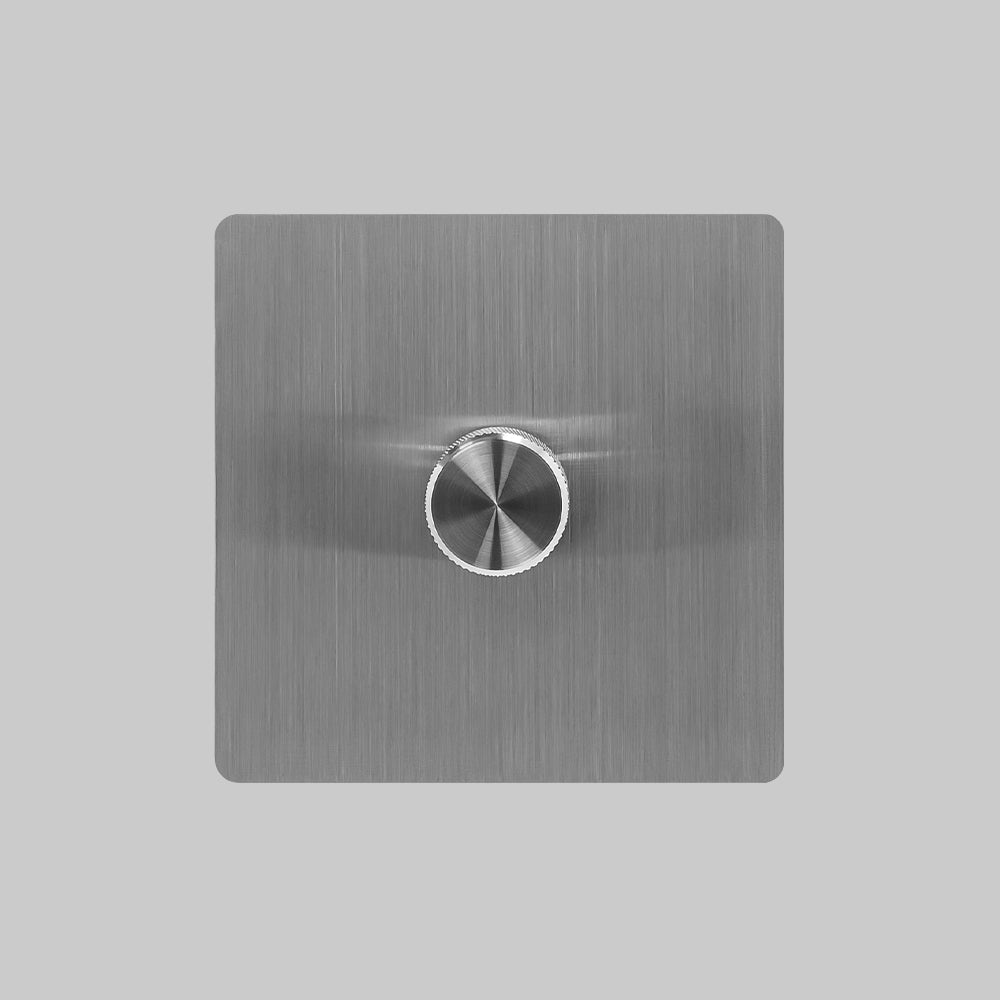
UK regulations require dimmer installation by a qualified electrician; DIY is for preparation only, with metal faceplates grounded and V0 fire-rated materials used.
Part P of Building Regulations mandates certified electricians for notifiable electrical work to prevent fires and shocks. Repenic dimmers comply with UKCA standards, featuring V0 fire-rated plastic and six-layer surge protection. Metal faceplates on brass or steel models must be earthed using the green/yellow wire. Always turn off power at the consumer unit, verify with a voltage tester, and avoid live wiring. For smart Zigbee models like RD-250ZG, no neutral is needed, but multi-way setups require compatible dummies. If your back box is under 25mm deep or involves new circuits, hire a professional immediately.
Which Tools and Materials Do You Need?
You need a screwdriver set, voltage tester, wire strippers, wire nuts, Repenic dimmer (e.g., RD-250), dimmable LEDs, and earth wire for metal plates.
Essential tools include slotted/pozidriv screwdrivers, a non-contact voltage tester, needle-nose pliers, and wire strippers for 1-4mm² terminals. Materials: Repenic 2-way dimmer (RD-250 or RD-400, 230VAC 50Hz), compatible bulbs (LED 5-250W R,C), green/yellow earth sleeve, and terminal blocks. For multi-way, add RD-MP or dummy dimmers (brass/steel). Ensure back box depth ≥25mm. Repenic products support terminal capacities of 1x4mm²/3x1.5mm², fitting UK wiring seamlessly.
How Do You Check Compatibility Before Starting?
Verify back box ≥25mm deep, calculate LED load against de-rating, confirm grid (MK/BG/DETA), and check for neutral if needed (Repenic smart skips it).
| Grid Brand | Repenic Compatibility |
|---|---|
| MK | Full (all dimmers) |
| BG | Full (all dimmers) |
| DETA | Full (all dimmers) |
| Hager | Full (all dimmers) |
| Hamilton | Full (all dimmers) |
| Crabtree | Full (all dimmers) |
| Schneider | Full (all dimmers) |
| Schneider-lisse | Full (all dimmers) |
| Wandsworth | Full (9-grid kits) |
Use this table for Repenic's universal UK grid fit. For RD-250, ensure LED load ≤250W (1-gang). No-neutral models like Zigbee RD-250ZG suit older homes.
How to Turn Off Power and Prepare the Site Safely?
Check: Smart dimmer - Black steel 1/2/3/4 Gang
Switch off at consumer unit, remove fuse/MCB, test wires with voltage tester, then unscrew and pull out old switch carefully.
Locate your circuit's MCB (miniature circuit breaker) or fuse, switch off, and label it. Use a voltage tester on all wires—live (brown) should read 0V. Unscrew the faceplate, gently pull the switch forward, noting wires: live (permanent), switched live (to light), and earth. Take photos for reference. Clear space in the ≥25mm back box, stripping 10mm insulation if needed. Repenic dimmers have flexible terminals for easy prep.
What Is the Step-by-Step Wiring for a 2-Way Dimmer?
Connect live to C (common), L1/L2 to travellers/strappers, earth metal plate; for Repenic RD-250, program trailing edge post-install.
- Identify wires: brown live to C terminal.
- Connect strappers (red/black, often taped) to L1/L2.
- Earth green/yellow to metal yoke if brass/steel faceplate.
- Secure module in box, attach faceplate.
- Restore power, test dimming.
Repenic RD-250/RD-400 support 5-250W/400W LEDs, programmable min brightness (1-50%), and BOOST mode for low-level lights.
How to Set Up Multi-Way with Dummy Dimmers?
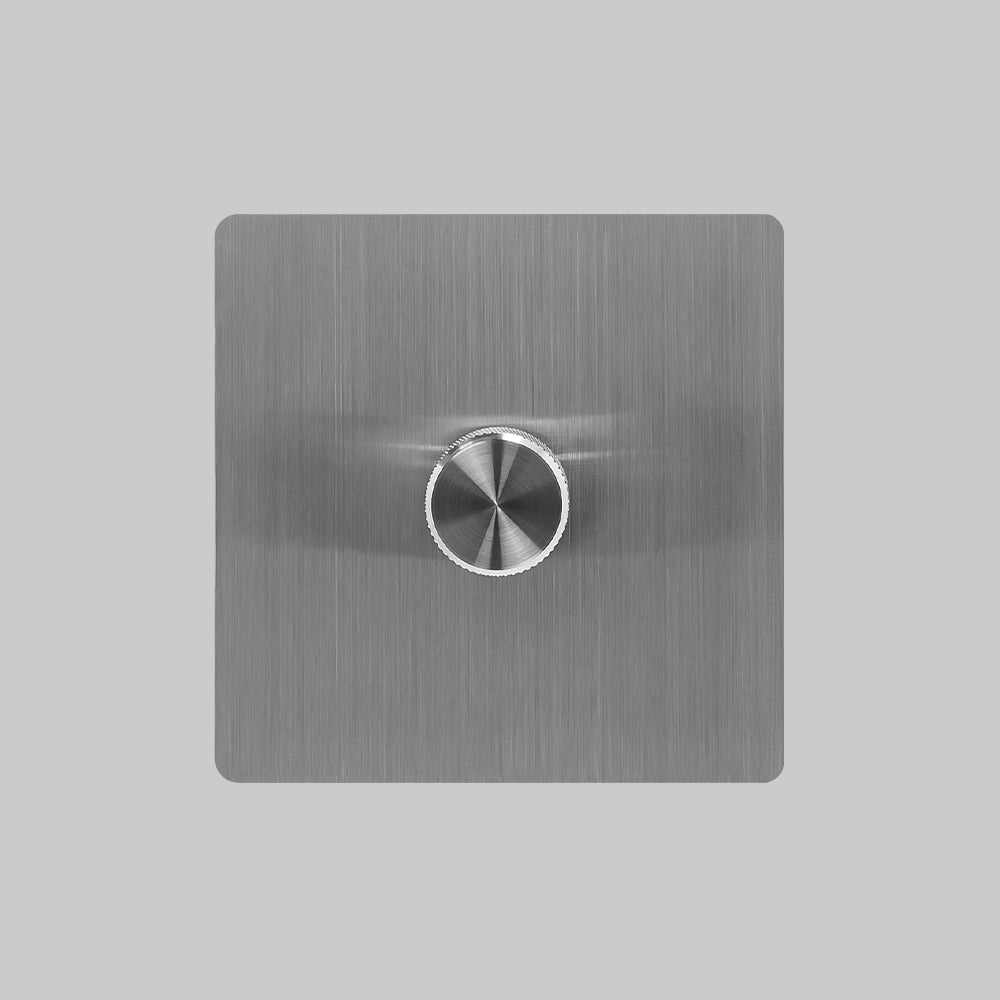
Wire main dimmer (RD-250) as 2-way; dummies (brass/steel) as intermediates with travellers looped; max 5 RD-MP per circuit ≥15W total.
For 2-way: Main dimmer at one end (live to C, L1/L2 to cable), dummy at other (L1/L2 only, 6A capacity). For 3-way+, add intermediates. RD-MP links up to 50m to light/100m dimmer-to-dimmer, only with matching Repenic units. Dummy dimmers match rotary style for uniformity, no neutral needed. Ground metal plates. Test all locations sync.
How to Install a No-Neutral Zigbee Smart Dimmer?
Wire like 2-way: live to L, switched live to output (no neutral); pair via Zigbee 3.0 gateway, enable BOOST/moonlight modes.
Repenic RD-250ZG (black steel/brass/white, 1-4 gang) fits ≥25mm boxes, 5-250W LEDs. Connect live in to L, load to appropriate terminal, earth metal plate. No 2-way/intermediate with non-Repenic. Pair with Homey/Hubitat for energy monitoring, OTA upgrades. Features: dim speed, child lock, auto-return brightness.
What Is LED De-Rating and BOOST Mode?
De-rating reduces max load in multi-gang (e.g., RD-250: 2G=212W); BOOST mode lifts low-level LEDs without flicker.
| Gangs | RD-250 LED (R,C) | RD-400 LED (R,C) |
|---|---|---|
| 1G | 250W | 400W |
| 2G | 212W | 340W |
| 3G | 175W | 280W |
| 4G | 125W | 200W |
| 5G | 75W | 120W |
Auto-adjust max brightness prevents flicker. BOOST (default off) aids dim LEDs; trailing edge default suits R,C loads.
Repenic Expert Views: "At Repenic, our dimmers are engineered for UK homes—trailing/leading edge for LEDs, no-neutral Zigbee for retrofits, and V0-rated for safety. Multi-way with matching dummies ensures seamless control up to 5 units. Always ground metal faceplates and verify loads; our 5-year warranty backs programmable features like BOOST for flicker-free results." — Repenic Technical Team
Conclusion
Safely upgrading to a Repenic dimmer transforms your UK home's lighting. Follow these steps, prioritise safety, and consult electricians for compliance. Explore Repenic's brass, steel, and Zigbee ranges at repenic.com for grid-compatible, premium solutions.
FAQs
Is DIY dimmer installation legal in the UK? Preparation is fine, but final connections require a qualified electrician per Part P.
Do Repenic dimmers need a neutral wire? No, Zigbee smart models like RD-250ZG do not; standard ones may depending on setup.
Will Repenic dimmers work with my LEDs? Yes, 5-250W dimmable LEDs (R,C), with BOOST and programmable brightness to avoid flicker.
How do I ground a metal Repenic faceplate? Connect green/yellow earth wire to the yoke terminal.
What's the warranty on Repenic dimmers? 5 years, covering UK-compliant installations.