
A grid switch system UK uses a modular frame to mix dimmers, switches, and dummies behind one faceplate for custom lighting control. Repenic's Zigbee and no-neutral dimmers (5–250W LED compatible) fit MK, BG, and Hamilton grids in standard 25mm back boxes, support trailing and leading edge dimming, BOOST mode for flickering LEDs, and multi-way setups—all installed by qualified electricians for flicker-free LED renovations.
Check: How Can You Control Lights Away From Home Easily?
What Is a Grid Switch System and Why Choose It for UK Renovations?
A grid switch system is a modular electrical solution that lets you combine different switch modules, dimmers, and dummy switches behind a single decorative faceplate, tailored to your exact lighting needs. Instead of fixed pre-configured switches, grid systems allow complete customization—perfect for UK home renovations where lighting control flexibility matters.
Grid switch systems have become increasingly popular in UK home upgrades because they solve a common problem: how to control multiple lighting circuits from one elegant location without installing separate switch plates. Whether you're renovating a kitchen, bedroom, or office space, a grid system lets you mix 2-way dimmers, intermediate switches, and standard on-off modules in any combination you need.
For UK homeowners, the appeal is clear. A well-designed grid panel looks premium, functions flawlessly with modern LED lighting, and adapts as your needs change. If you later decide to swap a standard switch for a dimmer, or add a smart module for voice control, you simply replace that individual module—no rewiring the entire installation. This modularity saves time, money, and frustration during renovations.
Grid systems also work seamlessly with UK electrical standards. They fit standard 25mm back boxes, comply with BS regulations, and integrate with leading UK grid plates like MK, BG, DETA, Hager, Hamilton, Crabtree, and Schneider. This compatibility ensures that whether you're working with an electrician or managing a DIY consultation, you'll find parts that work together reliably.
How Do Grid Switch Components Work Together?
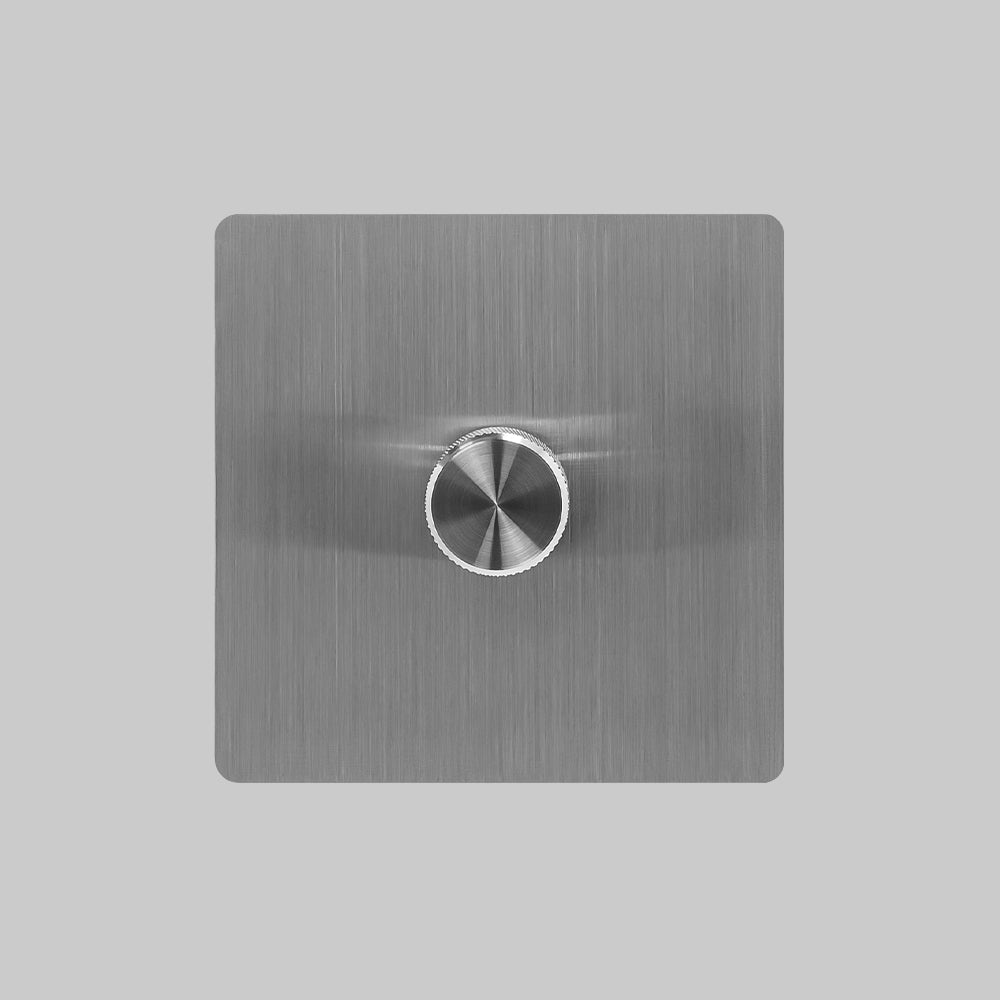
A grid system consists of three core parts: a mounting frame (grid yoke) that anchors inside the wall box, individual switch or dimmer modules that click or screw into the frame, and a decorative faceplate that covers everything for a finished look.
The grid frame (also called a mounting plate or yoke) is the backbone. It's a metal or plastic structure that sits inside your wall-mounted back box and holds all modules securely in place. Frames come in 1-gang to 6-gang or larger configurations, depending on how many modules you want to install. The frame ensures perfect alignment and prevents modules from shifting over time.
Switch modules are the functional components that do the actual work. They click or screw into the grid frame and come in many types: standard 1-way and 2-way switches, intermediate switches for multi-way setups, dimmer modules (both manual and smart), fused connection units (FCUs), USB outlets, neon indicators, and even wireless receivers. Each module is independent, so you can mix and match to create exactly the control setup you need.
The faceplate is the decorative cover that ties everything together visually. Available in dozens of finishes—from classic white and stainless steel to premium brass and matte black—the faceplate creates a unified, polished appearance while protecting the modules behind it. Modern grid faceplates are designed to work with any combination of modules, so your aesthetic choices remain flexible.
The beauty of this three-part design is modularity. Need to replace a failed dimmer? Simply unscrew the module and swap in a new one. Want to upgrade to a smart dimmer later? Same process. The frame and faceplate stay in place; only the functional module changes. This approach is far more cost-effective and sustainable than replacing entire switch units.
Which UK Grid Plates Are Compatible with Repenic Dimmers?
Repenic dimmers are compatible with leading UK grid systems including MK, BG, DETA, Hager, Hamilton, Crabtree, Schneider, Schneider-lisse, and Wandsworth—all fitting standard 25mm back boxes.
When choosing a grid system for your renovation, compatibility is critical. Repenic dimmers are engineered to work seamlessly with nine of the most popular UK grid plate manufacturers, giving you flexibility in choosing the aesthetic and brand that suits your home. Whether you prefer the clean lines of MK Logic, the robust build of Hamilton, or the design heritage of Crabtree, Repenic modules integrate flawlessly.
This broad compatibility means you can visit any electrical supplier, select the grid plate finish and brand you prefer, and confidently install Repenic dimmer modules behind it. There's no guesswork about whether components will fit or function together—the engineering is already proven across thousands of UK installations.
All Repenic grid-compatible dimmers are designed for standard UK back boxes with a minimum depth of 25mm. This is the industry standard for residential and commercial installations, so if your electrician has already installed your back boxes, you can be confident that Repenic modules will fit without modification.
| UK Grid Brand | Repenic Compatibility | Typical Finishes Available | Best For |
|---|---|---|---|
| MK Logic Plus | Full compatibility | White, cream, brushed steel, polished chrome | Traditional and modern homes |
| BG Electrical | Full compatibility | White, brushed steel, black | Budget-conscious renovations |
| Hamilton Litestat | Full compatibility | Polished brass, polished chrome, satin steel | Premium and period properties |
| Crabtree Platinum | Full compatibility | White, black, stainless steel | Contemporary designs |
| Schneider Lisse | Full compatibility | White, black, stainless steel | Modern minimalist interiors |
| Hager | Full compatibility | White, graphite, brushed steel | Commercial and residential hybrid |
What Makes Repenic Dimmers Ideal for Modular Grid Setups?
Repenic dimmers excel in grid setups because they combine premium materials (solid brass and stainless steel), smart Zigbee integration, no-neutral wiring, multi-gang de-rating, and BOOST mode for LED flicker—all fitting standard UK 25mm back boxes.
Repenic has engineered its dimmer range specifically for the UK market and the demands of modern home renovations. Unlike generic grid modules, Repenic dimmers address real problems homeowners face: flickering LED lights, the need for wireless smart control, and the desire for premium finishes that elevate interior design.
Premium Build Quality: Repenic's smart dimmers and standard dimmers come in three material finishes—solid brushed brass, solid brushed stainless steel, and white steel—each with 100% metal faceplates and knurled knobs. This isn't plastic-coated metal; it's genuine solid material that ages beautifully and resists tarnishing. For renovators investing in high-end interiors, this premium build quality ensures your grid panel matches the quality of your kitchen cabinetry or bathroom fixtures.
No Neutral Wire Required: Traditional dimmers often require a neutral wire to function, which complicates installation in older UK homes where neutral wiring may be absent or difficult to access. Repenic dimmers work without a neutral wire, making them ideal for retrofitting into existing installations or working within the constraints of period properties. This alone saves electricians hours of rewiring and reduces installation costs significantly.
Flicker-Free LED Performance: LED bulbs are notoriously tricky to dim smoothly. Many budget dimmers cause flickering, buzzing, or fail to illuminate at very low levels. Repenic dimmers use high-speed chipsets and tuned MOSFETs to deliver 0–100% dimming without flicker or noise. The BOOST mode automatically detects stubborn LEDs that won't illuminate at low brightness levels and gives them an initial power surge to start reliably. This means your LED lighting remains smooth and flicker-free across the entire dimming range—crucial for creating the right ambiance in living spaces.
Programmable Brightness Control: Repenic dimmers let you set minimum and maximum brightness limits. This prevents flickering at the low end and protects bulbs from excessive heat at the high end. You can also program soft start, which gradually ramps power to protect LED lifespan and reduce electrical stress on your installation.
Smart Integration with Zigbee: Repenic's smart dimmers use Zigbee 3.0 protocol, making them compatible with any Zigbee hub—including open platforms like Homey and Hubitat. This means you can control your grid dimmers via voice commands (through compatible smart speakers), automate them with routines, and monitor energy consumption in real time. Unlike WiFi dimmers that rely on internet connectivity, Zigbee operates locally on a mesh network, ensuring reliability even if your broadband drops.
How Do You Build a Multi-Gang Grid Panel with 2-Way Dimmers?
Build a multi-gang grid by selecting a frame sized to your module count, installing 2-way dimmers in the primary location and dummy dimmers (mechanical 2-way switches) in secondary locations, then securing all modules into the frame and attaching the faceplate.
Let's walk through a practical example: you want to control bedroom lights from both the main switch (beside the bed) and a secondary switch (near the door). This is a classic 2-way setup, and a modular grid system makes it elegant and flexible.
Step 1: Choose Your Frame Size
Count the total modules you need. If you want a 2-way dimmer at the bed and a dummy dimmer at the door, plus a standard on-off switch for the ensuite fan, that's three modules. You'd select a 3-gang frame. Frames come in 1-gang to 6-gang configurations, so you can match exactly to your needs.
Step 2: Select Your Modules
At the primary location (bed), install a Repenic 2-way dimmer—either a standard RD-250 (250W capacity) or an RD-400 (400W capacity) if you're running multiple high-power lights. If you want smart control, choose the Zigbee RD-250ZG instead, which lets you dim via your phone or voice commands while still functioning as a traditional manual dimmer.
At the secondary location (door), install a Repenic dummy dimmer in brass or steel to match your primary dimmer's material. The dummy dimmer is a mechanical 2-way switch with a rotary knob that looks identical to your main dimmer, creating visual uniformity across your grid panel. When you press the dummy, it toggles the lights on and off from that location, controlled by the wiring between the two switches.
Step 3: Wiring Considerations
Your electrician will run 2-way switch wiring between the primary and secondary locations. This involves three wires: the live feed, the switched live, and a return wire. The wiring is straightforward and follows standard UK electrical practice. Repenic dimmers are designed to work reliably with this configuration, and the no-neutral requirement simplifies the installation further.
Step 4: Install Modules into the Frame
Once wiring is complete, your electrician will insert each module into the grid frame. Repenic modules either click or screw into place depending on the grid system you've chosen. Ensure each module is fully seated and secure.
Step 5: Attach the Faceplate
Slide or screw the faceplate onto the frame. Choose a finish that complements your interior—solid brass for traditional or luxury homes, brushed stainless steel for modern spaces, or white for classic interiors. The faceplate covers all modules and wiring, presenting a seamless, professional appearance.
The result is a cohesive 3-gang grid panel where your bedroom lights can be controlled from two locations with smooth dimming, premium materials, and complete aesthetic harmony.
Can Repenic Zigbee Dimmers Enable Smart Multi-Way Control?
Yes—Repenic's Zigbee RD-250ZG smart dimmer enables multi-way control by allowing up to one smart dimmer plus two multiway dimmers on the same circuit, all communicating via Zigbee 3.0 for voice control, automation, and energy monitoring.
Traditional 2-way dimmers are hardwired to a single secondary switch location. Repenic's Zigbee smart dimmer opens new possibilities: you can control the same lights from multiple locations wirelessly, without running additional wires between switches. This is a game-changer for renovations where running new wiring is impractical or costly.
Here's how it works: Install a Repenic Zigbee RD-250ZG smart dimmer at your primary location (e.g., bedroom bedside). This dimmer connects to your Zigbee hub—whether that's a dedicated Zigbee bridge, a smart speaker with Zigbee built-in, or an open platform like Homey or Hubitat. Once connected, you can control that dimmer from anywhere in your home via your smartphone, voice commands, or automated routines.
For secondary locations, you have two options. First, you can install wireless Zigbee buttons or remote controls—no wiring needed. Second, you can install Repenic multiway dimmers (RD-MP) at secondary locations. These are mechanical dimmers that communicate wirelessly with the primary Zigbee dimmer, letting you control the same lights from multiple physical switch locations without traditional 2-way wiring.
The maximum configuration is one Zigbee smart dimmer (RD-250ZG) plus two multiway dimmers (RD-MP) on the same circuit. This gives you three physical control points plus smartphone and voice control—extraordinary flexibility for complex lighting scenarios.
Energy Monitoring and Automation: The Zigbee RD-250ZG also provides real-time energy monitoring. You can see exactly how much power your lights are consuming, identify inefficiencies, and optimize your usage. With platforms like Homey and Hubitat, you can create sophisticated automations—for example, "dim lights to 20% at sunset" or "turn on lights when motion is detected after 9 PM."
OTA Updates: Repenic's Zigbee dimmers support over-the-air (OTA) firmware updates. This means Repenic can improve features, add compatibility, or fix issues without you having to replace hardware. Your dimmer gets smarter over time.
What Are Multi-Gang De-Rating Rules for Grid Dimmers?
Check: Which 4 Gang Dimmer Switch is Best for Your UK Home? A Complete Buying Guide
Multi-gang de-rating reduces dimmer capacity as you add more modules to a single grid to prevent overheating: a single 250W dimmer handles 250W, but in a 3-gang setup, each 250W dimmer is de-rated to 175W for LED/resistive loads.
This is a critical detail many renovators overlook. When you combine multiple high-power dimmers into one grid frame, they share the same physical space and can generate heat. To prevent that heat from damaging components or creating a fire risk, electrical standards require de-rating—reducing the safe power capacity of each dimmer as you add more modules.
| Number of Gangs (Dimmers) | RD-250 Capacity (LED/Resistive) | RD-250 Capacity (Inductive/Halogen) | RD-400 Capacity (LED/Resistive) | RD-400 Capacity (Inductive) |
|---|---|---|---|---|
| 1 Gang | 250W | 100W | 400W | N/A |
| 2 Gang | 212W | 90W | 340W | N/A |
| 3 Gang | 175W | 80W | 280W | N/A |
| 4 Gang | 125W | 60W | 200W | N/A |
| 5 Gang | 75W | 40W | 120W | N/A |
For example, if you're building a 4-gang kitchen grid with four Repenic RD-250 dimmers controlling LED downlights, each dimmer is de-rated to 125W. So you can safely run up to 125W of LED lighting through each dimmer module. If you try to push 250W through one module in that 4-gang setup, you risk overheating and failure.
The good news: most residential lighting scenarios stay well within de-rated capacities. A typical kitchen might have 40–60W of LED downlights per dimmer, leaving plenty of headroom. But it's essential to calculate your actual lighting load with your electrician before finalizing your grid design.
Repenic dimmers come in two main capacities: RD-250 (250W single-gang) and RD-400 (400W single-gang), both with de-rating tables provided in technical documentation. Choose RD-400 if you're planning a 1–2 gang setup with high-power loads, or stick with RD-250 for flexibility in larger multi-gang installations.
How to Install Grid Dimmers in Standard UK 25mm Back Boxes?
Installation requires a qualified electrician: turn off power at the circuit breaker, run live, neutral (if needed), and switched live wires to the 25mm back box, insert the grid frame, connect module terminals using 1–4mm² wire, secure modules into the frame, and attach the faceplate.
While this guide explains how grid systems work, actual installation must be performed by a qualified electrician registered with a UK competent person scheme (NICEIC, ELECSA, or equivalent). Electrical work carries serious safety risks, and improper installation can cause fires or electrocution.
That said, understanding the process helps you communicate effectively with your electrician and make informed decisions about your grid layout.
Back Box Preparation: Your electrician will ensure your back box has a minimum depth of 25mm—the UK standard. Most modern back boxes meet this requirement, but older installations may be shallower. If your back box is too shallow, it must be replaced with a deeper one before grid installation proceeds.
Wiring Runs: Depending on your grid configuration, the electrician will run appropriate wiring to the back box. For a simple single dimmer, this is live, switched live, and earth. For 2-way setups, additional wires are needed between the two switch locations. For smart Zigbee dimmers, no neutral is required—a major advantage in older homes.
Terminal Connections: Repenic dimmers accept wire sizes from 1mm² to 4mm² at the terminal blocks. The electrician will strip the wire ends, insert them into the appropriate terminals, and tighten the captive screws. Terminals are designed for easy installation and secure connection, reducing the risk of loose wiring over time.
Module Installation: Once wiring is complete, each module is inserted into the grid frame. Depending on your grid system (MK, BG, Hamilton, etc.), modules may click into place or screw down. The frame holds everything securely and ensures proper alignment.
Faceplate Attachment: Finally, the decorative faceplate is attached, covering all wiring and creating a finished, professional appearance. If the faceplate is metal (brass, steel), it must be properly grounded for safety—your electrician will ensure this is done.
The entire process typically takes 2–4 hours for a multi-gang grid installation, depending on complexity and whether existing wiring needs modification.
Why Choose Brass or Steel Finishes for Grid Switch Panels?
Brass and steel finishes elevate interior design, age beautifully, resist tarnishing, and signal premium quality—making them ideal for luxury renovations and homes where electrical accessories are visible focal points.
Electrical switches are often overlooked in interior design, yet they're visible every single day. A premium grid panel with solid brass or steel faceplates transforms a functional necessity into a design statement that complements high-end kitchens, bathrooms, and living spaces.
Solid Brass: Brass is timeless. It develops a warm patina over years, which many homeowners and designers love. Repenic's solid brushed brass dimmers are 100% genuine brass, not plating, so they won't chip or fade. Brass works beautifully in traditional homes, period properties, and contemporary spaces seeking warmth and character. It pairs naturally with copper accents, warm wood tones, and vintage-inspired interiors.
Solid Stainless Steel: Stainless steel is modern, durable, and hygienic—ideal for kitchens and bathrooms where moisture and cleaning are concerns. Repenic's brushed stainless steel dimmers resist fingerprints better than polished finishes and complement minimalist, industrial, and contemporary design schemes. Steel also works well in homes with chrome or metallic accents.
White Steel: For traditional or neutral interiors, white steel offers a clean, classic look that never dates. It's versatile enough to work in almost any home style and provides a neutral backdrop for other design elements.
Beyond aesthetics, premium finishes signal quality to anyone who sees your grid panel—electricians, guests, potential buyers. A home with solid brass or steel electrical accessories feels more carefully designed and maintained than one with plastic-coated budget alternatives. For renovations where you're investing significantly in kitchens, bathrooms, or whole-home upgrades, choosing premium grid finishes is a small investment that pays dividends in perceived quality and longevity.
Repenic Expert Views:
"At Repenic, we design dimmers specifically for UK homes, which means understanding the real challenges homeowners face: flickering LED lights, the desire for smart control without rewiring, and the need for premium finishes that match high-end interiors. Our grid-compatible dimmers solve these problems by combining solid brass or steel construction, Zigbee smart integration, and flicker-free LED performance in a modular format that works with every major UK grid system. Whether you're retrofitting a period property without a neutral wire or building a smart multi-way control panel in a modern home, Repenic dimmers give you confidence that your installation will