
Featured Snippet Match dimmer switches to wall lights by selecting finishes (brass, steel, white) that complement your décor, confirming LED wattage compatibility (typically 5–250W), checking UK grid fit (MK, BG, DETA), and using programmable dimmers with flicker-free technology. Pair with dummy dimmers for multi-way control and ensure your back box depth meets ≥25mm standards for seamless installation.
Check: smart thermostat
Why Should You Match Your Dimmer Switches to Your Wall Lights?
Matching dimmer switches to wall lights creates visual harmony, ensures technical compatibility, and maximises lighting control. Coordinated finishes elevate your living room aesthetic, while compatible wattage ratings prevent flickering and premature bulb failure. Proper pairing also simplifies installation and future upgrades.
Your living room's lighting sets the mood for relaxation, entertaining, and daily life. When your dimmer switches and wall lights work in harmony—both aesthetically and functionally—you create an environment that feels intentional and luxurious. A matte black steel dimmer paired with contemporary wall sconces, for example, communicates sophistication and control, whereas mismatched finishes or incompatible wattage ratings can undermine even the most carefully curated interior design.
Beyond aesthetics, technical compatibility is essential. Wall lights typically operate at specific wattage ranges, and your dimmer must support those loads without flickering or overheating. In UK homes, particularly older properties, your back box depth and grid system (MK, BG, DETA, Hager, or others) determine which switches you can safely install. By matching your dimmer switches to your wall lights from the outset, you avoid costly rewiring, ensure reliable performance, and future-proof your living room for LED upgrades and smart home integration.
What Are the Key Design Styles for Living Room Dimmer Switches?
Living room dimmer switch styles range from minimalist matte black and brushed steel to warm brass and crisp white finishes. Choose based on your wall light style (modern, traditional, industrial, luxury) and overall décor palette. Premium materials like solid brass and stainless steel elevate the aesthetic while ensuring durability and heat dissipation.
Designer dimmer switches have evolved far beyond basic plastic toggles. Today's premium finishes reflect broader interior design trends and complement a variety of wall light aesthetics:
Matte Black and Black Steel: Modern, minimalist, and increasingly popular in contemporary living rooms, matte black dimmers create visual continuity with charcoal walls, black metal wall sconces, and industrial-style fixtures. They pair beautifully with LED wall lights that have sleek, geometric frames and work well in open-plan spaces where subtle, understated elegance is desired.
Brushed Brass: Warm, luxurious, and trending in upscale renovations, brushed brass dimmers complement vintage, transitional, and mid-century modern wall lights. Brass pairs exceptionally well with warm-toned LED bulbs and softer colour schemes, adding richness without overwhelming the space.
Brushed Steel and Stainless Steel: Neutral and versatile, steel finishes work across traditional, contemporary, and Scandinavian-inspired living rooms. They provide a professional, clean appearance and coordinate naturally with chrome, nickel, and glass elements in wall light fixtures.
Solid White: Crisp and timeless, white dimmers suit traditional, farmhouse, and coastal-inspired décor. They recede visually, allowing wall lights and artwork to take centre stage, and work particularly well in light, airy living rooms with pale walls.
How Do You Choose Between Brass, Steel, and White Dimmer Finishes?
Select your dimmer finish by matching it to your wall light material and room palette. Brass complements warm, traditional designs; steel suits modern and neutral schemes; white works in light, minimalist spaces. Consider your existing fixtures, wall colour, and long-term design goals to ensure cohesion and timeless appeal.
Choosing between brass, steel, and white dimmer switches requires balancing aesthetic preference with practical durability and heat management. Each material offers distinct advantages:
| Finish | Best For | Aesthetic Pairing | Durability & Heat | Maintenance |
|---|---|---|---|---|
| Brushed Brass | Luxury, transitional, vintage-inspired living rooms | Brass wall sconces, warm LED bulbs, jewel tones | Excellent heat dissipation; patinas naturally over time for character | Occasional polishing maintains lustre; patina adds authenticity |
| Brushed Steel / Stainless Steel | Modern, Scandinavian, contemporary, industrial spaces | Chrome wall lights, cool-tone LEDs, minimalist frames | Superior heat dissipation; resists corrosion and discolouration | Minimal; occasional wipe-down to remove fingerprints |
| Solid White | Traditional, farmhouse, light-filled living rooms | Ceramic or frosted glass sconces, soft whites, pastels | Good heat management; blends with wall colour | Regular cleaning to prevent dust accumulation; avoid harsh chemicals |
When selecting your finish, examine your wall light fixtures closely. If your sconces feature brass accents or warm metallic elements, a brushed brass dimmer creates intentional design synergy. Conversely, if your wall lights have sleek chrome or stainless steel frames, a matching steel dimmer reinforces that contemporary aesthetic. Your wall colour also influences the choice: warm, neutral walls pair beautifully with brass or steel, whilst very pale walls benefit from white dimmers that disappear visually.
Repenic's range of designer dimmer switches—available in solid brushed brass, black steel, and white steel finishes—exemplifies how premium materials elevate both function and form. These dimmers feature 100% solid metal faceplates and knurled knobs, ensuring durability and heat dissipation whilst maintaining luxury aesthetics across 1, 2, 3, and 4-gang configurations.
Which Repenic Dimmer Wattage Is Right for Your LED Wall Lights?
Check: 0-10V dimmer - Solid steel 1/2/3/4 Gang
Most living room LED wall lights operate between 5–100W, requiring a 250W dimmer (standard for single sconces). For multiple sconces or higher-wattage fixtures, verify total load, check multi-gang de-rating tables, and consult a qualified electrician. Repenic dimmers support 5–250W LED loads, with 400W options for larger installations.
Wattage compatibility is fundamental to safe, flicker-free dimming. Undersizing your dimmer risks overheating and flickering; oversizing wastes energy and cost. Most living room wall light installations fall into two categories:
Single or Dual Sconces (5–100W total): A standard Repenic 250W dimmer handles this load comfortably. For example, two 40W dimmable LED sconces (80W total) operate well within the 250W capacity, leaving headroom for future upgrades.
Multi-Sconce Layouts (100–250W total): If your living room features three or more wall lights, or a combination of sconces and picture lights, you may approach or exceed 100W. In these cases, a 250W dimmer remains suitable for most residential scenarios, but you should verify the exact wattage of each fixture and add them together.
Multi-Gang De-Rating: When installing multiple dimmers in one switch panel (e.g., a 2-gang or 3-gang setup), each dimmer's capacity reduces slightly due to heat accumulation. For instance, in a 2-gang Repenic dimmer configuration, each unit is de-rated from 250W to 212W (R,C loads). A qualified electrician will account for this when designing your lighting circuit.
Repenic's 250W dimmer range supports LED loads from 5–250W (resistive and capacitive), making it ideal for most living room wall light scenarios. For installations exceeding 250W, Repenic's 400W dimmer option provides additional capacity whilst maintaining the same premium finish options and flicker-free performance.
How Can You Ensure LED Compatibility and Flicker-Free Dimming?
Ensure LED compatibility by confirming your wall lights use dimmable LED bulbs (not standard non-dimmable LEDs), selecting a dimmer rated for LED loads, and choosing one with programmable minimum brightness and BOOST mode to prevent low-level flickering. Repenic dimmers feature high-speed chipsets and tuned MOSFETs for silent, flicker-free performance across the full 0–100% dimming range.
One of the most common frustrations in modern living room lighting is flickering dimmable LEDs. Unlike traditional incandescent or halogen bulbs, LEDs require sophisticated dimmer electronics to dim smoothly. Incompatible or low-quality dimmers cause visible flicker, audible buzzing, and shortened bulb lifespan.
Verify Dimmable LED Bulbs: Your wall light bulbs must be explicitly marked "dimmable." Standard, non-dimmable LEDs will flicker or fail entirely on a dimmer circuit. Check your sconce's product documentation or bulb packaging before installation.
Select LED-Rated Dimmers: Not all dimmers support LEDs equally. Repenic's dimmer switches are engineered specifically for LED compatibility, supporting loads from 5–100W (resistive/capacitive) with leading or trailing edge dimming modes. Trailing edge dimming is the default and works best with most dimmable LEDs, whilst leading edge dimming suits certain LED types and halogen fixtures.
Programmable Minimum Brightness: Many lower-quality dimmers struggle when LEDs reach very low brightness levels. Repenic dimmers feature programmable minimum brightness settings (adjustable from 1–50%), allowing you to set a threshold below which the light won't dim. This prevents the "dead zone" where LEDs flicker or fail to illuminate.
BOOST Mode: Some dimmable LEDs resist illumination at ultra-low levels. Repenic dimmers include a BOOST mode that provides a brief power surge to help stubborn LEDs start reliably, then settles into smooth dimming. This feature is particularly valuable in older living rooms with mixed lighting loads.
Auto-Adjust Maximum Brightness: Repenic dimmers automatically adjust the maximum brightness threshold to prevent flickering at the top end of the dimming range, ensuring smooth, silent operation across the entire 0–100% spectrum. Combined with a high-speed chipset and tuned MOSFETs, this technology eliminates the humming and flashing that plague cheaper alternatives.
What's the Difference Between 2-Way and Multi-Way Dimmer Setups?
A 2-way dimmer allows control from two locations (e.g., doorway and sofa); multi-way (3+ locations) requires additional intermediate switches. Use Repenic dummy dimmers as companion switches to maintain visual uniformity whilst adding control points. Multi-way setups simplify living room layouts where convenience and accessibility matter.
Living room layouts often benefit from multiple control points. Imagine entering from the hallway, moving to the sofa, and later heading to a reading nook—having dimmer access at each location enhances comfort and eliminates the need to cross the room to adjust lighting.
2-Way Dimming: A 2-way dimmer allows you to control the same wall lights from two separate switch locations. Electrically, the dimmer and a second switch are wired in parallel, so either location can independently adjust brightness. This is ideal for living rooms with two entry points or for controlling lights from both the main seating area and an adjacent space.
Multi-Way Dimming (3+ Locations): For three or more control points, you'll need intermediate switches. In a traditional setup, the dimmer occupies one location, intermediate switches occupy the others, and they're all wired together. The dimmer controls brightness; the intermediate switches toggle the circuit on and off. This arrangement is common in larger living rooms or open-plan spaces where multiple seating zones exist.
Dummy Dimmers for Visual Consistency: Here's where Repenic dummy dimmers shine. Rather than installing standard on/off switches at secondary locations, dummy dimmers feature the same rotary knob and premium finish (brass, steel, or white) as your main dimmer. Visually, they're indistinguishable, creating a cohesive, intentional aesthetic across your switch panel. Functionally, they operate as 2-way or intermediate switches, controlling lights from multiple locations whilst maintaining design harmony.
Repenic's dummy dimmers in solid brass, black steel, and white steel are available in 1, 2, 3, and 4-gang configurations, matching your main dimmer perfectly. They're compatible with Repenic dimmers and fit standard UK 25mm back boxes, making them an elegant solution for multi-location lighting control.
How Do You Install Designer Dimmers in Older UK Homes Without a Neutral Wire?
Older UK homes often lack neutral wires at switch locations, complicating dimmer installation. Repenic dimmers are specifically engineered for no-neutral installations, requiring only live and switched-live connections. This makes them ideal for period properties and renovations where rewiring is impractical or expensive. Always hire a qualified electrician to ensure compliance with UK building regulations.
Many UK properties built before the 1990s lack neutral wires at switch locations—a legacy of older electrical standards. This creates a genuine challenge when upgrading to modern dimmers, as many brands require a neutral connection for proper operation. Repenic has addressed this gap by designing dimmers that work without a neutral wire, making them perfect for heritage homes, Victorian conversions, and other period properties undergoing living room renovations.
How No-Neutral Dimmers Work: Repenic dimmers draw minimal standby current from the switched-live circuit itself, eliminating the need for a neutral return path. This is achieved through sophisticated internal engineering and high-impedance circuitry. The result is a dimmer that installs using only two wires (live and switched-live), fitting seamlessly into older switch boxes without costly rewiring.
Installation Requirements: Despite the no-neutral advantage, professional installation is essential. Your back box must be at least 25mm deep—a standard depth in most UK homes, but worth verifying before purchase. The dimmer must be compatible with your grid system (MK, BG, DETA, Hager, Hamilton, Crabtree, Schneider, Schneider-lisse, or Wandsworth). Your electrician will confirm these details and ensure the installation complies with UK Building Regulations and the IET Wiring Regulations.
Repenic's No-Neutral Advantage: All Repenic dimmer switches—whether manual (RD-250, RD-400) or smart (Zigbee-enabled)—are designed for no-neutral installations. This makes them an accessible choice for UK homeowners who want designer lighting control without the expense and disruption of rewiring their entire living room. Combined with their premium finishes and advanced dimming features, Repenic dimmers deliver luxury and practicality in equal measure.
Can You Create a Cohesive Multi-Gang Switch Panel for Your Living Room?
Yes. Use matching dimmer and dummy switch finishes (brass, steel, or white) in coordinated gang configurations (2-gang, 3-gang, or 4-gang) to create a unified aesthetic. Ensure all switches fit your back box depth (≥25mm), are compatible with your grid system, and respect de-rating limits for multi-gang loads. A qualified electrician will balance load distribution across gangs.
Modern living rooms often require multiple lighting circuits: wall sconces on one dimmer, overhead lights on another, accent lighting on a third. Rather than a scattered, mismatched collection of switches, a cohesive multi-gang panel—where every switch shares the same finish, material, and design language—elevates your interior design and signals intentional curation.
Designing Your Multi-Gang Layout: Start by mapping your living room's lighting zones. Typically, you might have: (1) wall sconces for ambient mood lighting, (2) overhead or recessed lights for general illumination, and (3) accent or picture lights for artwork. Assign each zone to a separate circuit and dimmer.
Next, choose your finish. If you've selected brushed brass dimmers for your wall sconces, pair them with matching brass dummy dimmers or additional brass dimmers for other zones. This creates visual continuity and reinforces your design intent. Repenic offers 2-gang, 3-gang, and 4-gang configurations in brass, black steel, and white steel, allowing you to build a panel that feels cohesive and luxurious.
Multi-Gang De-Rating Considerations: When multiple dimmers occupy the same switch plate, heat accumulation reduces each unit's capacity slightly. Repenic's 2-gang configuration de-rates from 250W to 212W per dimmer (for R,C LED loads); 3-gang reduces to 175W per dimmer; 4-gang reduces to 125W per dimmer. Your electrician will verify that your total living room load respects these limits and distributes circuits appropriately.
Visual Uniformity with Dummy Dimmers: If you need control points at multiple locations (e.g., a dimmer by the door and dummy switches by the sofa), use Repenic dummy dimmers in the same finish and gang configuration. The rotary knob design and premium materials ensure they're visually indistinguishable from the main dimmer, creating a seamless, intentional aesthetic.
Repenic Expert View
At Repenic, we believe that lighting control is an extension of your home's personality. When we designed our dimmer switches in solid brushed brass, black steel, and white steel finishes, we weren't simply creating functional devices—we were crafting design elements that elevate your living space. Our dimmers combine premium materials with sophisticated internal engineering, delivering flicker-free dimming across dimmable LEDs, halogens, and incandescent bulbs. Whether you're renovating a Victorian terrace without neutral wires or upgrading a modern open-plan living room, our no-neutral designs and multi-gang configurations adapt to your home's unique needs. Paired with dummy dimmers in matching finishes, you achieve a cohesive, luxury aesthetic that's both beautiful and reliable. That's the Repenic difference: we don't just sell switches—we help you design lighting control that works for your home.
Conclusion
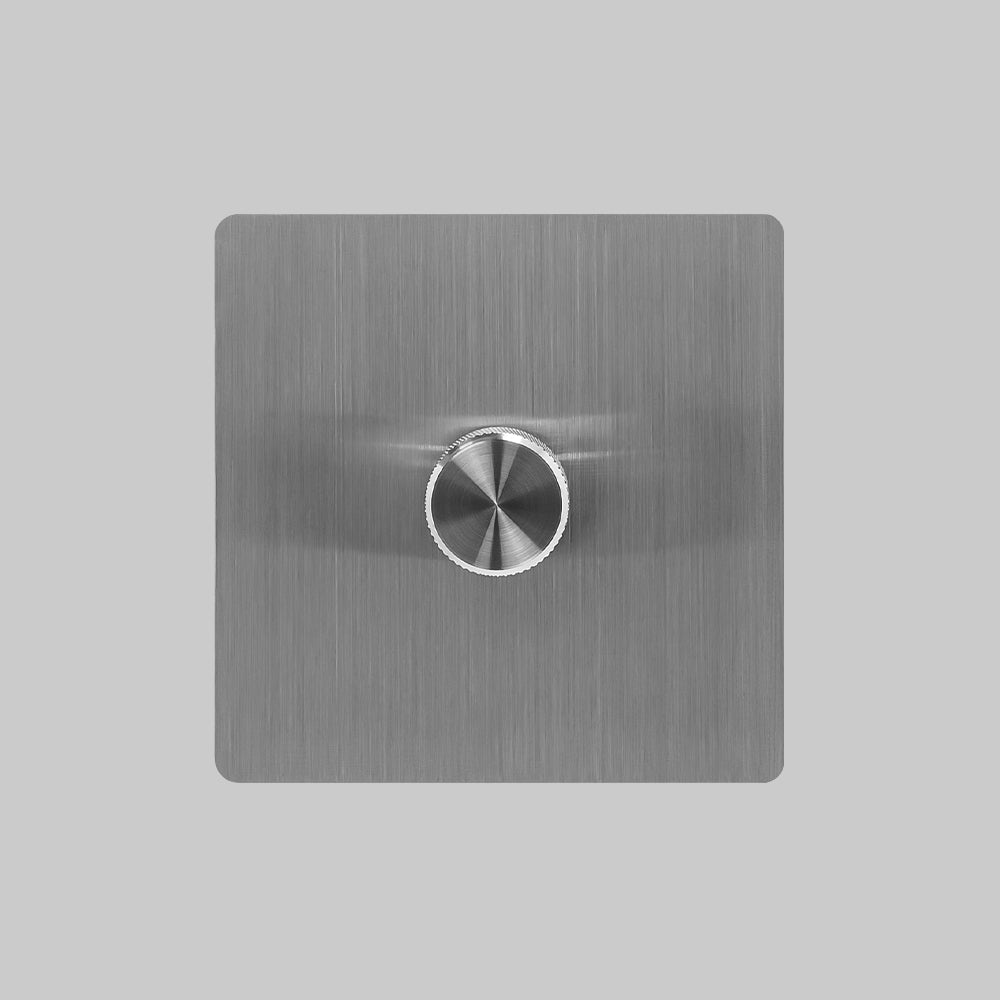
Matching designer dimmer switches to your living room wall lights is both an art and a science. Aesthetically, coordinating finishes—whether brushed brass, black steel, or crisp white—creates visual harmony and signals intentional design. Functionally, confirming LED wattage compatibility, UK grid fit, back box depth, and no-neutral capability ensures reliable, flicker-free performance for years to come.
Repenic's range of premium dimmer switches, available in multiple finishes and gang configurations, addresses the unique needs of UK homeowners and trade professionals. With support for 5–250W LED loads, programmable brightness controls, BOOST mode for stubborn LEDs, and no-neutral installation, Repenic dimmers simplify living room renovations whilst delivering the luxury aesthetic and reliable performance your home deserves. Pair them with matching dummy dimmers for multi-location control, and you've created a lighting system that's as beautiful as it is functional.
Frequently Asked Questions
Can I install a dimmer switch on any wall light fixture?
Not all wall lights are dimmable. Your fixture must use dimmable LED, halogen, or incandescent bulbs. Standard non-dimmable LEDs will flicker or fail on a dimmer. Always verify your wall light's product documentation before purchasing a dimmer. Additionally, your dimmer's wattage rating must accommodate the fixture's load—typically 5–100W per sconce in most living rooms.
Do Repenic dimmers work with Google Home or other smart platforms?
Repenic's smart dimmer range uses Zigbee 3.0 protocol, compatible with any Zigbee 3.0 gateway (such as Homey or Hubitat). Enhanced features are available on open platforms. The manual dimmer switches (RD-250, RD-400) offer no smart home integration but provide flicker-free dimming, programmable brightness, and premium aesthetics without the cost or complexity of smart systems.
What back box depth do I need for a Repenic dimmer?
Repenic dimmers require a minimum back box depth of 25mm—a standard depth in most UK homes. Verify your existing back box before purchasing. If your back box is shallower (older homes occasionally have 20mm boxes), you may need to upgrade the back box or consult a qualified electrician about alternative solutions.
Can I mix brass and steel dimmers in the same multi-gang panel?
Technically, yes—but it's not recommended for a cohesive aesthetic. Mixing finishes creates visual fragmentation and undermines the luxury, intentional look you're aiming for. For the most polished result, select one finish (brass, black steel, or white steel) and commit to it across all dimmers and dummy switches in your living room.
How do I know if my LED wall lights are truly dimmable?
Check the bulb packaging or your wall light's product manual for "dimmable" labelling. Many LED bulbs are non-dimmable by default; only dimmable-rated LEDs will work smoothly on a dimmer. If unsure, contact the fixture manufacturer or consult a qualified electrician. Using non-dimmable LEDs on a dimmer will cause flickering and potential damage.