
Featured Snippet High-wattage dimmers for UK chandeliers require multi-gang derating to prevent overheating: a 400W dimmer rated at 1 gang drops to 340W at 2 gangs, 280W at 3 gangs, 200W at 4 gangs, and 120W at 5 gangs. Solid brass or steel faceplates act as heat sinks, reducing thermal stress. Always ground metal plates, verify LED load compatibility, and choose trailing edge dimmers with BOOST mode for smooth, flicker-free control in luxury lighting installations.
Check: How Can You Control Lights Away From Home Easily?
What is multi-gang derating and why does it matter for high-wattage dimmers?
Multi-gang derating reduces the maximum wattage a dimmer can safely handle when installed alongside other switches in a gang box. As more dimmers share the same back box space, heat dissipation becomes compromised, requiring lower wattage limits to prevent overheating and component failure.
Multi-gang derating is a critical safety principle that protects your electrical installation from thermal stress. When you install multiple dimmers side-by-side in a single gang box—common in luxury homes upgrading chandeliers or high-load lighting arrays—each dimmer generates heat. In a confined 25mm back box, this heat accumulates and cannot escape as efficiently as it would in a standalone installation.
UK electrical standards require dimmers to operate within safe temperature ranges. Exceeding these limits can degrade internal components, reduce dimmer lifespan, and in extreme cases, create fire hazards. That's why manufacturers specify derating tables that progressively lower the maximum load as you add more gangs.
For example, a dimmer rated at 400W when installed alone (1 gang) must be derated to 340W at 2 gangs, 280W at 3 gangs, 200W at 4 gangs, and just 120W at 5 gangs. This ensures each dimmer operates within its thermal envelope, protecting both your installation and your home.
How do 250W and 400W dimmers differ in handling LED chandelier loads?
A 400W dimmer handles significantly higher LED loads than a 250W dimmer, especially across multi-gang installations. The RD-400 supports up to 400W at 1 gang (derated to 120W at 5 gangs), while the RD-250 maxes at 250W single-gang (derated to 75W at 5 gangs), making the 400W ideal for large chandeliers and high-density LED arrays.
Choosing between a 250W and 400W dimmer depends on your chandelier's total LED load and your installation layout. Modern LED chandeliers, especially those with 20+ dimmable bulbs or high-power LED arrays, often demand more capacity than traditional incandescent fixtures.
The Repenic RD-400 is engineered for precisely these demanding applications. It delivers 400W capacity at single-gang installation, making it suitable for large chandeliers or commercial-grade lighting arrays. When derating across multiple gangs, it maintains robust capacity: 340W at 2 gangs, 280W at 3 gangs, 200W at 4 gangs, and 120W at 5 gangs. This flexibility allows trade professionals and homeowners to control multiple high-load zones without undersizing the dimmer.
The Repenic RD-250, by contrast, offers 250W at 1 gang with derating to 75W at 5 gangs. It's ideal for standard chandelier retrofits, medium-load zones, or homes where space is tight and load requirements are moderate. Both models support LED, halogen, and incandescent loads, with programmable trailing or leading edge dimming to match your bulb type.
When calculating your needs, add up the wattage of all dimmable bulbs or LED modules in your chandelier. If the total exceeds 250W or you're planning a 2+ gang installation with high loads, the RD-400 provides the headroom to avoid derating constraints and ensures long-term reliability.
Which dimmer materials (brass, steel, plastic) provide the best heat dissipation for high-power installations?
Check: Which 4 Gang Dimmer Switch is Best for Your UK Home? A Complete Buying Guide
Solid brass and stainless steel faceplates act as natural heat sinks, dissipating thermal energy far more efficiently than plastic alternatives. Brass offers superior thermal conductivity (around 100–120 W/mK), while stainless steel provides robust durability with excellent heat transfer. Both materials reduce internal component stress in high-wattage installations, extending dimmer lifespan and maintaining safer operating temperatures.
Heat management is the silent killer of high-wattage dimmers. Inside every dimmer, semiconductor components (MOSFETs and control circuits) generate heat proportional to the load they're switching. In a 400W installation, this thermal output is substantial. Without effective dissipation, internal temperatures can climb beyond safe limits, causing component degradation, flickering, or premature failure.
This is where material choice becomes critical. Metal faceplates—brass and stainless steel—conduct heat away from the internal circuitry far more effectively than plastic. When you install a Repenic dimmer with a solid brass or stainless steel faceplate, the entire metal surface becomes a passive heat sink. Heat flows from the internal components through the PCB and into the metal faceplate, where it radiates into the surrounding air. Plastic faceplates, by contrast, insulate the heat, trapping it inside the dimmer.
| Material | Thermal Properties | Best For | Aesthetic Appeal |
|---|---|---|---|
| Solid Brass | Excellent thermal conductivity; natural heat sink; premium feel | High-wattage chandeliers; luxury renovations; heat-critical installations | Warm, elegant, timeless |
| Stainless Steel | Excellent thermal conductivity; corrosion-resistant; modern aesthetic | Contemporary homes; high-load lighting arrays; multi-gang setups | Modern, sleek, versatile |
| Plastic | Poor thermal conductivity; insulates heat; lower cost | Low-wattage installations; budget-conscious builds; non-critical loads | Limited; often white or cream only |
Repenic offers both solid brass and stainless steel options across their dimmer range, including the premium RD-400 and RD-250 models. The brass variants feature 100% solid brushed brass faceplates with knurled metal knobs, delivering both superior heat dissipation and a luxurious aesthetic perfect for high-end chandelier installations. The stainless steel options provide the same thermal benefits with a contemporary finish, ideal for modern renovations.
In high-density LED arrays—where multiple bright LEDs sit close together—heat concentration is even more critical. Solid metal faceplates help distribute this thermal load, preventing hotspots that can shorten LED lifespan and dimmer reliability. This is especially important in 3–5 gang installations where multiple dimmers share confined space.
Why do metal dimmer plates need grounding, and when is it mandatory in UK homes?
Metal dimmer faceplates must be grounded to prevent electrical hazards and comply with UK safety standards. Grounding provides a safe path for fault currents, protecting users from electric shock. It's mandatory for all metal plates in UK homes under Building Regulations and UKCA standards; Repenic dimmers specify this requirement in all product documentation.
Grounding a metal dimmer faceplate is not optional—it's a fundamental safety requirement in UK electrical installations. The metal faceplate is conductive and, if not properly grounded, could become energised in the event of an internal fault or component failure. Without a ground connection, a user touching the plate could receive an electric shock.
UK Building Regulations and UKCA standards mandate that all metal electrical accessories—including dimmer switches, light switches, and socket plates—must be connected to the protective earth (PE) conductor. This earth connection provides a low-resistance path for fault currents to return safely to the main earthing point, rather than flowing through a person's body.
When installing a Repenic dimmer with a metal faceplate (brass, stainless steel, or black steel), always connect the earth wire from the back box to the dimmer's earth terminal. The back box itself should also be earthed if it's metal. Most standard UK wall boxes come pre-drilled for earth connections, and qualified electricians will ensure this is done correctly.
If you're retrofitting a dimmer into an older installation without earth provision, consult a qualified electrician. They may recommend upgrading the back box or installing a separate earth conductor from the consumer unit. Never skip this step or use a non-grounded metal plate as a workaround.
How can you calculate the correct dimmer wattage for your LED chandelier array?
Add the wattage of all dimmable LED bulbs or modules in your chandelier. Check the dimmer's derating table for your gang configuration (1–5 gangs). Ensure the chandelier's total wattage doesn't exceed the dimmer's rated capacity at that gang level. For example, a 350W LED chandelier requires at least a 400W dimmer at 1 gang, or a 250W dimmer at 1 gang if the load is 250W or less.
Calculating the correct dimmer size is straightforward but critical. Start by identifying every dimmable light source in your chandelier:
1. Check each LED bulb or module for its wattage. Look for markings on the bulb itself or in the product documentation. LED bulbs are typically marked in watts (e.g., 5W, 10W, 15W).
2. Add up all the wattages. If your chandelier has 20 dimmable LED bulbs at 10W each, the total is 200W. If it has a mix—say, 10 bulbs at 10W and 5 at 15W—calculate: (10 × 10W) + (5 × 15W) = 100W + 75W = 175W.
3. Identify your installation type. Will the dimmer be installed alone (1 gang), or alongside other switches in a 2, 3, 4, or 5 gang setup?
4. Check the dimmer's derating table. For a Repenic RD-400 at 1 gang, you can handle up to 400W. At 2 gangs, it's derated to 340W. At 3 gangs, 280W. At 4 gangs, 200W. At 5 gangs, 120W.
5. Compare your chandelier's total wattage against the dimmer's capacity at your gang level. If your chandelier is 175W and you're installing the dimmer at 2 gangs, the RD-400's 340W capacity is more than sufficient. If your chandelier is 400W and you're at 5 gangs, you'd need to split the load across two separate dimmers (each handling 200W) because a single RD-400 is derated to only 120W at 5 gangs.
Always size up slightly if you anticipate adding more bulbs in the future. This headroom prevents the need for costly rewiring later.
Does a high-wattage dimmer need a neutral wire for UK 25mm back boxes?
No. Repenic high-wattage dimmers (RD-250, RD-400, and Zigbee variants) are designed for UK homes and do not require a neutral wire. They operate on the live and earth connections alone, making them ideal for retrofitting into standard 25mm back boxes without additional wiring work or rewiring of the circuit.
This is one of Repenic's standout advantages for UK homeowners and renovators. Traditional dimmer designs often required a neutral wire to complete their control circuits, which meant retrofitting into older installations was labour-intensive and sometimes impossible if neutral wasn't available at the switch location.
Repenic's engineering approach eliminates this constraint. The RD-250, RD-400, and smart Zigbee dimmer (RD-250ZG) all operate without requiring a neutral connection. They draw their control power from the live circuit itself, meaning you only need to connect the live, switched live, and earth wires—the same configuration as a standard on/off switch.
This no-neutral design is particularly valuable in period properties, Victorian terraces, and older renovation projects where neutral availability at switch locations is rare. It also simplifies installation for trade professionals, reducing on-site troubleshooting and speeding up project timelines.
All Repenic dimmers are designed to fit standard UK 25mm back boxes, the minimum depth specified by Building Regulations. The compact internal design ensures no clearance issues, and the metal faceplates (brass or stainless steel) integrate seamlessly with existing switch plates and wall finishes.
What is BOOST mode and how does it solve low-level LED flickering in chandeliers?
BOOST mode is a programmable feature that delivers a brief pulse of higher power when you dim an LED light to very low levels. Many dimmable LEDs struggle to illuminate below 10–15% brightness, causing flicker or complete darkness. BOOST mode overcomes this by temporarily increasing power until the LED stabilises, then returning to your desired brightness level. Repenic dimmers include BOOST mode to ensure smooth, flicker-free dimming across the full 0–100% range.
Low-level LED flickering is a common frustration in high-end chandelier installations. Unlike incandescent bulbs, which dim gracefully to near-zero brightness, many dimmable LEDs have a minimum brightness threshold. Below this threshold, the LED's internal driver cannot maintain stable operation, causing visible flicker or refusing to light at all.
This happens because LEDs require a minimum voltage or current to activate their semiconductor junction. When you dim below this point using a standard trailing edge dimmer, the LED receives insufficient power to sustain operation, and it flickers or cuts out.
BOOST mode solves this elegantly. When activated, it detects when you're dimming below the LED's natural threshold and delivers a compensatory power pulse—just enough to keep the LED illuminated smoothly. Once the LED stabilises, the dimmer returns to your target brightness level. The result is seamless dimming from 100% all the way down to 1%, with no flicker or dark spots.
Repenic dimmers include BOOST mode as a standard, programmable feature. It's particularly valuable in chandeliers with 20+ LED bulbs, where even one flickering bulb is noticeable. Combined with programmable minimum brightness settings (adjustable from 1% to 50%), BOOST mode ensures your chandelier responds predictably to every dimming gesture, enhancing both comfort and perceived quality.
Can you control a high-wattage chandelier from multiple rooms using Zigbee dimmers without rewiring?
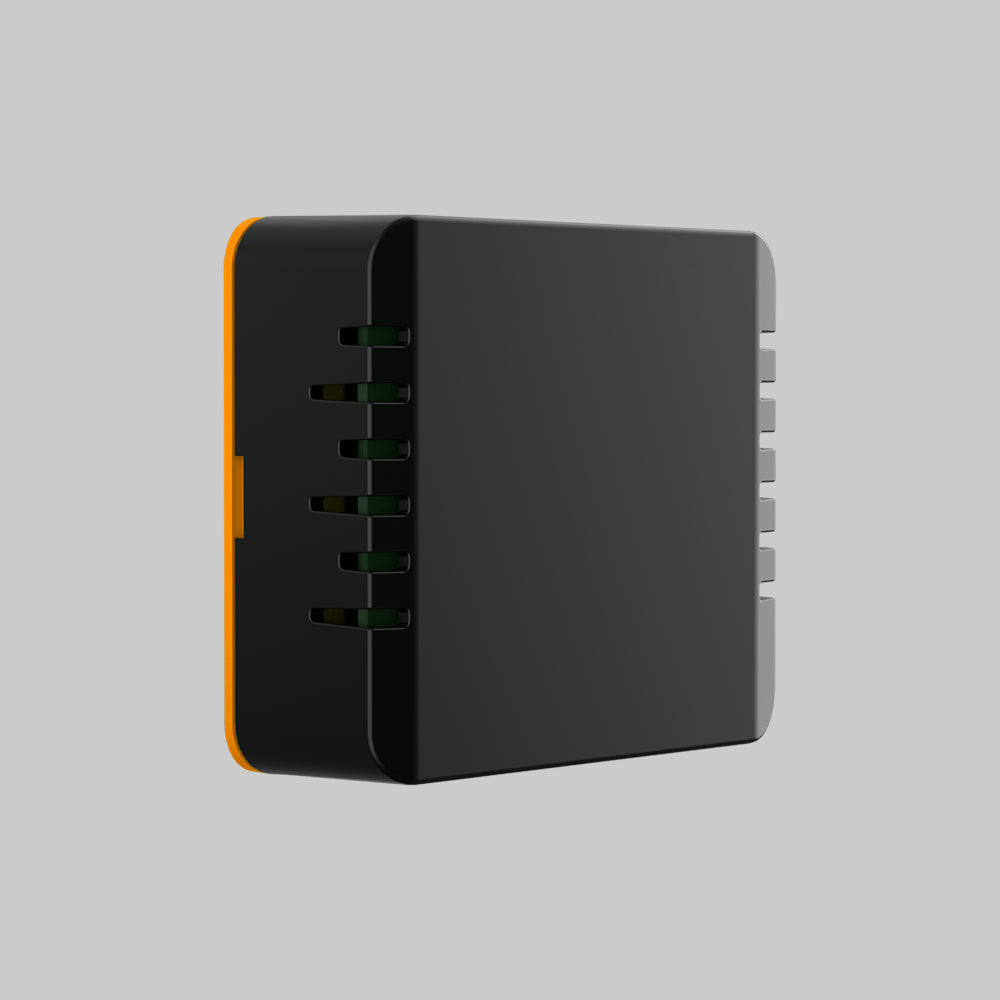
Yes. Repenic's Zigbee smart dimmers (RD-250ZG) support multi-way control without rewiring. You can pair up to two Repenic multiway dimmers on the same circuit as one Zigbee dimmer, allowing you to control a high-wattage chandelier from multiple locations via Zigbee commands. This eliminates the need for traditional 2-way or intermediate wiring, simplifying installation in renovation projects.
Traditional multi-way lighting requires 3-core or 4-core cables running between switch locations, which is costly and disruptive to install in existing homes. Repenic's Zigbee approach sidesteps this entirely.
The Repenic RD-250ZG is a Zigbee 3.0 smart dimmer that can be paired with up to two Repenic multiway dimmers on the same circuit. The Zigbee dimmer communicates wirelessly with your smart home hub (such as Homey or Hubitat, or any Zigbee 3.0 gateway), while the multiway dimmers act as wireless control points. When you press a multiway dimmer in another room, it sends a signal through the electrical circuit to the Zigbee dimmer, which adjusts the light accordingly.
This approach offers several advantages for high-wattage chandelier installations:
No rewiring: You don't need to run new 3-core or 4-core cables between switch locations. Existing single-gang circuits can support multiway control.
Flexible placement: Multiway dimmers can be installed anywhere on the same circuit, giving you control points in different rooms without physical wiring constraints.
Smart integration: The Zigbee dimmer integrates with your smart home ecosystem, allowing voice control, automation, and scheduling alongside manual dimmer operation.
Future-proof: Zigbee 3.0 is a standard protocol, ensuring long-term compatibility and interoperability with other smart devices.
For a luxury chandelier in a multi-storey home or open-plan renovation, this flexibility is invaluable. You can control the chandelier from the living room, hallway, and bedroom without the expense and disruption of traditional multi-way wiring.
Repenic Expert Views: "High-wattage dimming in UK homes is fundamentally about balancing thermal management, load compatibility, and user experience. Our RD-400 dimmer with solid brass or stainless steel faceplate acts as a passive heat sink, dissipating thermal stress that would otherwise degrade internal components. The multi-gang derating system ensures safe operation in confined 25mm back boxes, while BOOST mode and programmable brightness prevent the LED flicker that frustrates homeowners in luxury installations. For trade professionals, the no-neutral design and Zigbee multi-way capability eliminate rewiring headaches, reducing project costs and timelines. Repenic dimmers are engineered for real UK homes—tested in period properties, modern renovations, and high-load commercial settings. That's why we back them with a 5-year warranty and V0 fire-rated materials."
Conclusion
Safely dimming high-wattage LED chandeliers in UK homes requires understanding multi-gang derating, material thermal properties, and LED-specific dimming techniques. The Repenic RD-400 and RD-250 dimmers, available in premium solid brass and stainless steel finishes, are engineered specifically for these demanding applications. With capacities up to 400W at single gang, robust derating across 2–5 gang configurations, no-neutral installation, and features like BOOST mode and programmable brightness, they deliver the reliability and performance that luxury lighting installations demand.
Whether you're retrofitting a Victorian terrace with a modern LED chandelier or managing a full renovation project with high-load lighting arrays, choosing the right dimmer—and installing it correctly—ensures years of flicker-free, thermally stable operation. Always verify your chandelier's total wattage, check the dimmer's derating table for your gang configuration, ground metal faceplates, and consult a qualified electrician for installation. With these principles and the right dimmer, your chandelier will shine beautifully at any brightness level, safely and reliably.
Frequently Asked Questions
1. Why does my metal dimmer plate get hot during high-wattage dimming?
Metal dimmer plates heat up because the internal semiconductor components (MOSFETs) generate heat proportional to the load they're switching. In high-wattage installations, this thermal output is substantial. A solid brass or stainless steel faceplate actually helps by acting as a heat sink, radiating this heat into the surrounding air rather than trapping it inside. However, if your dimmer is oversized for a multi-gang installation or derating limits have been exceeded, excessive heat indicates an unsafe condition. Always verify your load is within the dimmer's derating table for your gang configuration. If heat persists, consult a qualified electrician.
2. Can I use a 250W dimmer for a 300W LED chandelier?
No. A 250W dimmer is rated for a maximum 250W load at single-gang installation. A 300W chandelier exceeds this capacity and risks overheating the dimmer, causing component failure or fire hazard. You must use at least a 400W dimmer for a 300W load at 1 gang. Alternatively, if you're installing at 2 gangs, the Repenic RD-400 derated to 340W would still accommodate a 300W load safely. Always size your dimmer to or above your chandelier's total wattage at your gang configuration.
3. Do I need a separate circuit for a high-wattage dimmer?
Not necessarily. High-wattage dimmers can share a circuit with other loads, provided the total circuit load doesn't exceed the circuit breaker's rating (typically 10A at 230V = 2,300W for a standard lighting circuit). However, if your chandelier alone draws significant current (e.g., 400W = 1.7A), ensure the remaining circuit capacity accommodates other lights or switches without overloading. For complex installations, consult a qualified electrician to verify circuit capacity and safety.
4. Is BOOST mode necessary for all LED chandeliers?
Not all LED chandeliers require BOOST mode, but many benefit from it. If your dimmable LEDs illuminate smoothly down to 1–5% brightness without flicker, BOOST mode may be unnecessary. However, if you experience flicker, dark spots, or complete darkness at low brightness levels, BOOST mode solves this by stabilising LED operation below their natural threshold. Repenic dimmers include BOOST mode as a programmable feature, so you can enable it only if needed—it's a valuable safety net for luxury installations where flicker is unacceptable.
5. Can I mix Repenic dimmers with other brands in a multi-gang setup?
For standard (non-smart) dimmers, mixing brands is generally safe provided all dimmers are rated for the same voltage (230V AC) and comply with UK safety standards. However, for Repenic's Zigbee smart dimmers and multiway systems, it's best to use Repenic components exclusively. The RD-250ZG Zigbee dimmer can work with up to two Repenic multiway dimmers on the same circuit, but mixing with other smart or multiway systems may cause compatibility issues. For complex multi-gang installations, consult Repenic's technical support or a qualified electrician to ensure safe, reliable operation.