
No, you cannot safely dim non-dimmable LEDs with standard dimmers—they cause flickering, buzzing, or damage. Instead, use trailing or leading edge dimmers with programmable brightness control and BOOST mode to stabilise problematic LEDs. Always hire a qualified electrician for installation in UK homes.
Check: How Can You Dim LED Lights Without a Dimmer?
What Happens When You Dim Non-Dimmable LEDs?
Non-dimmable LEDs connected to a dimmer switch experience flickering, buzzing, reduced dimming range, or complete failure. The dimmer sends a changing voltage signal that the LED's fixed circuit cannot process, causing unstable brightness or dropout (light turns off entirely). Damage to the LED driver or overheating may occur, voiding warranties and creating fire hazards.
When you install a dimmer on a non-dimmable LED, the results are almost always disappointing—and potentially dangerous. Non-dimmable LEDs are engineered with a simple power supply and fixed circuit that accepts only constant voltage and current. The moment a dimmer introduces variable voltage, the LED's internal driver struggles to interpret the signal, leading to jerky, inconsistent brightness rather than smooth dimming.
Common problems include:
- Flickering: The light flickers visibly, creating an uncomfortable, strobe-like effect that can trigger headaches or eye strain.
- Buzzing or humming: Electrical noise from the incompatible dimmer and LED circuit.
- Dropout: The light turns off completely at low dimmer settings because the voltage drops below the LED's minimum threshold.
- Pop-on: The light suddenly jumps to full brightness due to leakage current preventing proper dimming.
- Premature failure: The LED driver overheats or burns out, shortening bulb lifespan significantly.
- Warranty void: Most manufacturers explicitly void warranties if non-dimmable LEDs are used with dimmers.
For UK homeowners, the safety risk is particularly serious. Older wall-mounted dimmers rated for 40W or 60W—designed for incandescent bulbs—are especially unsuitable for LEDs. These legacy dimmers can cause sustained overheating, circuit failure, and in extreme cases, fire hazards. This is why using the correct dimmer type is not just about convenience; it's a fire safety issue.
Why Do Non-Dimmable LEDs Flicker or Buzz?
Non-dimmable LEDs flicker because their fixed circuit cannot process the variable voltage from a dimmer. The dimmer reduces voltage to lower brightness, but the LED driver interprets this as an unstable power signal, causing the light to pulse rapidly (flicker) or generate electrical noise (buzzing). The LED's simple design lacks the electronic components needed to handle dimming signals.
The root cause lies in the fundamental design difference between dimmable and non-dimmable LEDs. A dimmable LED contains an electronic driver—a small circuit board inside the bulb base—that is specifically programmed to accept and process dimming signals. This driver smooths out voltage fluctuations and maintains stable brightness across a wide range of input levels.
A non-dimmable LED has no such driver. Instead, it uses a basic power supply that expects a constant 230V AC input. When a dimmer switch reduces this voltage—say, from 230V to 150V—the non-dimmable LED's circuit receives an unexpected, unstable signal. The result is that the LED turns on and off many times per second, creating the visible flicker we perceive.
Buzzing occurs for a similar reason. The dimmer's switching frequency (typically 100–120 Hz for trailing-edge dimmers) interacts with the non-dimmable LED's fixed circuit, creating harmonic interference that manifests as audible electrical noise.
In two-wire electrical systems common in older UK homes, this problem is even worse. Two-wire setups rely on load current flowing back through the dimmer for synchronisation. Non-dimmable LEDs draw minimal current, starving the dimmer of the feedback it needs to function properly. This is why upgrading to a three-wire system (which includes a neutral wire) significantly improves dimmer reliability—but even then, you must use dimmable LEDs with a compatible dimmer.
Can Capacitors or DIY Hacks Safely Dim Non-Dimmable LEDs?
No. DIY hacks like adding capacitors or resistors to non-dimmable LEDs are unsafe and not certified for UK electrical standards. They do not address the core incompatibility, risk circuit failure, overheating, and fire hazards. UKCA-compliant dimmers like Repenic's RD-250 or RD-400 are the only safe, legal solution for UK homes.
Online forums and DIY communities occasionally promote workarounds—adding a capacitor to the LED circuit, wiring a resistor in series, or using a PWM (pulse-width modulation) controller. These hacks might produce some dimming effect, but they are fundamentally unsafe for residential use and violate UK electrical regulations.
Here's why:
- No certification: These modifications are not tested or certified to UKCA standards or V0 fire ratings. If an electrical fire occurs, your home insurance may not cover the damage, and you could face liability.
- Unpredictable performance: Capacitors and resistors degrade over time, causing flickering or sudden failures months after installation.
- Thermal risk: Adding components increases heat generation in the LED driver, risking overheating and component failure.
- Electrician liability: A qualified electrician cannot recommend or install these hacks without violating Building Regulations and potentially facing professional indemnity claims.
- No warranty: LED and dimmer manufacturers will not honour warranties on modified or hacked systems.
The safe, legal alternative is straightforward: replace non-dimmable LEDs with dimmable LEDs, and install a UKCA-certified dimmer switch compatible with your home's wiring and grid system. For UK homes, Repenic dimmers are engineered to work seamlessly with dimmable LEDs, offering programmable brightness control, BOOST mode for stubborn bulbs, and six layers of intelligent protection exceeding UKCA standards.
What Is Trailing Edge vs Leading Edge Dimming?
Trailing-edge dimmers cut voltage at the end of the AC cycle and are optimised for LED and CFL bulbs, providing smooth dimming without flickering. Leading-edge dimmers cut voltage at the start of the cycle and suit incandescent and halogen bulbs. Using the wrong type with non-dimmable LEDs worsens flickering and compatibility issues.
Understanding dimmer types is crucial for preventing flickering and damage. The UK mains supply alternates at 50 Hz, meaning voltage rises and falls 50 times per second. A dimmer switch controls brightness by interrupting this AC waveform at different points in the cycle.
Trailing-edge dimmers (also called "electronic" or "reverse-phase" dimmers) cut the voltage at the end of each cycle. They produce a gentler, more gradual voltage reduction that modern LED drivers can process smoothly. Trailing-edge dimmers are the default choice for LEDs because they minimise flicker and electromagnetic interference.
Leading-edge dimmers (also called "forward-phase" dimmers) cut voltage at the start of each cycle, creating a sharper voltage transition. These were designed for incandescent and halogen bulbs, which tolerate abrupt voltage changes. Leading-edge dimmers often cause severe flickering with LEDs because the sharp transitions confuse the LED driver.
If you attempt to dim a non-dimmable LED with a leading-edge dimmer, the problem is compounded. The dimmer sends an aggressive, incompatible signal that the non-dimmable LED's fixed circuit simply cannot process. Flickering becomes extreme, buzzing intensifies, and failure accelerates.
Repenic's dimmers support both trailing and leading edge modes, programmable via the dimmer's internal electronics. This flexibility allows installers to optimise performance for mixed loads (e.g., dimmable LEDs and halogen spotlights on the same circuit). For non-dimmable LED problems, always ensure your dimmer is set to trailing-edge mode.
Which Repenic Dimmers Work Best for Problematic LEDs?
Repenic RD-250 and RD-400 dimmers are engineered for dimmable LEDs up to 250W and 400W respectively. Both feature programmable trailing/leading edge modes, BOOST mode to stabilise low-level brightness, auto-brightness adjustment to prevent flickering, and six-layer safety exceeding UKCA standards. They fit standard UK 25mm back boxes with no neutral wire required.
Repenic dimmers are purpose-built to solve the exact problems non-dimmable LEDs create. Here's how they differ from generic dimmers:
| Feature | Repenic RD-250 | Repenic RD-400 | Generic Older Dimmers |
|---|---|---|---|
| LED Load Capacity | 5–250W (dimmable) | 5–400W (dimmable) | Often 40–60W (incandescent-rated) |
| Dimming Mode | Trailing/leading edge (programmable) | Trailing/leading edge (programmable) | Fixed (usually leading-edge only) |
| BOOST Mode | Yes (stabilises low-level brightness) | Yes (stabilises low-level brightness) | No |
| Auto-Brightness Adjustment | Yes (prevents flickering) | Yes (prevents flickering) | No |
| Programmable Min/Max Brightness | Yes (1–50% range) | Yes (1–50% range) | No |
| Fire Rating | V0 (highest) | V0 (highest) | Often unrated or lower |
| Warranty | 5 years | 5 years | Often 1–2 years |
| UK Back Box Fit | 25mm minimum (no neutral needed) | 25mm minimum (no neutral needed) | May require rewiring |
The RD-250 is ideal for most UK homes, offering 250W capacity across 1, 2, 3, and 4-gang configurations. For larger installations—such as a kitchen with multiple LED downlights—the RD-400 provides up to 400W capacity on a single circuit.
Both models are compatible with major UK grid systems including MK, BG, DETA, Hager, Hamilton, Crabtree, Schneider, and Wandsworth. They feature high-speed chipsets and tuned MOSFETs that deliver real-time stability without flickering or humming, even with dimmable LEDs that might otherwise be problematic.
Importantly, Repenic dimmers require no neutral wire—a significant advantage in older UK homes where neutral wires may not reach the switch position. This reduces installation complexity and cost, making upgrades feasible in properties where rewiring would otherwise be necessary.
How Does BOOST Mode Fix Low-Level LED Issues?
BOOST mode temporarily increases voltage at low brightness levels to ensure dimmable LEDs illuminate smoothly rather than cutting out or flickering. This feature prevents "dropout" (light turning off) and allows dimming down to 1% brightness without performance loss. BOOST mode is essential for dimmable LEDs that struggle at low dimmer settings.
One of the most frustrating problems with dimmable LEDs and standard dimmers is that the light refuses to turn on at very low dimmer settings. This "dropout" occurs because the dimmer reduces voltage so much that the LED driver cannot sustain operation. The light simply goes dark, making it impossible to achieve subtle, low-level ambient lighting.
Repenic's BOOST mode solves this by intelligently boosting voltage during low-brightness operation, giving the LED driver enough power to function properly while still appearing dim to the human eye. This allows smooth dimming from 1% to 100% brightness without dead zones or sudden on/off jumps.
BOOST mode is particularly valuable in renovation projects where homeowners want to install dimmable LEDs in existing fixtures that previously held problematic non-dimmable bulbs. By upgrading to Repenic dimmers with BOOST mode, you gain full dimming flexibility—from subtle nightlight levels to full brightness—without the flickering or failure that plagued the old setup.
Can You Use Multi-Way Dimmers with Non-Dimmable LEDs?
No. Multi-way dimmers like Repenic's RD-MP (Multiway Dimmer) are designed exclusively for dimmable LEDs. Non-dimmable LEDs will flicker and fail regardless of the dimmer type. However, upgrading to dimmable LEDs with multi-way dimmers eliminates the need for intermediate switches, simplifying wiring and improving control in rooms with multiple light locations.
Multi-way dimming—controlling a light from two or more locations—traditionally requires intermediate switches wired in series. This approach works fine for on/off control but becomes complex and unreliable when combined with dimmers.
Repenic's Multiway Dimmer (RD-MP) changes this. It allows up to five dimmers on the same circuit, each capable of controlling brightness independently. This is particularly useful in hallways, staircases, and large rooms where you want dimming control from multiple locations without installing intermediate switches.
However, the RD-MP—like all dimmers—requires dimmable LEDs. If you attempt to use it with non-dimmable LEDs, you'll experience the same flickering and compatibility issues as with any other dimmer. The solution is simple: upgrade to dimmable LEDs and enjoy seamless multi-way dimming from any location on the circuit.
For trade professionals, this represents a significant selling point. Multi-way dimming with Repenic dimmers reduces installation time (no intermediate switches to wire), improves user experience (intuitive brightness control from multiple locations), and eliminates the compatibility nightmares that plague older dimmer systems.
Why Choose Zigbee Smart Dimmers for UK LED Setups?
Repenic's Zigbee Smart Dimmer (RD-250ZG) integrates with Google Home, Homey, and Hubitat platforms, enabling automated brightness scheduling, voice control, and energy monitoring. Smart dimmers also offer advanced flicker prevention through firmware updates and real-time load balancing, making them ideal for renovation projects where reliability and future-proofing matter.
Smart dimmers represent the next evolution in LED lighting control. Unlike traditional manual dimmers, Repenic's Zigbee Smart Dimmer combines the reliability of trailing-edge dimming with intelligent software that continuously optimises performance.
Key advantages for UK homes include:
- Voice control: Integrate with Google Home to dim lights by voice command or automated routines.
- Energy monitoring: Track real-time energy consumption and identify inefficient lighting setups.
- Scheduling: Set sunrise/sunset modes or automatic brightness changes throughout the day.
- Multi-way simplicity: Control lights from multiple locations via the Zigbee network—no intermediate switches needed.
- OTA updates: Firmware updates improve performance and add features without hardware replacement.
- Future-proofing: Zigbee 3.0 compatibility ensures long-term integration with new smart home devices.
For homeowners upgrading from non-dimmable LED frustrations, a smart dimmer offers peace of mind. The intelligent load balancing and real-time performance monitoring prevent the flickering and dropout issues that plagued older systems. For trade professionals, smart dimmers represent a premium upsell that improves customer satisfaction and reduces callback issues.
Repenic Expert Views: "Many UK homeowners assume they're stuck with flickering or non-dimmable LEDs in older homes. In reality, upgrading to a UKCA-certified dimmer like Repenic's RD-250 or RD-400 is straightforward and affordable. The key is matching the dimmer type to your wiring (trailing-edge for LEDs) and ensuring the LED bulbs are dimmable-rated. For renovation projects, we recommend either traditional dimmers with BOOST mode for simplicity, or Zigbee smart dimmers for full smart home integration. Both deliver flicker-free performance, fit standard 25mm UK back boxes, and come with five-year warranties. The investment pays for itself through improved lighting quality and energy efficiency."
Conclusion
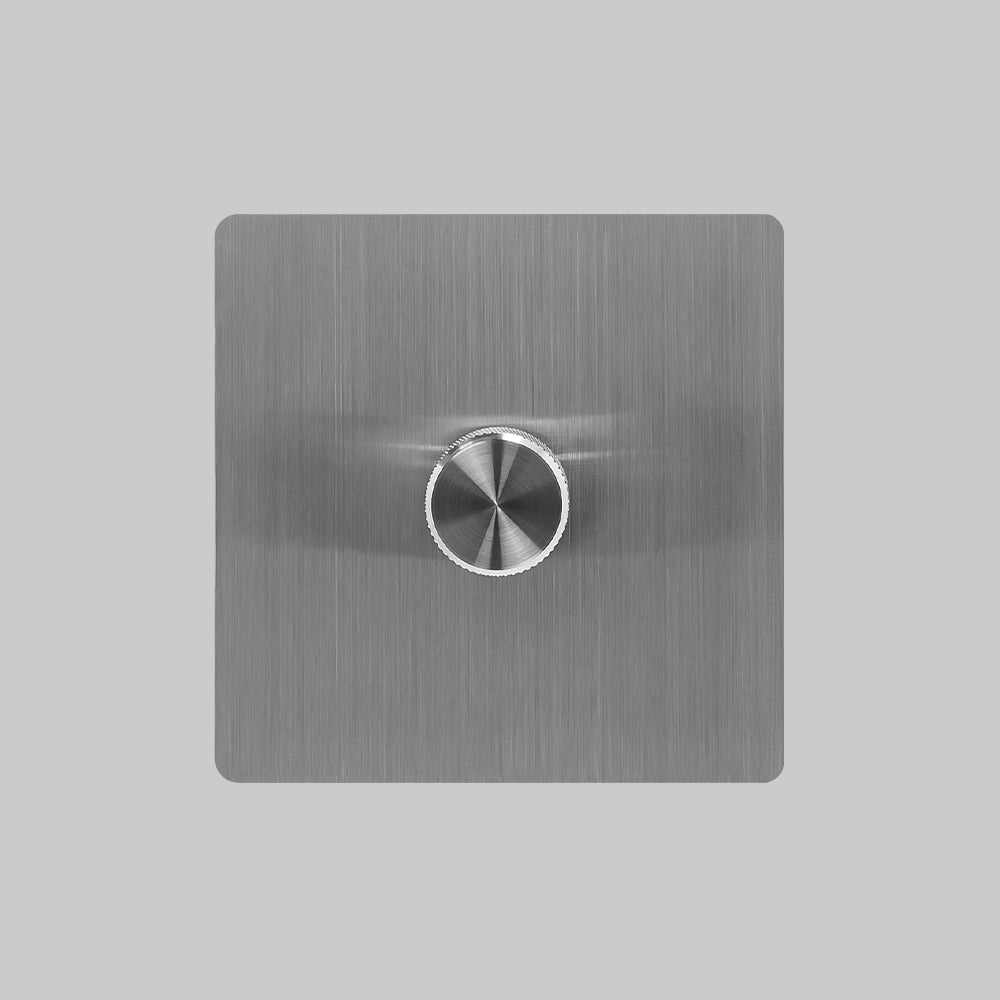
You cannot safely dim non-dimmable LEDs with any dimmer switch. The incompatibility causes flickering, buzzing, premature failure, and potential fire hazards—all violations of UK electrical safety standards. DIY hacks like capacitors are unsafe and illegal for residential use.
The solution is clear: upgrade to dimmable LEDs paired with a UKCA-certified dimmer designed for LED loads. Repenic's RD-250 and RD-400 dimmers deliver flicker-free performance, programmable brightness control, BOOST mode for low-level stability, and six-layer safety protection. They fit standard UK 25mm back boxes, require no neutral wire, and are compatible with all major grid systems.
For renovation projects requiring multi-location control or smart home integration, Repenic's Multiway Dimmer (RD-MP) and Zigbee Smart Dimmer (RD-250ZG) offer advanced solutions that eliminate intermediate switches and unlock voice control, scheduling, and energy monitoring.
Always hire a qualified electrician for installation. Repenic dimmers come with five-year warranties, ensuring your lighting upgrade is reliable, safe, and future-proof.
Frequently Asked Questions
Can I use a capacitor to dim non-dimmable LEDs safely?
No. Adding capacitors or resistors to non-dimmable LEDs is not certified for UK electrical standards, risks overheating and circuit failure, and voids warranties. UKCA-compliant dimmers are the only safe solution.
Will my old dimmer switch work with dimmable LEDs?
Older dimmers (rated 40–60W) designed for incandescent bulbs often cause flickering with dimmable LEDs due to incompatible leading-edge switching and insufficient load handling. Upgrade to a modern trailing-edge dimmer like Repenic's RD-250 for reliable performance.
Do I need to replace my non-dimmable LEDs to use a dimmer?
Yes. Non-dimmable LEDs are incompatible with any dimmer. You must replace them with dimmable LEDs and install a compatible dimmer. This upgrade is cost-effective and delivers smooth, flicker-free brightness control.
What is the difference between BOOST mode and standard dimming?
BOOST mode temporarily increases voltage at low brightness levels to prevent dropout (light turning off). Standard dimming reduces voltage proportionally, which can cause LEDs to cut out below a certain threshold. BOOST mode enables smooth dimming from 1% to 100%.
Can I control lights from multiple rooms with a smart dimmer?
Yes. Repenic's Zigbee Smart Dimmer allows up to five dimmers on the same circuit, each controlling brightness independently. This eliminates the need for intermediate switches and enables voice control and automation via Google Home, Homey, or Hubitat.